Video Tip for Radically Candid Criticism
We've been sharing video tips from Kim and Russ every couple of weeks, and we started off with a bunch of tips about giving praise. We received...
1 min read
Radical Candor Sep 27, 2022 12:34:39 AM
Table of Contents
Do you think your feedback is often Ruinously Empathetic? If so, you're not alone. In our experience, most feedback mistakes fall in the Ruinous Empathy quadrant.
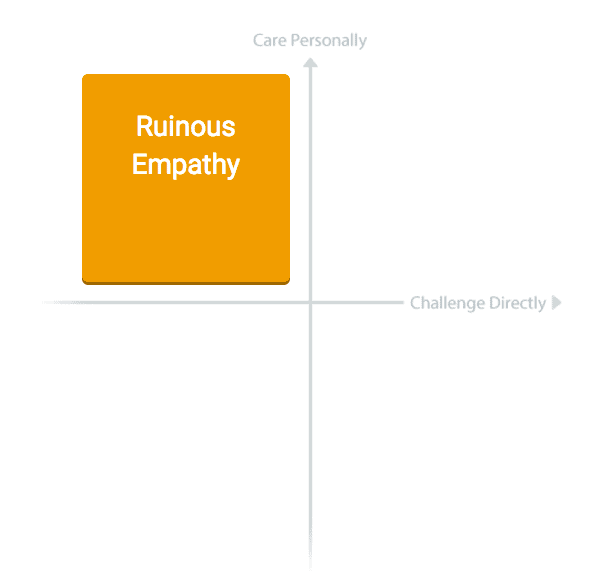
Ruinous Empathy is what happens when you want to spare someone’s short-term feelings, so you don’t tell them something they need to know. You Care Personally, but fail to Challenge Directly.
It’s praise that isn’t specific enough to help the person understand what was good or criticism that is sugar-coated and unclear. Or simply silence. Ruinous Empathy may feel nice or safe, but is ultimately unhelpful and even damaging. This is a feedback fail.
People tend to back down from their Direct Challenge because they want to be "nice." If you can relate, don't despair, we've got advice for moving away from Ruinous Empathy and toward Radical Candor.
Need help with Radical Candor? Let's talk! >>
Listen to a story and a simple piece of advice in this video of Radical Candor author and co-founder Kim Scott answering an audience question at Slack HQ:
https://youtu.be/_XQBxPy3Ah4
Praise can be Ruinously Empathetic when bosses try to be “nice” and get things wrong. Click the link to read a few cautionary tales of how trying to make a person feel good without taking the time to understand the details of their work to challenge them appropriately can go astray. Learn more >>
When bosses care too much about hurting their employees’ feelings, they will avoid giving criticism. Eventually, it becomes too late to fix this Ruinously Empathetic situation. Learn more >>
One of the best ways to make your intentions clear when you want to offer guidance* to someone is to state your intention to be helpful before giving them feedback.
In Radical Candor, Kim Scott notes, “Perhaps the simplest advice I have to give here is for you to tell the person you are giving feedback to that you are trying to be helpful. Try a little preamble for hard criticism.”
She continues, “For example, try saying, in words that feel like you, ‘I’m going to tell you something because if I were in your shoes I’d want to know so I could fix it.’ Simply exposing your intent to be helpful offers clarity to the other person about your intentions. Most people will want to hear whatever it is you’re going to say.”
————————————————————————————————————————————————————————————–
Ruinous Empathy happens when you Care Personally about someone but fail to Challenge Directly. To protect their short-term feelings, you withhold honest feedback — offering praise that's too vague to be useful, criticism that's so sugar-coated it loses its meaning, or simply saying nothing at all. While it feels kind in the moment, Ruinous Empathy is ultimately harmful because the person never gets the information they need to grow or improve.
Most managers slip into Ruinous Empathy because they want to be 'nice' and avoid making people feel bad. Challenging someone directly can feel uncomfortable or even unkind, so they soften feedback until it loses its impact — or skip it altogether. According to the Radical Candor framework, this is the most common feedback mistake managers make. The intention is good, but the outcome fails the person receiving the feedback.
The key is to state your intention before delivering hard feedback. Kim Scott recommends a simple preamble like: 'I'm going to tell you something because if I were in your shoes I'd want to know so I could fix it.' This exposes your intent to be helpful, making it easier for the other person to receive criticism openly. You still Care Personally — you just stop letting that care prevent you from Challenging Directly.
Yes — praise becomes Ruinously Empathetic when it's too vague or generic to be useful. Saying 'great job!' without explaining what was great or why it mattered doesn't help the person understand what to repeat or build on. Radically Candid praise is specific: it tells someone exactly what they did well so they can replicate it. Without that specificity, even positive feedback can fall flat and fail to support growth.
Lead with your intent. Before delivering criticism, tell the person you're sharing the feedback because you want to help them — not to tear them down. A phrase like 'I'm telling you this because I'd want to know if I were in your shoes' signals care and honesty at the same time. This small preamble shifts the emotional frame of the conversation and makes it far more likely the other person will be receptive to what you have to say.
Both involve genuinely caring about the person — but Radical Candor adds the willingness to Challenge Directly. Ruinous Empathy stops at caring; it prioritizes the other person's short-term comfort over their long-term growth. Radical Candor means you care enough to say the hard thing. The goal isn't to be harsh — it's to be honest in a way that's clearly motivated by wanting to help, not to criticize for its own sake.
Three ways to put this into practice.
Related reading
We've been sharing video tips from Kim and Russ every couple of weeks, and we started off with a bunch of tips about giving praise. We received...
For those of you who are familiar with our Radical Candor framework, you’ll remember that Ruinous Empathy is in the upper left. High Care Personally,...
How often should you be giving people feedback? Speaking a few years ago at Slack, I got a question about feedback frequency — how much is too much...