Use "The Big 3" Leadership Framework Alongside Radical Candor to Transform Your Team
Edited By Brandi Neal, Radical Candor podcast writer and producer, and director of content creation for Radical Candor. This article about Russ...
5 min read
Farrah Mitra is the founder of Green Reed, a leadership coaching and consulting firm that supports people through the moments that matter most. She is also a seasoned Radical Candor Coach, known for helping leaders balance care with candor—especially when the stakes are high and the message is hard. With a background in strategy consulting, HR, and executive coaching, Farrah brings a unique ability to help leaders not just “say the thing,” but say it with integrity, clarity, and emotional intelligence.

It started with a phone call.
A layoff was coming, and it was going to be hard. An executive called asking, “What do I say to the team—like, five minutes after the announcement?” Farrah Mitra, an experienced coach and communications expert, didn’t hand over a script. Instead, she opened a Google Doc and began sketching out a series of questions to help the leader process what had happened, clarify the message, and figure out how to deliver it with clarity and compassion.
That rough outline—created on the fly—would become the foundation of what’s now known as the Communicating Change Framework.
Within two weeks, that same executive used the tool again for a follow-up conversation with the team. Then someone else used it. And someone else. Farrah realized: these weren’t just coaching questions. They were part of a repeatable process—one that helped people communicate hard things without causing harm.
Today, the Communicating Change Framework has been used by leaders across sectors—from tech companies and startups to nonprofits and public institutions—navigating everything from layoffs to reorgs, performance reviews to high-stakes strategic shifts.
In a world where change is constant and communication often falls flat, Farrah offers something rare: a way to deliver hard news with the kind of clarity and care that builds trust instead of breaking it.
“You can keep doing the work,” she says, “but if you’re not communicating well, there’s no impact.”
This combination of care and clarity followed Farrah through her years as an HR executive and coach, especially as she supported leaders navigating hypergrowth, hard changes such as layoffs, and organizational transformation.

What started as a quick Google Doc to help a leader navigate a post-layoff team conversation evolved into a repeatable, transformative process. The framework is now a go-to resource for leaders across industries who want to do more than “get the message out”—they want to get it right, which means 3 things:
The framework has four key components:
1. Know the Facts
Before communicating anything, leaders must be absolutely clear on what the message actually is. Many discover through this process that they’re conflating multiple messages—like performance issues with structural changes—resulting in confusion or damage.
2. Check in With Yourself
Here’s where things shift. Leaders reflect on their emotional state and mindset. “However you feel is going to come through,” Farrah says. “You can’t fake it.” This self-awareness allows them to move from fear, guilt, or defensiveness, which could result in wishy washy or blaming messaging, into a mindset of clarity and partnership.
3. Empathize With Your Audience
Instead of focusing solely on the facts, Farrah’s framework encourages leaders to think about what their team already knows, what they need emotionally, and—crucially—what they should say and feel after the conversation.
4. Deliver and Support With Care
Change isn’t a single moment—it’s a process. The part of the framework focuses on delivery, timing, and follow-through. How will you support your team after the message is delivered? How do you show up in the days and weeks that follow?
The results speak for themselves. One client, using the framework to prepare for a tough performance review conversation, shared that the employee’s response was word-for-word what they had hoped: “This sucks, but you’re right. And I’m thankful you’re helping me grow.” The review couldn’t and didn’t change, but by changing the experience of it, the employee felt empowered to grow.
Another client remarked that simply going through the framework shifted their mindset—from dread and guilt to grounded confidence. One client noted, “In 20 minutes, you’ve helped me completely shift my mindset - and now I know exactly how to approach this.”
“Every time, it’s the coaching around mindset that changes everything,” Farrah says.
Even when leaders know what they want to say, Farrah’s coaching helps them say it in a way that lands. As one client put it: “The magic is in Farrah’s coaching. You can’t just forward her framework template and use it—it’s about how she helps you deliver it.”
What sets Farrah apart is her ability to bring both coaching depth and communication precision . She’s not just helping leaders feel more confident—she’s helping them say hard things in a way that builds trust, preserves dignity, and keeps people engaged.
As a Radical Candor Coach, Farrah lives the balance of caring personally while challenging directly. Her framework reinforces those same values: honesty, empathy, and responsibility. “Radical Candor is all about mindset and skillset,” she says. “So is this framework. You need both.”
Farrah brings 20+ years of experience working with executives as a Bain strategy consultant, HR executive, and executive coach. She has lived experience in fast-changing, high-performing organizations. She’s seen firsthand how poor communication creates fear, disengagement, and trauma—and how thoughtful, compassionate communication can do the opposite.
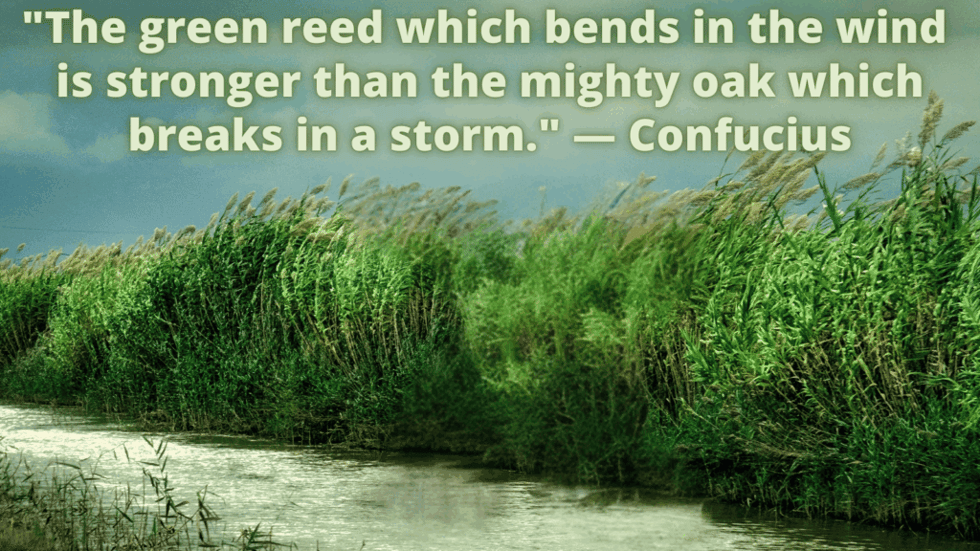
The name of Farrah’s company, Green Reed, might sound unusual, but it reflects a philosophy that drives everything Farrah teaches:
The green reed which bends in the wind is stronger than the mighty oak which breaks in a storm." — Confucius
This idea came to life for Farrah during a literal windstorm in Texas. As she watched towering oaks snap in half while slender, flexible trees stayed rooted, something clicked. For much of her life, she had been the oak—rigid, driven by fear, and determined to hold it all together.
Raised in an immigrant family, Farrah grew up with an intense drive to succeed and avoid failure at all costs. Perfectionism became her shield, but it also came at a price: physical stress, burnout, and a black-and-white mindset that left little room for flexibility or grace. Through coaching, she began to unpack those outdated beliefs, embrace a new mindset, and move through the world with less fear.
Green Reed represents that shift—and it’s the essence of how Farrah helps others grow. Her coaching work starts with uncovering the internal stories that keep leaders stuck. Then, once those barriers are addressed, she brings in practical, actionable skills to help them actually “do the thing”—whether that’s having a hard conversation, letting go of control, or stepping into a new leadership role with confidence.

Farrah’s commitment to better communication isn’t just professional—it’s personal. Whether advocating for her daughter’s education or navigating her husband’s surprise open-heart surgery, she’s seen how clarity and care can transform even the most difficult situations.
She credits empathy as the reason her husband’s hospital recovery was smooth. “Same surgery, same procedure at any other hospital,” she says. “But the difference was the level of care our hospital provided. I’m convinced empathy got him out faster.”
After refining the framework over years of client work, Farrah is finally stepping out to share it more publicly—through podcasts, LinkedIn Live events, and writing. Still, she’s thoughtful about how the framework is implemented. “The framework is powerful,” she says. “But the value is in how it’s used—and I’m excited to help leaders shift their mindset and deliver with intention.”
For Farrah, the mission is clear: help people communicate hard things without causing harm—and, ideally, with a lot more humanity giving managers confidence, employees trust, and companies forward momentum.
Contact us to book Farrah for Radical Candor, or reach out to her on LinkedIn.
Edited By Brandi Neal, Radical Candor podcast writer and producer, and director of content creation for Radical Candor. This article about Russ...

By Brandi Neal, Radical Candor podcast writer and producer, and director of content creation for Radical Candor. As companies enforce ...
Edited by Brandi Neal, Radical Candor podcast writer and producer, and director of content creation for Radical Candor. When frustration flares, it’s...