Video: You Have Spinach in Your Teeth
If you’re already familiar with the Radical Candor framework, you know that we’ve labeled the axes “Challenge Directly” and “Care Personally”....
2 min read
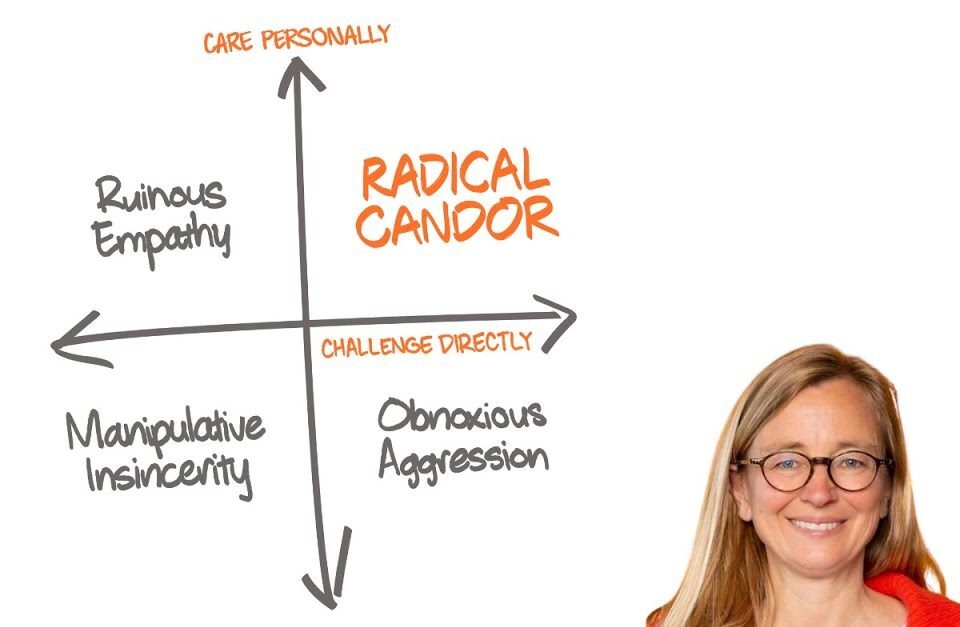
What is Radical Candor? People often get confused about what Radical Candor really means.
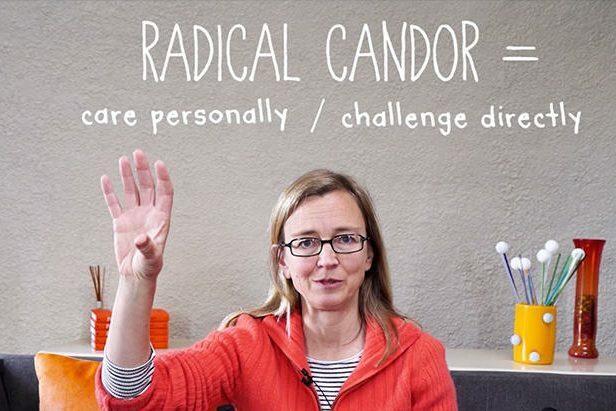
It's not brutal honesty. Radical Candor really just means saying what you think while also giving a damn about the person you’re saying it to.
Watch Radical Candor author and co-founder Kim Scott give the quick-and-dirty explanation below.
Your entire working life you’ve been told to be professional. Too often, that’s code for leaving your humanity at home. To build strong relationships, you have to Care Personally.
This can be as simple as showing enough vulnerability to admit when you’re having a bad day and creating a safe place for others to do the same.
Since you learned to talk you’ve likely been told some version of, “If you don’t have anything nice to say, don’t say anything at all.” Then you become the boss and the very thing you’ve been taught not to do since you were 18 months old is suddenly your job.
In order to succeed, you have to Challenge Directly. Challenging people is often the best way to show you care. It does not mean that whatever you think is the truth; it means you share your (humble) opinions directly.
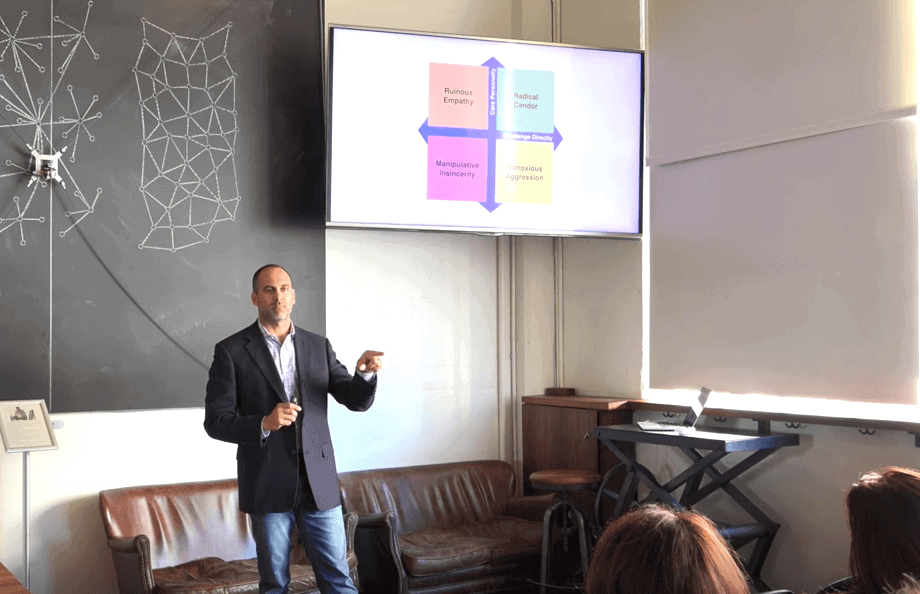
Radical Candor happens when you put these two things together to give feedback that's kind, clear, specific and sincere.
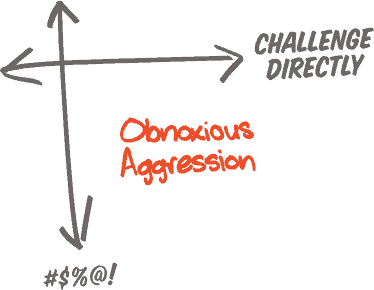
Obnoxious Aggression, also called brutal honesty or front stabbing, is what happens when you challenge someone directly, but don’t show you care about them personally.
It’s praise that doesn’t feel sincere or criticism and feedback that isn’t delivered kindly.
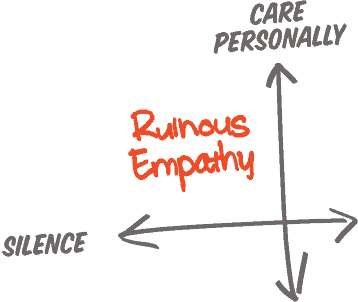
Ruinous Empathy is what happens when you want to spare someone’s short-term feelings, so you don’t tell them something they need to know.
It’s praise that isn’t specific enough to help the person understand what was good or criticism that is sugar-coated and unclear. Or simply silence.
Ruinous Empathy may feel nice or safe, but is ultimately unhelpful and even damaging.
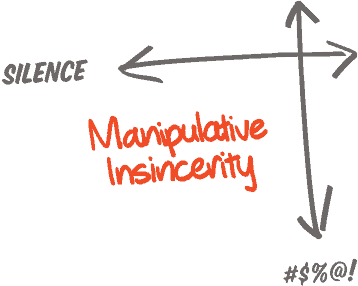
Manipulative Insincerity is praise that is insincere, flattery to a person’s face and harsh criticism behind their back.
It’s the kind of backstabbing, political, passive-aggressive behavior that might be fun to tell stories about but makes for a toxic workplace, ruining relationships and ruining work.
People give praise and criticism that is manipulatively insincere when they are too focused on being liked or they think they can gain some sort of political advantage by being fake, or when they are too tired to care or argue anymore.
Need help with Radical Candor? Let's talk! >>
————————————————————————————————————————————————————————————–
If you’re already familiar with the Radical Candor framework, you know that we’ve labeled the axes “Challenge Directly” and “Care Personally”....

What makes Radical Candor radical is that it’s a deviation from the norm, which tends to fall somewhere between acting like a jerk and avoiding...
We have learned something really important from the way that the press sometimes describes Radical Candor as brutal honesty. And we want your advice...
Share your perspective
Leave a comment below.