Enhancing Personal and Professional Growth: The Undeniable Power of Feedback Workshops
You might think that giving and getting feedback should be simple, right? Why would you need a feedback workshop? At Radical Candor we like to say...
4 min read

If your feedback has ever failed or fallen flat, you’re in good company. Feedback training for leaders is one of the most overlooked aspects of leadership development.
Leaders who find themselves guiding teams without first learning the art of effective feedback are basically driving with the parking brake on. Sure, they can move things forward, but each gain is made slowly and with great effort. Before long things start to malfunction.
You get the idea. Everything is more difficult than it needs to be, but that doesn't stop folks from trying to push ahead — all the while avoiding the one thing that would make their lives easier. (You know, releasing the parking brake or taking a feedback training course.)
A 2021 survey revealed that almost 25% of employers only ask for feedback once per quarter and almost 15% have never asked their employees for feedback. Other studies found that employees want but aren't getting helpful feedback that would allow them to correct mistakes or repeat success.
If we know that a feedback-rich environment leads to happier, healthier and more profitable workplaces, why aren't more leaders asking for or giving regular feedback?
Simple. They were never taught how to solicit or offer feedback. Getting and giving feedback is a skill, and it takes practice to get it right.
Need help with Radical Candor? Let's talk!

Before we go too far down a path here, while I am using the word “leader” in this post, I am referring to anyone who leads or manages others. Radical Candor author and co-founder Kim Scott notes in the book Radical Candor:
“Most people don’t like the words for their role: ‘boss’ evokes injustice, ‘manager’ sounds bureaucratic and ‘leader’ sounds self-aggrandizing.”
Despite these competing associations, they’re all used to describe someone whose job it is to guide a team to achieve results.
Scott notes that Richard Tedlow’s biography of Intel’s legendary CEO Andy Grove: The Life and Times of an American “asserts that management and leadership are like forehand and backhand. You have to be good at both to win.”
Kick-ass bosses, leaders and managers know that being in charge doesn’t mean they have all of the answers. They understand the importance of feedback coaching and grasp how it can significantly enhance their leadership abilities by helping them move away from command and control and toward collaboration.
Need help with feedback training for leaders? Our Candor Coaches can coach you to align, catalyze and sustain a culture of feedback. Ask us about feedback training for leaders, individual contributors and teams!
Not convinced of the benefits? Let’s explore these myriad reasons why feedback training for leaders is non-negotiable.

Feedback — praise and criticism — is an essential component of personal and professional growth. It serves as a mirror reflecting our strengths and weaknesses, allowing us to make informed improvements.
For leaders, feedback is not only crucial for their individual development but also for the success of their teams and organizations.
This doesn’t mean just giving feedback. Before leaders give feedback they have to get it. This is where the Radical Candor order of operations comes into play.

Feedback training helps leaders become more self-aware. Self-awareness is the foundation of effective leadership.
Leaders who understand their strengths and weaknesses can make informed decisions, set realistic goals and adapt their leadership style to meet the needs of their teams.
Soliciting feedback regularly offers leaders insights into their behaviors, communication and impact on others, facilitating self-improvement.
Effective communication is a cornerstone of successful leadership. Leaders who receive feedback training develop better communication skills.
They learn to listen to understand versus to respond, ask clarifying questions and provide kind, clear, specific and sincere feedback to their teams.
By honing their communication abilities, leaders can foster a more open and transparent work environment, which, in turn, enhances team collaboration and productivity.

Leadership is not just about individual performance; it's also about nurturing and developing your team. Feedback training equips leaders with the skills to provide meaningful feedback to their team members.
Specific and sincere praise and kind and clear criticism encourage personal and professional growth, boosts morale and motivates employees to strive for excellence.
Leaders who can effectively guide their team's development will get more done with less drama, enjoy an increase in employee engagement and retain their teams.
Leaders often face complex challenges that require innovative problem-solving. Feedback training can help leaders become more adept at identifying the root causes of issues, as they learn to approach problems from multiple perspectives.
Continuous feedback provides valuable input for resolving these challenges, whether they involve project management, team dynamics or strategic decision-making.
Trust is the bedrock of strong leadership. When leaders actively seek feedback, they signal to their teams that they value input and are willing to learn and adapt.
Trust is a two-way street, and when leaders demonstrate their commitment to personal growth through feedback training, they inspire trust and loyalty in their team members.

To make the most of feedback training, leaders should consider the following steps:
Create an environment of psychological safety: Foster a workplace culture where giving and receiving feedback is encouraged, not punished.
Practice Radical Candor: Schedule regular one-on-one meetings and team feedback sessions to ensure continuous improvement and communication.
Use a feedback model: Use the four-step CORE model to practice how to give effective feedback.
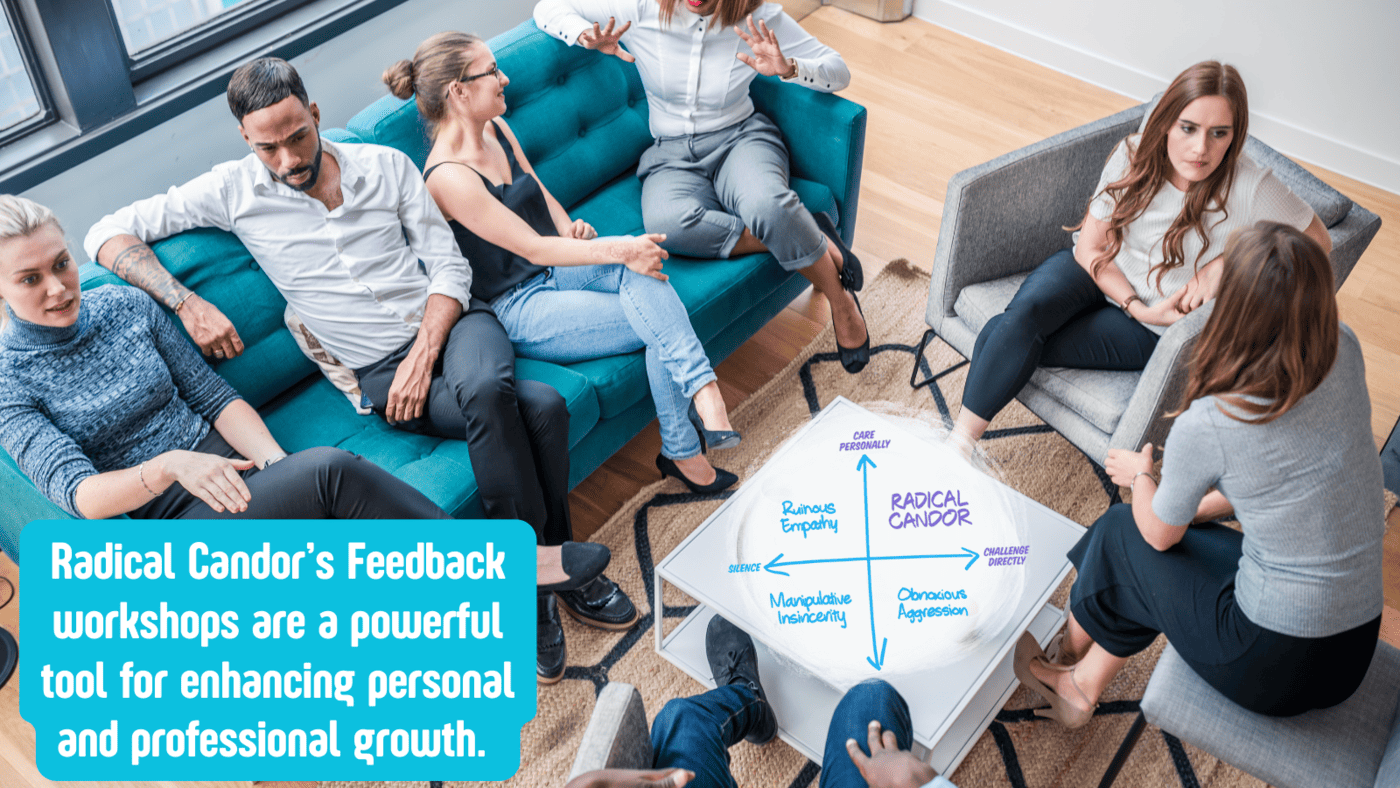
At Radical Candor we offer feedback workshops for teams and companies. Through storytelling, we introduce you to the core concepts, give you a shared vocabulary and offer tips and techniques that demonstrate to your team how Radical Candor can become an integral part of their success at work.
Real-life scenarios provide opportunities to practice in a supportive environment so your team has a clear understanding of how to put Radical Candor into action right away.
Ask us how we can create a feedback workshop for you!

Anyone can take a digital Radical Candor feedback training course. Choose from these three fun and affordable options to learn to get, give, gauge and encourage feedback like a boss!
The bottom line? Feedback training is not an optional add-on for leaders; it is a critical component of leadership development.
Effective leadership hinges on self-awareness, communication, team development, problem-solving and trust-building, all of which are enhanced through feedback training.
By prioritizing feedback training, leaders can improve their performance, guide their teams to achieve results, and ultimately contribute to the growth and success of their organizations.
————————————————————————————————————————————————————————————–
You might think that giving and getting feedback should be simple, right? Why would you need a feedback workshop? At Radical Candor we like to say...

By Indiana Lee, a freelance journalist specializing in business operations, leadership, communication, and marketing.

Creating a culture of feedback at work helps teams thrive, companies retain top talent and individuals grow in their careers. Gone are the days when...
Share your perspective
Leave a comment below.