Navigating Feedback Conversations On Multigenerational Teams
By Nahla Davies, a software developer and tech writer. Before devoting her work full-time to technical writing, she managed—among other intriguing...
6 min read

By Nahla Davies, a software developer and tech writer. Before devoting her work full-time to technical writing, she managed—among other intriguing things—to serve as a lead programmer at an Inc. 5,000 experiential branding organization whose clients include Samsung, Time Warner, Netflix, and Sony.
In the melting pot of today's global business scene, guiding a multicultural team brings a unique set of hurdles. A particular challenge leaders face is learning how to have radically candid feedback conversations on diverse teams.
While Radical Candor is a concept that sounds simple, it's not easy, especially when you add folks from a vibrant mix of cultural backgrounds.
However, as Radical Candor author and Co-founder Kim Scott discusses in her book Radical Respect, letting your fear of saying "the wrong thing" stop you from giving any feedback at all creates its own set of problems.
Need help navigating feedback on diverse teams? Let's talk!

A study from the real-time bias-busting software company Textio found that underrepresented people in corporate leadership receive inadequate or poor feedback. People feel most comfortable giving feedback to others they perceive to be similar to themselves.
According to Textio, Black and Latinx women receive 1.8x more biased feedback than Asian men, the group least likely to receive such feedback. The study also reported that female leaders are more likely to be described as “abrasive,” and Black women are more likely to be called “overachievers.”
When practicing Radical Candor, it’s important to understand racial, gender, and cultural nuances, show compassion for all team members, gauge how your feedback is landing, and adjust your message to fit the needs of the people hearing it.
@syntheticzero #japan #culture #culturaldifference #highcontext #implication ♬ original sound - Mitsu Hadeishi
For instance, some cultures value directness and clarity, viewing it as a form of honesty and respect. Others may find such directness abrasive, preferring more nuanced, indirect forms of communication that maintain harmony and save face.
Leaders must take the time to recognize these differences and handle them appropriately to help avoid misunderstandings that could lead to resentment or disengagement.
It's about reading the room, knowing your team, and adapting your feedback style accordingly. This doesn't mean diluting your message but delivering it in a way that's reflective of each person's cultural context.
For example, Kim Scott details how she had to adjust her message when managing a Google team in Tokyo whose members felt it was disrespectful to point out problems to the product team. Because of this reluctance to Challenge Directly, problems weren’t getting fixed.
“I found my own Southern upbringing helpful in understanding the Japanese perspective: both cultures placed a great emphasis on manners and on not contradicting people in public,” Scott explains.
“So I encouraged the team in Tokyo to be ‘politely persistent.’ Being polite was their preferred way of showing they Cared Personally. Being persistent was the way they were most comfortable challenging Google’s product direction.”
The role of cultural empathy in the workplace extends to every interaction we share and directly influences how team members communicate, collaborate, and perceive each other's intentions.
Developing cultural empathy means actively listening to and valuing diverse perspectives, even when these views challenge your own assumptions and beliefs.
It involves a commitment to continuous learning and openness to changing one's behavior based on new understandings of cultural norms and values.
Embedding cultural empathy directly into the fabric of team dynamics allows leaders and members to create and foster a more inclusive, supportive work environment.
Doing so actively enhances the team's ability to work together effectively while deepening the impact of Radical Candor by ensuring that feedback isn’t just heard—but truly understood and appreciated, bridging cultural divides and fostering a culture of mutual respect and collaboration.
As teams across all industries are becoming increasingly diverse, creating a culture of Radical Candor that fits in with the cultural dynamics of your team isn't just beneficial—it's essential to your success. Here are four ways to create a rich feedback culture on a diverse team.
Beyond recognizing the diverse communication styles of your team, try to take proactive steps to learn about the cultural backgrounds that inform these styles.
These proactive steps might involve formal training or informal team discussions that celebrate and explore these differences.
The aim here is to actively adapt your feedback while encouraging team members to appreciate and understand each other's preferred communication styles, optimizing for collaboration and inclusion.
An environment of openness is one where kind, clear, specific, and sincere feedback is seen as a gift to be cherished, regardless of its form.
With this in mind, encourage team members to use Radical Candor as a compass to share feedback with each other, and explore together how best to adapt these principles to their respective cultural contexts.
A collaborative approach can significantly increase the team's comfort with giving and receiving feedback, making the process more effective and meaningful.
Likewise, if you host your feedback on an internal platform, ensure the server is protected. If this involves teams in hospitals or healthcare settings, even informal feedback and chats still have to be guarded by HIPAA-compliant hosting, lest a data leak happen that causes a problem with regulators.
Having such security measures in place helps protect the organization legally while reinforcing trust within the team, making it clear that their privacy and the confidentiality of their feedback are taken seriously.
Having compassion in leadership means recognizing the unique challenges and pressures your team members may face, especially people from underrepresented or historically disadvantaged backgrounds.
Compassion is empathy in action. It goes beyond surface-level understanding to actively support and advocate for your team's diverse needs. It means modeling empathy (not the ruinous kind) in your leadership.
By leading with empathy, you signal that Radical Candor isn’t just about business outcomes—it’s about fostering personal growth and mutual respect.
Coaching Real Leaders podcast host Muriel Wilkins, a C-suite advisor and executive coach, said on the Radical Candor podcast that empathy is the most important skill leaders need to develop.
Clear and contextual feedback removes much of the ambiguity that leads to misunderstandings, particularly in a multicultural setting.
Take the time to ensure that your feedback includes examples and actionable steps while also being open to discussing it further.
Doing so ensures that your message is understood and that your team members feel supported in their efforts to improve, rather than alienated or confused.

Creating an inclusive feedback culture within multicultural teams is more than just a strategy; it's a real commitment to fostering an environment where diversity is acknowledged and celebrated.
Leaders are instrumental in helping to shape this culture—one that values openness, mutual respect, and personal growth as pillars.
Leaders who are open about their own experiences, including their missteps and learning moments, pave the way for a culture where vulnerability is seen as a strength.
This openness doesn’t just humanize leaders, it also encourages team members to share their own experiences and challenges without fear of judgment.
It's a powerful way to demonstrate that feedback in your team is a two-way street, offering rich learning opportunities for everyone involved.
Challenging directly while still caring personally is a delicate balance that requires understanding and respect for individual sensitivities and cultural backgrounds.
When leaders approach feedback with genuine concern and a clear intention to support team members' development, it sets a new standard for communication that’s both honest and compassionate at the same time.
With its ability to offer accurate translations and craft training manuals tailored to various cultures, AI tools can empower leaders to navigate the complexities of feedback with greater ease and effectiveness.
Integrating AI into the dynamics of multicultural teams can dramatically revolutionize the notion of feedback within a team-centric context.
As handling and assessing data can be handled by algorithms, leaders can instead focus on learning how not to criticize but to help team members grow and succeed in a supportive, culturally aware environment.

Navigating the delicate balance of feedback within multicultural teams can indeed seem like a tightrope walk at times—but with the right mix of cultural empathy, understanding, and the tailored application of Radical Candor, it's more than possible to cross that tightrope with grace.
You can transform feedback from a dreaded chore into an invaluable tool for growth and inclusion by appreciating the diverse communication styles of your team, leading with compassion, and fostering an environment of openness and vulnerability.
However, the journey toward mastering feedback in multicultural teams shouldn’t be taken alone.
Thankfully, Radical Candor offers a compass to guide these conversations, ensuring they're not just effective but that they're also genuinely meaningful.
Whether it's through embracing the nuances of cultural variations in communication, or the careful balancing act of caring personally while challenging directly, the principles of Radical Candor can help you build a stronger, more cohesive team.
***
Nahla Davies is a software developer and tech writer. Before devoting her work full-time to technical writing, she managed—among other intriguing things—to serve as a lead programmer at an Inc. 5,000 experiential branding organization whose clients include Samsung, Time Warner, Netflix, and Sony.
————————————————————————————————————————————————————————————–

By Nahla Davies, a software developer and tech writer. Before devoting her work full-time to technical writing, she managed—among other intriguing...

The atomic building block of Radical Candor is the two-minute impromptu feedback conversation. And, according to a poll from Gallup, employees who...
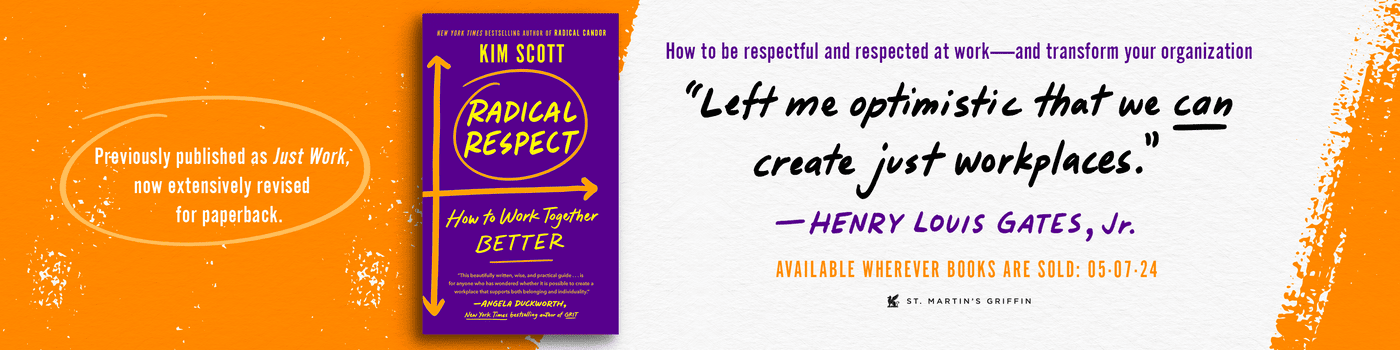
Radical Candor author and co-founder Kim Scott announced the launch of her new book, Radical Respect: How to Work Together Better (St. Martin’s...
Share your perspective
Leave a comment below.