10 Strategies to Improve Communication In the Workplace
By Suman Agarwal, an image evangelist, author, TEDx speaker, and Image Management Professionals Association president. Edited by Radical Candor...
5 min read

By Jodie Hurst, a financial analyst turned entrepreneur who advises businesses on using technology to manage teams, upskill staff, and streamline business processes.
In today's rapidly evolving business landscape, the key to maintaining a competitive edge lies in a skilled and adaptable workforce. This means investing in upskilling and leadership training for employees.
Upskilling is the process of continuous learning through which employees can be trained and equipped with the necessary skills and knowledge to handle their professional responsibilities more efficiently, thus reducing the risk of errors or attrition.
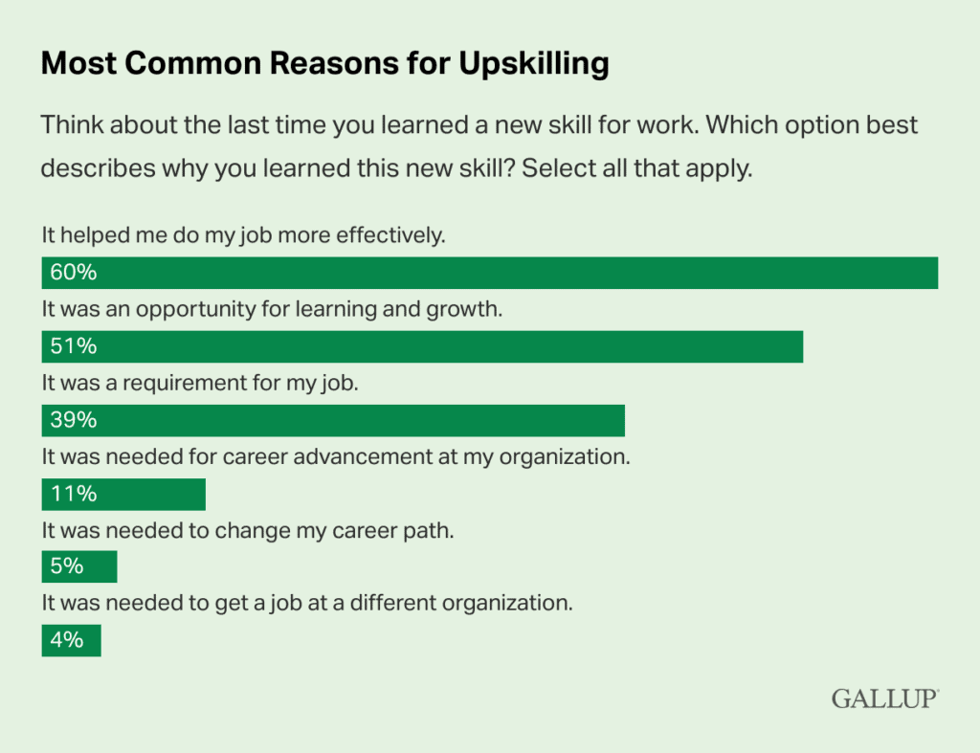
It is a proactive approach that empowers teams to stay ahead of the curve and adapt to changing industry demands.
One particular skill, leadership training for employees at all levels, can inspire and motivate individuals to take ownership of their work and motivate and encourage each other.
Irrespective of the organization or department, every team can significantly boost its productivity and improve its performance through strategic upskilling efforts and leadership training activities for employees.
If you aim to help your team succeed and thrive in an increasingly competitive environment, here are 10 effective ways to provide leadership training for your employees and upskill your team toward peak performance and professional growth.
Need leadership training for your team? Let's talk!

The first step in any effective upskilling strategy is identifying knowledge gaps within your team. Nitpicking or making assumptions about skill deficiencies can undermine your efforts.
Instead, conduct a thorough analysis to pinpoint areas that require attention. This can include reviewing key performance indicators (KPIs) for different roles, conducting employee assessments, observing your team and providing performance feedback in their day-to-day activities, and creating a comprehensive skill inventory.
By comparing this inventory with the desired skill set, you can identify specific gaps and create targeted upskilling and training plans to address them effectively.
 In the digital age, it would be unwise to overlook the power and convenience of online training tools. These resources are not only more cost-effective than hiring professional coaches but also offer time-efficient and globally accessible learning opportunities.
According to e-learning statistics reported by the World Economic Forum, there has been a five-fold increase in employers offering e-learning opportunities to help uskill and reskill employees.
Platforms like Teachable (where you can access two Radical Candor courses), LinkedIn Learning (where you can take a Compassionate Candor course with Radical Candor author and co-founder Kim Scott), and MasterClass (where you can sign up for a Radical Candor course) offer a wealth of pre-made courses covering a wide range of topics, from technical skills to leadership training for employees.
Alternatively, if you need to address specific skill gaps, you can create custom training materials and distribute them among your team, allowing them to learn at their own pace.
Virtual training sessions provide a dynamic and engaging platform for group learning, collaboration, recruitment management, and skill development. These sessions can be facilitated by hiring external experts or leveraging internal resources through learning and development (L&D) programs.
Virtual training offers a flexible and accessible format, making it an ideal solution for remote or hybrid teams scattered across different locations. Radical Candor offers both in-person and virtual feedback workshops to provide communication, and leadership training for employees and managers alike.
By participating in these sessions, team members can improve their collaboration and communication skills while enhancing their technical proficiencies in a supportive and interactive environment.
Appreciate and recognize your team members' efforts to upskill themselves, and lead by example by actively pursuing your own learning and development opportunities, such as through feedback training for leaders from Radical Candor.
One Radical Candor workshop participant noted, "It's clear that giving and receiving feedback can help with career development of professionals at all levels. The workshop gave my team tools to implement to start giving and receiving feedback frequently to help improve our effectiveness."
Whether it's mastering a new technical skill or honing skills like leadership, communication, or emotional intelligence, demonstrate a commitment to lifelong learning and inspire your team to do the same.

Pursuing higher education or professional certifications can be a significant investment, both in terms of time and financial resources.
To support your team’s upskilling journey, consider offering financial assistance or a dedicated upskilling budget for both offline and online learning, since most working people would prefer to learn at a pace that's suitable to them and doesn't require too much offline commitment.
Financial assistance for online programs can cover the costs of degree programs, certifications, or leadership training programs for employees in areas such as online project management, cybersecurity, artificial intelligence online courses and machine learning bootcamps, digital marketing online diplomas, and even online clinical psychology programs (for human resources teams).
By providing this financial support, you not only demonstrate your commitment to their professional growth but also ensure that financial constraints, such as student-loan debt, do not hinder their ability to acquire new skills and knowledge.
While technical upskilling is undoubtedly valuable, it is equally important to focus on developing well-rounded individuals within your team by encouraging leadership activities for your employees.
Personal development initiatives that emphasize skills such as effective communication, time management, active listening, collaboration, leadership, work ethic, and emotional intelligence are crucial for achieving peak performance and fostering a productive work environment instead of a toxic one.
By incorporating workplace communication training, conflict resolution workshops, or leadership training activities for employees, you empower your team with the interpersonal skills necessary for success in any professional setting.

Peer-to-peer (P2P) learning is a powerful and time-tested approach to upskilling that leverages the collective knowledge and experiences of your team members.
Encourage your employees to take ownership of their learning by taking part in leadership training activities like facilitating team projects, leading meetings, and conducting employee-led workshops or training sessions.
This lateral learning method not only promotes skill development but also fosters collaboration, networking, and knowledge-sharing within the team.
Additionally, P2P learning can be facilitated through microlearning techniques, where team members teach and learn from each other on a daily basis, reducing the time and effort required for intensive training.
An essential component of building a successful upskilling program is actively soliciting and incorporating feedback from your team members.
By providing them with a platform to voice their concerns, suggest areas for improvement, and share their perspectives on skill gaps, you can tailor your upskilling initiatives to better align with their needs and expectations.
This two-way communication not only makes your team feel valued and heard but also ensures that the upskilling efforts are relevant, effective, and well-received. Encourage continuous feedback, and be willing to adapt and refine your approach based on their insights.
By pairing team members with experienced mentors (vs. coaches), either internal or external to the organization, you provide them with valuable guidance, insights, and personalized support throughout their professional development journey.
Mentors can offer a firsthand perspective on career progression, assist with goal-setting, and share industry-specific knowledge and best practices.
This early exposure to mentorship equips your team with the tools and mindset necessary for enhancing their performance and fostering sustained growth.

In the pursuit of upskilling, it is essential not to overlook the existing strengths and capabilities of your team members.
Conduct a comprehensive skill assessment to identify the areas in which your team already excels. This exercise will not only help you recognize their achievements but also inform your upskilling strategy by highlighting the specific domains that require further development or refinement. It will also identify potential mentors and highlight which team members would benefit from leadership training for employees.
By understanding the current skill levels, you can create targeted upskilling programs that build upon existing strengths while addressing areas for improvement, ensuring a well-rounded and effective approach to professional growth.
Upskilling is an art that requires precision, focus, and compassion to be truly effective. As a leader or manager committed to being a better boss for the success and growth of your team, actively investing in upskilling initiatives and leadership training activities for your employees is essential.
By following the strategies outlined above, you can cultivate a culture of continuous feedback and learning, foster an environment of professional growth, and empower your team to achieve peak performance.
Remember, upskilling is not a one-time endeavor but an ongoing process that demands adaptability, responsiveness, and a genuine commitment to your team's development.
Ready to get started? Book a call with Radical Candor today!
 Jodie Hurst is a financial analyst, turned entrepreneur, who advises businesses on using technology to manage teams, upskill staff, and streamline business processes.

By Suman Agarwal, an image evangelist, author, TEDx speaker, and Image Management Professionals Association president. Edited by Radical Candor...

By Rob Press, a content marketing manager at Deputy, a robust scheduling software. Aside from helping businesses reach operational efficiency, he...

By Gaurav Sharma, founder and CEO of Attrock, a results-driven digital marketing company that he grew an agency from 5-figure to 7-figure revenue in...
Share your perspective
Leave a comment below.