1 min read

Criticism & Obnoxious Aggression

Criticism & Obnoxious Aggression

Table of Contents

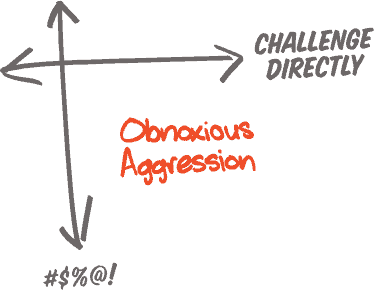
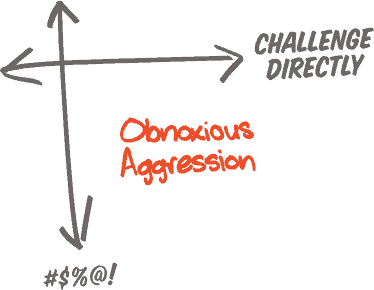
Obnoxiously Aggressive criticism is often referred to as “front-stabbing”. It’s when you criticize without Caring Personally.
What is Radical Candor?

A couple months after joining Google, Kim had a disagreement with Larry Page about his approach to an AdSense policy. She wrote an email to about 30 people, including Larry, which proclaimed his approach to be against his own mission and implied that he was recommending the policy because he was focused on increasing Google’s revenue rather than doing the right thing for users.

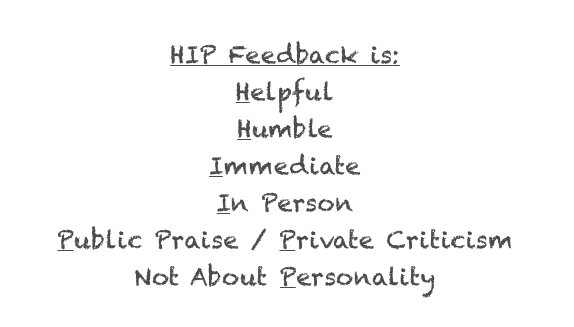
If Larry had worked for Kim instead of the other way around, she would never have sent such an arrogant, accusatory email. So why did she behave this way? Because she didn’t really think of Larry as a human being. She saw him as a kind of demigod who could be attacked with impunity. Kim didn’t get the full story to understand his stance, and her criticism wasn’t humble, helpful or in private.

It’s important to remember that Obnoxious Aggression, like the other quadrants, is a behavior, not a personality trait. Although Kim gave this type of feedback, it does not mean Kim is an asshole. Nobody is a bona fide asshole all the time. But all of us are Obnoxiously Aggressive some of the time.

---

More about this story and others is included in “Radical Candor: Be a Kickass Boss Without Losing Your Humanity,” published by St. Martin’s Press. Learn more
Key Questions Covered

What is Obnoxious Aggression in the Radical Candor framework?

Obnoxious Aggression is one of the four quadrants in the Radical Candor framework. It happens when you Challenge Directly but fail to Care Personally — you criticize someone without regard for their humanity or feelings. It's sometimes called "front-stabbing" because, unlike backstabbing, the attack is direct but still harmful. While it can feel honest in the moment, it damages trust and relationships because it lacks genuine compassion or humility.

How is Obnoxious Aggression different from Radical Candor?

Radical Candor requires both Caring Personally and Challenging Directly at the same time. Obnoxious Aggression has the challenging part but skips the caring part. The result is criticism that feels like an attack rather than helpful feedback. With Radical Candor, you deliver hard truths in private, with humility, and with the other person's growth in mind. Obnoxious Aggression tends to be public, arrogant, and accusatory — like Kim Scott's email to Larry Page.

Why did Kim Scott send an obnoxiously aggressive email to Larry Page?

Kim sent a blunt, accusatory email to about 30 people — including Larry Page — criticizing his AdSense policy stance and implying his motives were driven by revenue rather than user welfare. She later realized she behaved this way because she didn't see Larry as a fully human person deserving of the same respect she'd give a direct report. She skipped getting the full story, wasn't humble, and criticized him publicly rather than privately.

Does being Obnoxiously Aggressive make someone a bad person or a bad manager?

No. The Radical Candor framework is clear that Obnoxious Aggression — like all four quadrants — describes a behavior, not a personality trait or permanent character flaw. Nobody is obnoxiously aggressive all the time. All of us slip into this quadrant occasionally. The goal isn't to label yourself or others, but to recognize the behavior in the moment and course-correct by adding genuine care back into your communication.

What makes criticism "Obnoxiously Aggressive" rather than just blunt or direct?

Criticism crosses into Obnoxious Aggression when it lacks three key qualities: humility, helpfulness, and privacy. Kim's email to Larry Page failed on all three — it was arrogant in tone, more accusatory than constructive, and sent to 30 people at once. Blunt or direct feedback can still be Radically Candid if it's delivered with genuine care for the other person and with the intent to help them improve, not to publicly shame or attack them.

How can I avoid falling into Obnoxious Aggression when giving feedback?

Before delivering criticism, ask yourself: Do I actually care about this person's success? Have I taken time to understand their full perspective? Am I planning to give this feedback privately? Is my tone humble rather than accusatory? If the answer to any of these is no, pause and recalibrate. The Radical Candor framework encourages you to get the full story first, choose a private setting, and lead with genuine concern for the person — not just the problem.

Keep going.

Three ways to put this into practice.

Apply what you've learned Get personalized coaching with Compass
Your AI-powered Radical Candor coach. Free to try.
Used by managers at Apple, Dropbox, and Twitter Try Compass free
Stay sharp More like this, every week
Practical leadership tips in your inbox.
Join 25,000+ leaders Subscribe free
For your whole team Bring Radical Candor to your organization
Workshops, keynotes, and rollouts for teams of 50+.
Trusted by 100+ Fortune 500 leadership teams Talk to our team

EXPLORE MORE FROM RADICAL CANDOR

Tips to Avoid Obnoxiously Aggressive Criticism

Tips to Avoid Obnoxiously Aggressive Criticism

If you think you've given criticism that was Obnoxiously Aggressive, check out these tips for moving towards Radical Candor!

Read More
Criticism & Manipulative Insincerity

Criticism & Manipulative Insincerity

When you don’t Care Personally or Challenge Directly, criticism is Manipulatively Insincere.

Read More
Video Tip for Radically Candid Criticism

Video Tip for Radically Candid Criticism

We've been sharing video tips from Kim and Russ every couple of weeks, and we started off with a bunch of tips about giving praise. We received...

Read More