 Kim Scott
Why Praising in Public and Criticizing in Private is Key to Giving Feedback Others Will Act On
A good rule of thumb for guidance is praise in public, criticize in private.

"I tried to give X constructive feedback, but then X got all defensive. How can I get through to X?" Sound familiar? We get this question a lot.
When a person begins a conversation by saying or even just thinking, “I’ve got some constructive feedback for you,” the other person’s defenses go up right away as they wait to hear these "constructive feedback examples."
There are three problems with the way that’s phrased. The first is the construction of the sentence. You're basically saying, “I’m gonna tell you a thing or two” — which is neither humble nor helpful. The second is the word “feedback.” The third is the word “constructive.”
While the goals of constructive feedback — to help people do more of what's good and less of what's not — are the same as the goals of Radical Candor, how you offer feedback matters.
It’s hard to sound or be humble when saying, “I’ve got some constructive feedback for you.” This sounds like you’re saying that you know a truth that the other person doesn’t know, and you’re going to tell them this truth.
It’s sort of like saying, “You have a problem, I’m going to tell you what it is, and you’re going to fix it. And moreover, you’re gonna like fixing it.”
This tends to feel Obnoxiously Aggressive. Better to say “I see a problem, I want to see if you agree that it’s a problem, and then if we do agree, let’s see how we can fix it together.”
Remember, you are a human being offering your interpretation of the facts. You are not God offering truth.
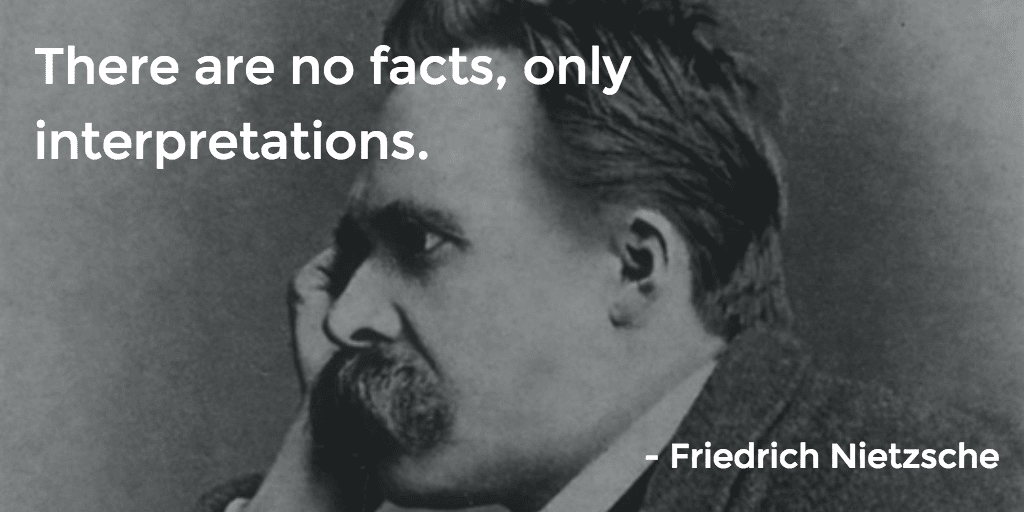
We say that feedback should be “objective” and “not personal,” when in fact most feedback is an interpretation of the facts, not “truth.” It’s important to keep this top of mind when offering criticism.
As Nietzsche said, “There are no facts, only interpretations.” You are not a computer spitting out data. You have a point of view. You have chosen to include some things and exclude others. Sure, you are trying to be fair. But you should also realize that as a mere mortal, you can’t be totally objective.
Maybe you’re skewing things, or maybe you’re plain wrong. If you think you're being 'objective' then you're more likely to dismiss a counter position as 'defensive' or infeasible. Worse, you might worry that you will seem weak if you listen to their point of view, to their assembly of the facts.
When you criticize (or praise) a person or their work and are conscious that you are not objective and might be wrong, your criticism is stronger, not weaker. The other person’s skewed version of the facts might just balance out your own.
“You have a problem, I’m going to tell you what it is, and you’re going to fix it. And moreover, you’re gonna like fixing it.”
When you challenge people and expect them to challenge you back, you both get stronger. You’re far more likely to “get it right.” When you challenge people and expect them to accept everything you say as objective truth, you’re sure to get it wrong a lot of the time.
When you praise or criticize somebody, you are offering more than data. You are offering your interpretation of the data. Your point of view is invaluable if it’s offered humbly.
The problem with the word “feedback” is that it tends to mean just criticism; don’t forget to “focus on the good stuff”
Another problem with the word “feedback” as it is commonly used is that it almost always means “criticism.” If somebody says to you, “I’ve got some feedback for you,” you’re probably not expecting to hear good news or accolades.
And the term “positive feedback” further muddles things. If “positive feedback” is praise and “negative feedback” is criticism, we go down another semantic rat-hole. If criticism is intended to be helpful, then “negative feedback” is “positive.” Shoot me now :)
That’s why I say “feedback” is screechy and makes most people want to put their hands over their ears. I prefer the word guidance, which is something most of us long for. Guidance is not a perfect word either though as it can imply “I’m older and wiser and know better than you.”
Perhaps neither word is right and it’s better to call it exactly what it is: praise and criticism instead of constructive feedback versus criticism or constructive criticism versus feedback or negative feedback versus constructive criticism.
When we talk about Radically Candid guidance we mean criticism that's kind and clear and praise that is specific and sincere.
Train yourself to think about both of these so you don’t make the mistake of only giving criticism. To show you care you should be offering more praise than criticism. SAY SOMETHING KIND!

By using the word constructive to describe the feedback you’re about to offer, you set an expectation that the other person “shouldn't” get angry or defensive or upset. You’re implying that they “should” react with gratitude to your examples of constructive feedback. Now, you’re telling them how to feel about whatever it is you’re about to say.
It doesn’t mean you are a “feedback failure” if there’s an emotional reaction. Criticism stings and most of us get upset when we get stung. There’s no way to say it so it won’t hurt.
The best you can do is to react to the hurt with compassion—but without diluting the clarity of your message. Just because the other person reacted emotionally doesn’t mean you failed to deliver the message properly.
In fact, often, if you don't get an emotional reaction, it might be a sign you haven’t been clear enough.
The best you can do is to react to the hurt with compassion—but without diluting the clarity of your message.
The word “constructive” sets you up to feel like a feedback failure when in fact you may have delivered the message as clearly and as kindly as humanly possible. All too often I’ll get a phone call from somebody I’ve been coaching who says. “I totally blew it. John burst into tears (or yelled or shut down).”
While it’s true that you should try not to personalize when giving praise or criticism, for most of us, our work is personal. Our work is one of the most important ways that we express who we are and offer our talents to leave the world a little better than we found it. Most of us spend more time working than anything else we do in life. Since it comprises so much of our lives, it better be personal! Otherwise, what is life?
So when you give somebody feedback, eliminate the phrase, “Don’t take it personally,” from your vocabulary. If somebody gets upset or angry or defensive, it doesn’t mean you’ve failed in some way. It means they care about their work.
That’s a good thing. Your job is to react with compassion, not to say, “Don’t take it personally.”
You’re batting above average if you can manage your own emotions. While telling another person how to feel is way overstepping your role as manager, you can and should do everything you can to manage your own emotions.
A big part of being a manager is “emotional labor.” You have to react compassionately to other people’s emotions without expecting them to do the same for you in return. Pause here and think about this because it’s pretty rough (and might offer a clue for you to revise how you deal with your manager).
This means it’s really important to take care of yourself. Whatever it is you need to do to manage your own emotions—get enough sleep, exercise, food, free time, adrenaline rushes, whatever—make sure to do it.
Listen to Our Navigating Emotional Reactions at Work podcast episode >>
————————————————————————————————————————————————————————————–
*This post was updated Feb. 24, 2023.

A good rule of thumb for guidance is praise in public, criticize in private.

The first time a person in a class I was teaching asked about how to give humble feedback, I sat there with my mouth hanging open. It was all I could...

Giving feedback in person is one of the tenets of our HIP approach to Radically Candid feedback. Having real, human, in-person feedback conversations...
Share your perspective
Leave a comment below.