



2 min read

Video Tip: How Often Should I Give Feedback?

Video Tip: How Often Should I Give Feedback?

Table of Contents

How often should you be giving people feedback? Speaking a few years ago at Slack, I got a question about feedback frequency — how much is too much or not enough?

QUESTION: I feel like I don't find that many opportunities where I can give someone constructive feedback. Am I just ignoring things? How often should one be doing this?

There is one rule of thumb that applies to criticism in general but is especially good advice when you're really busy and nerves are frayed. It's best summed up by advice a friend's godfather gave her at her wedding.

"If it's brown flush it down. If it's yellow let it mellow." She got married on an island with a poor septic system, and this was a sign by all the toilets. But as her godfather said, "These are words to live by. If there's a big stinking problem talk about it before it fouls your relationship. But if it's a small thing, let it go."

ANSWER: You don't need to nitpick every little thing, but if you see something that matters, tell the person.


Radical candor feedback frequency

The Art of the 2-Minute Impromtu Development Conversation

The atomic building block of Radical Candor is the two-minute impromptu development conversation.  If you work remotely, text them or ping people and ask if they have two minutes to chat.

You don’t want to try to operationalize impromptu chats. The motivations of both the feedback giver and the feedback receiver need to be intrinsic.

The motivation to solicit guidance and to act on it is the desire to improve, to grow, to do good work and then make it better, to build strong relationships and then make them stronger.

“I’m listening to you because I want to develop the skills and the team I’ll need to succeed.”

The motivation to give guidance is mostly altruistic—to help another person and the team as a collective flourish.

“I’m telling you this because I want to help you develop the skills you need to succeed and because it’s not fair to your peers if I don’t tell you.”

If you want to set a specific goal, try praising someone three-to-four times a week and giving them one piece of criticism. And remind yourself not to repress feedback — give it immediately.
(Need help with Radical Candor? Let's talk!)

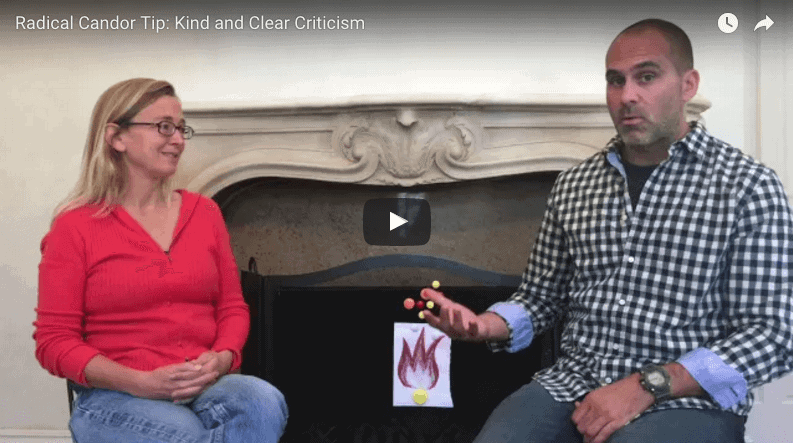
Watch my full answer to this feedback frequency question


https://youtu.be/wnBl5m44ey4


Impromptu feedback is something you can squeeze in between meetings in two minutes or less.

The best feedback (both praise and criticism) I’ve gotten in my life generally happened in super-quick conversations between meetings or standing waiting for a light to change.

Getting and giving impromptu feedback is more like brushing and flossing than getting a root canal. Don’t schedule it. Just ask for it and offer it consistently and immediately when it’s needed, and maybe you won’t ever have to get a root canal.

However, don't nitpick. I recommend leaving unimportant things unsaid every day.

This post was updated Aug. 26, 2022

————————————————————————————————————————————————————————————–

Key Questions Covered

How often should I give feedback to my team members?

A good rule of thumb is to aim for three to four pieces of praise per week and at least one piece of constructive criticism. But don't try to schedule or force it — the best feedback happens impromptu, squeezed into two-minute conversations between meetings. The key is consistency: give feedback immediately when it's needed rather than saving it up for a formal review.

Do I need to give feedback on every small mistake or issue I notice?

No — not every issue deserves a conversation. The Radical Candor rule of thumb is: if it's a big, stinking problem, address it before it damages the relationship. If it's a minor, low-stakes thing, let it go. Nitpicking every small detail can actually undermine trust. The goal is to speak up when something truly matters, and intentionally leave unimportant things unsaid every day.

What is the 'two-minute impromptu development conversation' in Radical Candor?

It's the atomic building block of the Radical Candor framework. Rather than scheduling lengthy formal feedback sessions, you catch someone for two minutes between meetings — or ping them remotely — and share a quick piece of praise or criticism. These short, spontaneous conversations tend to be more impactful than formal reviews because they happen in the moment, when the feedback is most relevant and actionable.

Why should feedback be given immediately rather than saved up?

Immediate feedback is more effective because it's tied directly to a specific behavior the person can still remember and act on. Holding feedback until a scheduled review means the moment has passed and the impact is diluted. Kim Scott compares regular, timely feedback to brushing and flossing — do it consistently and you avoid the painful 'root canal' of a major performance crisis down the line.

What should motivate me to give feedback to someone on my team?

According to Radical Candor, the motivation to give feedback should be mostly altruistic — you genuinely want to help the other person grow and succeed. A useful framing is: 'I'm telling you this because I want to help you develop the skills you need to succeed, and because it's not fair to your peers if I don't.' When feedback comes from a place of care rather than criticism for its own sake, it lands very differently.

How do I give feedback if I work on a remote team?

Remote work doesn't have to kill impromptu feedback. You can text or ping a colleague and ask if they have two minutes to chat — it's the digital equivalent of catching someone between meetings. The principle stays the same: keep it short, make it timely, and don't over-engineer it. Spontaneous, low-friction check-ins work just as well over a messaging app as they do in a hallway.

Keep going.

Three ways to put this into practice.

Apply what you've learned Get personalized coaching with Compass
Your AI-powered Radical Candor coach. Free to try.
Used by managers at Apple, Dropbox, and Twitter Try Compass free
Stay sharp More like this, every week
Practical leadership tips in your inbox.
Join 25,000+ leaders Subscribe free
For your whole team Bring Radical Candor to your organization
Workshops, keynotes, and rollouts for teams of 50+.
Trusted by 100+ Fortune 500 leadership teams Talk to our team

EXPLORE MORE FROM RADICAL CANDOR

The Difference Between 'Fast' and 'Meaningful' Feedback Conversations and Why You Should Be Having Both

The Difference Between 'Fast' and 'Meaningful' Feedback Conversations and Why You Should Be Having Both

The atomic building block of Radical Candor is the two-minute impromptu feedback conversation. And, according to a poll from Gallup, employees who...

Read More
Video Tip: Move Your Feedback Away from Ruinous Empathy and Do This Instead

Video Tip: Move Your Feedback Away from Ruinous Empathy and Do This Instead

Do you think your feedback is often Ruinously Empathetic? If so, you're not alone. In our experience, most feedback mistakes fall in the Ruinous...

Read More
Video Tip for Radically Candid Criticism

Video Tip for Radically Candid Criticism

We've been sharing video tips from Kim and Russ every couple of weeks, and we started off with a bunch of tips about giving praise. We received...

Read More