Rock Star Mode Versus Superstar Mode 4 | 1
Building a team is hard. But as we’re seeing now during the Great Resignation, failure to spend time building and investing in a team can have...
1 min read
Brandi Neal Mar 16, 2022 12:01:34 AM
Table of Contents
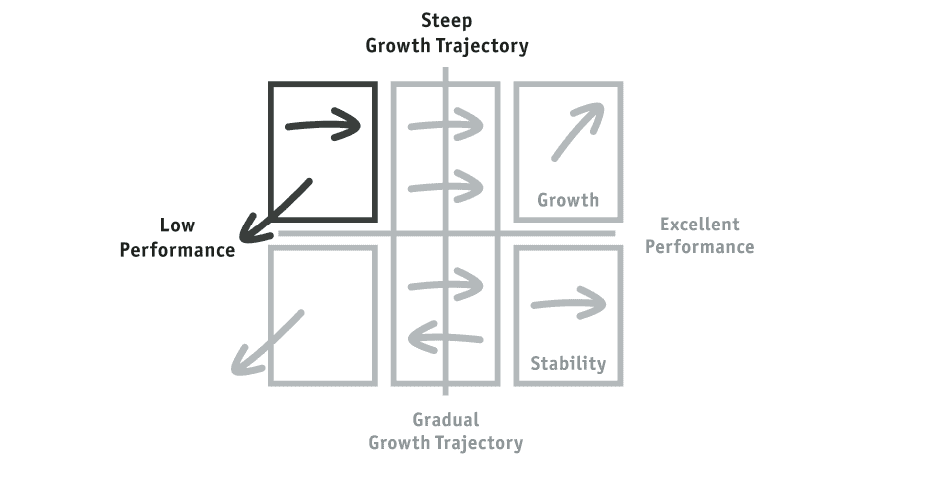
On this episode of the Radical Candor podcast, Kim, Jason and Amy discuss one of the most perplexing management dilemmas you might experience: when a person who ought to be taking on more and more responsibility and performing better every day is instead doing the opposite. This person is doing excellent work on a steep growth trajectory — maybe they even want to be your boss someday — and you’ve put in charge of the most important work or assigned them to solve your most difficult problems because they’re just that good. So why are they flailing instead of flying? We’ve seen this happen for five different reasons. Plus, organizations we're supporting for humanitarian relief in Ukraine.
Listen to the episode:
The 5 reasons people on steep growth trajectories might be falling short:
10 Free Resources to Help You Practice Radical Candor >>
Learn more about Kim's purple flag >>

We're supporting these organizations dedicated to helping people in Ukraine.
————————————————————————————————————————————————————————————–
The Radical Candor Podcast theme music was composed by Cliff Goldmacher. Order his book: The Reason For The Rhymes: Mastering the Seven Essential Skills of Innovation by Learning to Write Songs.
Sign up for our Radical Candor email newsletter >>
Shop the Radical Candor store >>
According to the Radical Candor podcast, the five reasons a superstar employee might be flailing instead of flying are: (1) they're in the wrong role — their strengths don't match the job's demands; (2) they're new to the role and have been given too much too fast; (3) they're dealing with personal problems outside of work; (4) there's poor alignment between the employee and the team or organization; and (5) the manager has put them in a box and left them there, failing to adapt to their evolving needs and capabilities.
When someone is new to a role and seems overwhelmed, the key is to slow down the pace of responsibility rather than piling on more. Managers should have regular development check-ins — distinct from quarterly performance check-ins — to ask the employee where they want to go and whether their current work is helping them move in that direction. This keeps expectations realistic and gives the employee the support they need to build confidence and competence over time.
A development check-in in the Radical Candor framework is a regular, informal conversation focused on an employee's growth trajectory — asking where they want to go and whether their current work is helping them get there. It's distinctly different from a performance check-in, which is more formal and should happen no more than once a quarter. Development check-ins should happen more frequently and feel more like coaching conversations than evaluations.
'Putting people in boxes and leaving them there' refers to a management mistake where a manager assigns a label or expectation to an employee — even a positive one like 'superstar' — and then stops actively supporting their growth. As the employee's needs evolve, the manager fails to adapt. This static approach can cause even the most talented people to stagnate or struggle, because they're no longer getting the tailored guidance and challenges they need to keep thriving.
The key is understanding where the person genuinely shines. The Radical Candor checklist suggests knowing your team members well enough to recognize their natural strengths. For example, putting a communications-oriented person alone with complex spreadsheets — or vice versa — is a role mismatch, not a growth challenge. If the struggle seems tied to the nature of the work itself rather than the newness of the situation, it's likely a wrong-role problem that may require reassignment rather than additional coaching.
Yes — personal problems are one of the five recognized reasons a strong employee might underperform, and ignoring them is a mistake. While managers shouldn't pry, Radical Candor encourages leaders to care personally about their team members as whole humans, not just as workers. Acknowledging that something seems off, checking in with genuine empathy, and offering flexibility or support can go a long way. Ignoring the issue often makes performance problems worse over time.
Three ways to put this into practice.
Related reading
Building a team is hard. But as we’re seeing now during the Great Resignation, failure to spend time building and investing in a team can have...
On this episode of the Radical Candor podcast, Amy and Kim talk about performance improvement plans (PIPs). When used correctly, performance...
You’ve likely heard about the Great Resignation — perhaps you’re even one of the millions of people who’ve bid their jobs farewell over the past few...