You’ve likely heard about the Great Resignation — perhaps you’re even one of the millions of people who’ve bid their jobs farewell over the past few months. On this episode of the Radical Candor podcast, Kim, Jason and Amy talk about how bad bosses, lack of transparency and poor communication are leading to a mass exodus of mid-level workers. How can you retain your team? Listen to find out how a series of small adjustments can help!
Listen to the episode:
The Great Resignation: Episode at a Glance
Gallup CEO Jim Clifton said in the Gallup State of the American Workplace study, “The single biggest decision you make in your job — bigger than all the rest — is who you name manager. When you name the wrong person manager, nothing fixes that bad decision. Not compensation, not benefits — nothing.”
As a boss, job one is you’ve got to treat everyone who works for you as a human being. This means actually talking to them about everything from their career goals to how they like to work — what works best for them versus what works best for you. Focus on being a partner, not an absentee manager or a micromanager.
This is always important, but it’s even more important to remember when your whole team is remote. Remember that everyone is different, which is why you need to ask each member of your team what works for them. While some people may want to hop on the phone several times a day to talk, others might find this disruptive and stressful. Don’t assume that what works for one person will work for every person.
If you have a manager who doesn’t communicate with you, you’re more likely to become part of the Great Resignation because humans do not handle uncertainty well. As Brené Brown says, "Clear is kind, unclear is unkind."
In order to retain your team, Gallup suggests having "stay conversations" with your direct reports. "Stay conversations are one-on-one conversations designed to learn more about the employee, including their passions and career goals, what they value in life, and what they need to be more successful in their role."
At Radical Candor, we call these Career Conversations. Career Conversations will guide you through career planning with your direct reports so you can learn what is important to them, understand where they want to go and work collaboratively with them to build the best possible plan of action to benefit each individual person as well as the team as a whole.
Career Conversations are something created by Kim's former Google colleague and Candor, Inc. co-founder Russ Laraway. (Get Russ's book: When They Win, You Win: Being a Great Manager Is Simpler Than You Think.)
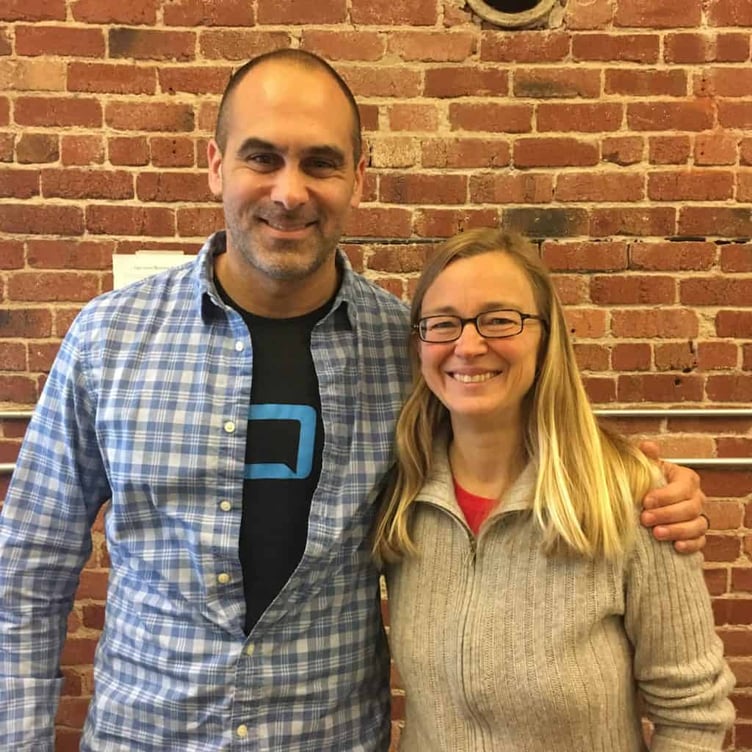 Russ Laraway & Kim Scott
Only when you get to know your direct reports well enough to know why they care about their work, what they hope to get out of their careers and where they are in the present moment in time, can you put the right people in the right roles and assign the right projects to the right people.
The bottom line is that having career conversations with each person who reports directly to you is the only way to understand their growth trajectory. Not only are these conversations crucially important to understanding how to help your people grow, but they’re also vital to understanding how you can help them grow relevantly. Russ has created a Career Conversations tool you can use with your team!
Radical Candor Podcast Checklist
Tip 1
Get to know each member of your team as a human being. Don’t assume that what works for one person will work for every person.
Only when you get to know your direct reports well enough to know why they care about their work, what they hope to get out of their careers and where they are in the present moment in time — are they in rockstar mode or superstar mode, can you put the right people in the right roles and assign the right projects to the right people.
Tip 2
Have regular two-minute impromptu conversations with your team members. If you work remotely, text them or ping them and ask if they have two minutes to chat.
The atomic building block of Radical Candor is the two-minute impromptu development conversation. You don’t want to try to operationalize impromptu chats. The motivations of both the feedback giver and the feedback receiver need to be intrinsic.
The motivation to solicit guidance and to act on it is the desire to improve, to grow, to do good work and then make it better, to build strong relationships and then make them stronger.
“I’m listening to you because I want to develop the skills and the team I’ll need to succeed.”
The motivation to give guidance is mostly altruistic—to help another person and the team as a collective flourish.
“I’m telling you this because I want to help you develop the skills you need to succeed and because it’s not fair to your peers if I don’t tell you.”
If you tie each two-minute conversation too explicitly to extrinsic motivators like bonuses, promotions or termination, you can ruin the motivation for them. If an employee thinks each two-minute impromptu conversation is going to impact their compensation or future career prospects, they will be less open to hearing what was said and more prone to fight it.
Tip 3
Have Career Conversations with each member of your team and revisit them often so you understand who is in rockstar mode and who is in superstar mode and how that aligns with the goals of the overall team.
Start with the Past – Life Story: The first step is understanding people’s motivations and values, the things that drive them. It’s amazing what you can learn from a person’s life story if you pay close attention to, and ask about, their major pivots and transitions.
Talk about the Future – Dreams: Step two is understanding where people want to be at the pinnacle of their careers.
Plan for the Present – Career Action Plan: With an understanding of the past and the future, you can now create a relevant and thoughtful action plan with clear owners and clear timelines
But remember, people change, and their dreams can change. This is why it’s important to have regular career conversations. Just like soliciting criticism from your team, it’s not a one-and-done practice.
Don’t put people in boxes and leave them there.
Radical Candor Podcast Resources
- Predictive Index 2021 People Management Report
- Inc. Why Are Workers Really Quitting? You Can Boil It Down to 1 Simple Reason
- New EY Consulting survey confirms 90% of US workers believe empathetic leadership leads to higher job satisfaction and 79% agree it decreases employee turnover
- The Problem with Career Conversations Today
- HBR: 7 Strategies to Build a More Resilient Team
- Gallup State of the American Workplace study
- Gallup: Overwhelmed by Employee Turnover? Have Stay Conversations
The Radical Candor Podcast theme music was composed by Cliff Goldmacher. Order his book: The Reason For The Rhymes: Mastering the Seven Essential Skills of Innovation by Learning to Write Songs.
Sign up for our Radical Candor email newsletter >>
Shop the Radical Candor store >>
More from Radical Candor
Fixing the Employee Experience (with Tiffani Bova) 8 | 26
While the podcast team is on a Radical Sabbatical, Kim Scott is spending the season talking to authors of the books that have shaped her thinking. This week: Tiffani Bova, whose …
Unlocking Leadership Intelligence (with Caroline Webb) 8 | 24
What separates a leader who makes wise calls under pressure from one who gets stuck in their own point of view? Caroline Webb has spent decades studying the answer — first as an …
Get Situated for Success (with Angela Duckworth) 8 | 23
While the Radical Candor podcast team is on a Radical Sabbatical, Kim Scott is spending the season interviewing authors of the books that have shaped her thinking over the past …
Share your perspective
This site is protected by reCAPTCHA and the Google Privacy Policy and Terms of Service apply.