The Co-Management Conundrum: How to Practice Radical Candor Across a Shared Team
Edited By Brandi Neal, Radical Candor podcast writer and producer, and director of content creation for Radical Candor. This article about...
4 min read

There are many different types of management styles. However, in the U.S., telling people what to do doesn't work outside of traditionally hierarchical organizations. And as the adage goes — people don’t leave bad jobs, they leave bad managers.
You likely know that effective management is an essential component of any successful organization. How a company is managed can have a profound impact on its culture, productivity and overall success. But, how do you know if your management style is effective?
If you’ve never been trained to be a manager and you are one, you’ve likely adopted a management style one of your bosses used. But you might not know there are myriad different types of management styles.
Let’s explore these seven different management styles, highlight their strengths and weaknesses, and identify when each style might be most effective.
Hint — it’s time to abandon one of these management styles altogether.
Need help with Radical Candor? Let's talk!

Democratic management encourages active participation from team members. Managers in this style seek input and solicit feedback, making decisions collectively. This approach fosters a sense of ownership among employees and often leads to better problem-solving and innovation.
While highly effective, this management style can be time-consuming, and decisions may take longer to reach a consensus. However, the long-term benefits — higher employee satisfaction and more successful organizations — outweigh any drawbacks.
This style is most closely related to Radical Candor. A radically candid management style focuses on respect and collaboration. A radically candid boss starts by caring personally about each person who works for them while also being willing to challenge them directly.
Radically candid managers communicate by giving praise that’s specific and sincere so people know what good looks like. They offer criticism that’s kind and clear so people know what’s not working and how to course-correct.
Being too hands-off is a form of absentee management. One of the most common mistakes bosses make is to ignore the people who are doing the best work because “they don’t need me” or “I don’t want to micromanage.” Ignoring somebody is a terrible way to build a relationship.
If you don’t take the time to get to know the people who get the best results, you can’t understand what they want and need to grow in their jobs at that particular moment in their lives.
You’ll assign the wrong tasks to the wrong people. You’ll promote the wrong people. Also, if you ignore your top performers, you won’t give them the guidance they need to succeed and they won't know how to repeat their success.
This style can lead to a highly engaged and motivated workforce. However, it may not be suitable for all situations, as it can sometimes lead to burnout if the vision is too demanding or "motivational" attitudes veer into toxic positivity where employees don't feel able to bring up problems.
Done right, transformational managers are true thought partners who work with your employees to set goals that make sense and align with the company’s long-term vision, actively listen to problems and help brainstorm solutions.
While this approach can provide clear guidelines, it may also create a culture driven by extrinsic rewards and fear of penalties, which can hinder long-term employee satisfaction.
This management style might work well for highly competitive people who work in sales or finance. On the other hand, creative employees often chafe under a transactional manager and end up feeling stifled, stressed and stuck.
This style can build strong relationships and loyalty, but it may also require a manager to balance the needs of individuals with the overall goals of the organization.
A servant leadership management style is best practiced when the manager's only role is to coach and develop their employees. Servant leaders are committed to guiding their teams to achieve results while also helping each individual take a step in the direction of their dreams.
While this style offers flexibility, it can be challenging to implement effectively without a deep understanding of the individual and a firm grasp of the team dynamics.
Situational leaders don’t assume that what works for one person will work for every person. Instead, they get to know each member of their team personally to balance the needs of the individuals with the goals of the organization.

The autocratic management style — what we refer to as command and control — is characterized by a top-down approach in which the manager makes decisions and gives orders without much input from the team.
This style can be effective in situations that require quick decisions and clear direction like emergency response teams or the military. However, in other organizations, it can stifle creativity and demotivate employees who feel they have no say in the decision-making process.
As a result, poor decisions are made. Employees are robbed of their agency. Managers are not held accountable. Results suffer, and so do employees.
What’s more, when managers make all of the decisions unilaterally, it is too risky for employees to challenge bias, prejudice or bullying, let alone to report harassment or discrimination. Because of this, harassment and discrimination are more likely to happen in command-and-control organizations.
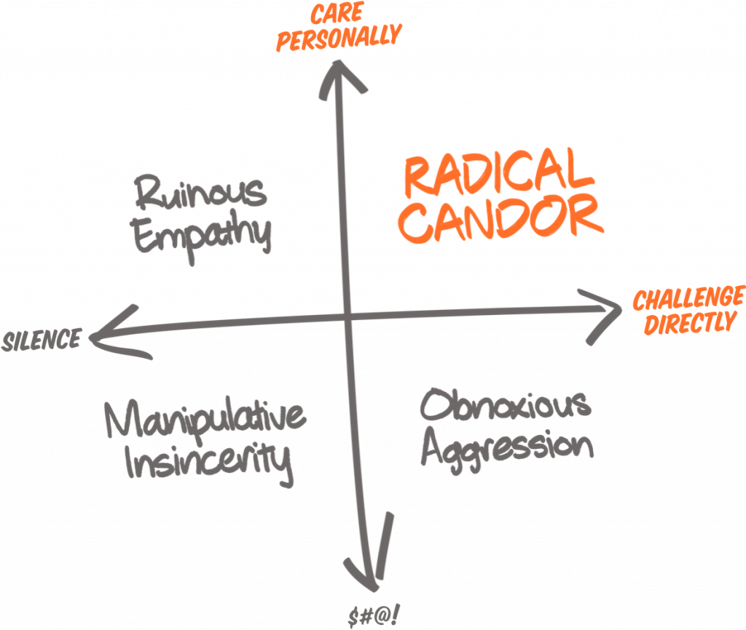
While there is no one-size-fits-all management style, some styles definitely work better than others. The effectiveness of a particular style depends on various factors, including the organization's culture, the nature of the work, and the skills and motivation of the team.
A skilled manager should be capable of utilizing different management styles as the situation demands, aiming to create a dynamic and adaptive approach that brings out the best in their team. At Radical Candor, we think this means shifting away from autocratic management styles in favor of more collaborative approaches.
In the end, a successful manager can balance authority and collaboration, inspiring and supporting their team members to achieve their goals and contribute to the overall success of the organization.
By understanding the various management styles and when to apply them, managers can become more effective leaders and create a radically respectful work environment where communication is kind, clear, specific and sincere, and everyone can thrive.
————————————————————————————————————————————————————————————–

Edited By Brandi Neal, Radical Candor podcast writer and producer, and director of content creation for Radical Candor. This article about...

*This article about creating a culture of listening is part of our new series about the Get Stuff Done (GSD) Wheel and has been excerpted from ...

By Suman Agarwal, an image evangelist, author, TEDx speaker, and Image Management Professionals Association president. Edited by Radical Candor...
Share your perspective
Leave a comment below.