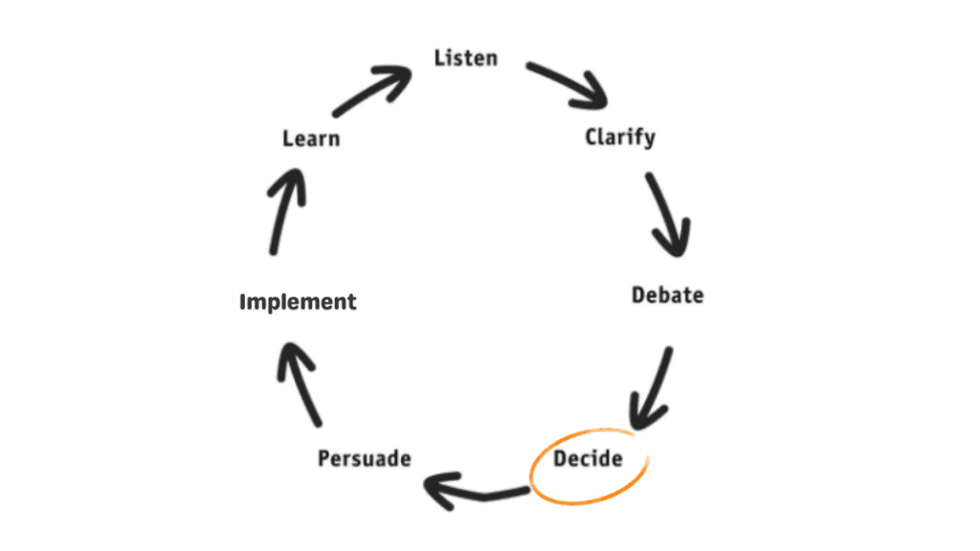
On this episode of the Radical Candor Podcast, Kim, Jason and Amy discuss how to make a decision after you've listened, clarified and debated your idea. Step 4 of the Get Shit Done Wheel, decide, is all about pushing the decisions into the facts. The Radical Candor Podcast team outlines 4 steps to follow when making decisions once you have shoved all ego — especially your own — out of the way. They also talk about the pitfalls of unconscious bias, the perils of skipping steps 1-3 and how to avoid garbage can decision-making.
Listen to the episode:
Radical Candor Podcast Episode At a Glance
Once you have gone through the listening, clarifying and debating spokes of the Get Shit Done Wheel, you have likely lined up decisions and facts and (hopefully) shoved all ego — especially your own — out of the way.
Now is the time, as Twitter and Square CEO Jack Dorsey put it, to “push the decisions into the facts.” Or as Kim says — how to help a team make the best possible decisions — or to “always get it right.”
Easier said than done. In a recent McKinsey survey, 61% of executives said that at least half the time they spent making decisions, much of it surely spent in meetings, was ineffective. And just 37% of respondents said their organizations’ decisions were both high-quality and timely.
So, how do you ensure you're making the right decisions in a timely manner? The best bosses often do not decide themselves, but rather create a clear decision-making process that empowers people closest to the facts to make as many decisions as possible. Not only does that result in better decisions, but it also results in better morale.
See the Radical Candor Podcast checklist below for the 4 steps to follow to create an environment where decisions are made by the folks closest to the facts versus by the boss.
Radical Candor Podcast Checklist
- When making decisions, you’re not the decider (usually). Remember, kick-ass bosses don’t grab decisions for themselves, but rather create a clear decision-making process that empowers people closest to the facts to make as many decisions as possible rather than fostering a culture of garbage can decision-making.
- The decider should get facts, not recommendations before making decisions. Be aware and accept that we all bring biases to the table in every decision we make. Create a culture where it’s safe for people to bring “unwelcome” facts to the table.
- Go spelunking before making decisions. To mitigate bias as much as possible, make sure you’re getting to the source of the facts versus making decisions based on ego-driven or emotional recommendations.
- Finally, hold a Big Decision Meeting and make sure once the decision is final a careful summary of the meeting is distributed to all relevant parties.
Radical Candor Podcast Resources
- Radical Candor Podcast Season 4, Episode 2: Use the GSD Wheel So No One Feels Sad, Bad or Left Out
- 4 Things to Consider When Making Decisions to Get Shit Done In 2022
- McKinsey Quarterly: Want a better decision? Plan a better meeting
- Board of Innovation: 16 cognitive biases that can kill your decision making
- The Decision Lab: Why we tend to rely heavily upon the first piece of information we receive
- Harvard Business Review: The Hidden Traps of Decision Making
- Wikipedia: Garbage Can Model
- A Garbage Can Model of Organization Choice
- Primer on Decision Making: How Decisions Happen by James G. March
- You can learn more about the decision-making process discussed on this episode in chapters 4 & 8 of Radical Candor
————————————————————————————————————————————————————————————–
More from Radical Candor
Fixing the Employee Experience (with Tiffani Bova) 8 | 26
While the podcast team is on a Radical Sabbatical, Kim Scott is spending the season talking to authors of the books that have shaped her thinking. This week: Tiffani Bova, whose …
Unlocking Leadership Intelligence (with Caroline Webb) 8 | 24
What separates a leader who makes wise calls under pressure from one who gets stuck in their own point of view? Caroline Webb has spent decades studying the answer — first as an …
Get Situated for Success (with Angela Duckworth) 8 | 23
While the Radical Candor podcast team is on a Radical Sabbatical, Kim Scott is spending the season interviewing authors of the books that have shaped her thinking over the past …
Share your perspective
This site is protected by reCAPTCHA and the Google Privacy Policy and Terms of Service apply.