How Being a Good Parent Can Make You a Better Boss with Dr. Becky Kennedy 8 | 19
While the podcast team is on a Radical Sabbatical, Kim is spending the season interviewing authors of the books that have shaped her thinking most in...
44 min read
 Kim Scott
Aug 3, 2026, 1:11:18 PM
Kim Scott
Aug 3, 2026, 1:11:18 PM
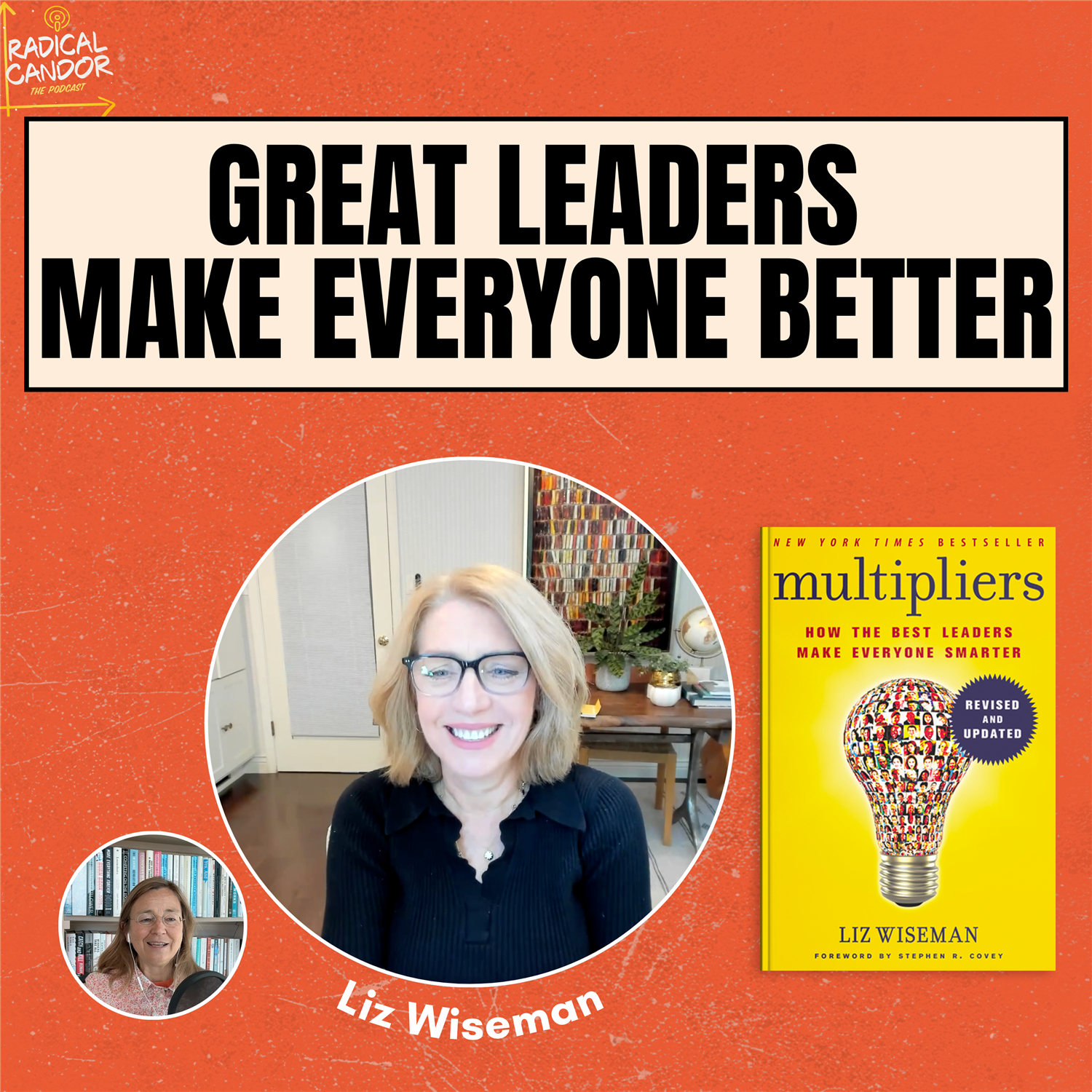
Table of Contents
Building high-performance teams is one of the hardest things a leader does — and it's easy for a passionate founder or senior leader to slide from advocate to authoritarian autocrat. Left unchecked, that shift quietly caps what an organization is capable of. So where's the balance between decisive leadership and command-and-control?
On this episode of the Radical Candor Podcast, Kim talks with Liz Wiseman, the New York Times bestselling author of Multipliers, The Multiplier Effect, and the Wall Street Journal bestsellers Rookie Smarts and Impact Players. Liz and Kim dig into why authoritarian leadership backfires, the handful of moments where a firmer hand is actually the right call, and practical ways to keep contributing even when your boss isn't a multiplier.
Watch the episode:
Wiseman's research started with a simple observation from her years in the tech industry: hiring brilliant people doesn't guarantee a brilliant team. Some leaders — she calls them diminishers — unintentionally shut down the intelligence around them, using on average just 48% of what their teams actually have to offer. Multipliers do the opposite. By listening, asking questions, and creating room for other people's thinking, they pull close to 95% of a team's available intelligence — nearly double the contribution, from the same people.
The mechanism is often Obnoxious Aggression more than outright hostility: an authoritarian leader delivers feedback in a way that triggers fight-or-flight, and the substance of what they're saying stops landing at all. On the other end, some well-meaning leaders slide into Ruinous Empathy — rescuing people from hard feedback or hard conversations — which creates its own kind of dependency. Either way, teams stop taking risks, stop speaking up, and sometimes drift into Manipulative Insincerity, quietly working around decisions instead of challenging them directly.
Wiseman isn't arguing that authoritarian leadership is never appropriate — just that it should be rare and time-bound. She points to three exceptions: a true crisis, where there's no time for debate and someone needs to call the shots; the early incubation of a bold new idea, when a leader needs to protect a fragile concept from too much outside input before it's ready; and a rapid course correction, when an organization has so much momentum behind the status quo that it takes a strong, singular push to change direction.
The through-line across all three: the leader has to signal clearly that they're stepping into an exception, and just as clearly hand control back once the moment passes. Leaders who forget the "by exception" part are the ones who end up running an authoritarian culture without meaning to.
Most people's instincts for dealing with a diminishing boss make things worse — arguing with a know-it-all, or working around a micromanager, tends to make them dig in harder. What actually works, Wiseman has found, is "multiplying up": treating your boss the way a multiplier would treat you. That means genuinely listening for what they know well, laying out the case against your own idea alongside the case for it, and owning mistakes quickly instead of trying to hide them.
It also means learning your boss's native genius and putting it to work for you — asking the specific kind of question they're actually good at answering, the way Apple's retail chief would take Steve Jobs a fully-formed plan and ask only "how could this be better?"
[00:05] Kim Scott: Hello, everybody, and welcome to the Radical Sabbatical. I'm Kim Scott, and with me today is Liz Wiseman, who had such a huge impact on my work. Liz is the author of many wonderful books, including Impact Players. That's that's your most recent one, Multipliers. is probably your most famous one and your beloved middle child is rookie smarts we just talked about it i love rookie smarts and i i have thoughts on rookie smarts but let's start with as you and i well first of all welcome liz
[00:38] Liz Wiseman: Rookie smarts. It's good to be here. Kim, you know I love talking with you and I think our subject today is gonna be an interesting one.
[00:56] Kim Scott: Yes, it's gonna be very interesting and very timely because I think the one of the biggest influences you had on me as a writer is your breakthrough research that and and you and I sort of started to have the conversation beforehand, but now we'll have it in real life on the podcast, is the the breakthrough research on what and how I phrased it was why authoritarianism doesn't work, why command and control doesn't work. and you said maybe there's some nuance to the situation. So let's let's start with the nuance and then we'll and then we'll get into the the core points.
[01:36] Liz Wiseman: Mm-hmm. Okay. Well, I I suppose I'm known for the anti-diminisher, anti-authoritarian position. And and I guess maybe we should start with the basics of why authoritarianism isn't a great leadership model for our current work environment. And then let's get to I think where that gets a little bit more.
[01:42] Kim Scott: Yes. Yes. Or and and I would maybe say for almost any work environment, almost any time people are trying to collaborate, authoritarianism is is not as good as as mul as being a multiplier.
[02:12] Liz Wiseman: Hmm. So I I came out of the tech world and what you know had this incredible experience working around such smart people, like everyone in the organization was so smart. And what I noticed is that really smart people don't always build really smart teams. That was really the observation. That just because you're a smart leader doesn't mean you're gonna create brilliance around you. And I saw so many
[02:31] Kim Scott: Yes. Yeah. Yeah.
[02:41] Liz Wiseman: Brilliant leaders just sucking the life and the intelligence out of their teams. And I think a lot of people noticed that they suck morale out, you know, they're like energy vampires. But what I think I noticed was you just hired a lot of really smart people and you paid top dollar in the market for that talent and you are woefully underutilizing that intelligence.
[02:47] Kim Scott: Yes. Yes. [inaudible].
[03:09] Liz Wiseman: Yeah, silencing it. And you know, doing doing the research, what I found is these leaders, I called them diminishers because of this kind of dampering effect that they had on ideas and insights and creativity, and initiative and accountability. All of these things what I found is on average these leaders were using forty-eight percent of people's available intelligence, know-how, expertise, insight.
[03:19] Kim Scott: Yes.
[03:38] Liz Wiseman: what we hire people for and what we hope people contribute and you know it's less than half. And I think because I
[03:46] Kim Scott: What a waste. Like what a waste for the organization, but also how terrible to have only half your talents being used.
[03:56] Liz Wiseman: Yeah. And I think because I grew up in this high growth environment where talent was always scarce and you always needed more headcount than was available, or you couldn't find the headcount in the market because you were creating something that didn't exist. And I thought, well, that seems like a a huge waste. And not only is it a waste of the company resource, it's a waste of experience because of course it creates this very defeating.
[04:05] Kim Scott: Mm-hmm. Mm. Yes.
[04:25] Liz Wiseman: Work experience. And we don't need to describe this. Everybody has experienced what it's like working around a diminishing leader.
[04:32] Kim Scott: Yes, I'll I'll summarize for you. When I decided I had had a job that I had loved, and when I decided to leave, what I said was this company hires the best people in the world and then tells them to sit down and shut up. That was how it felt for me anyway at that moment.
[04:51] Liz Wiseman: Yeah, and that's that's what I noticed is like why why would you do this? and and then I studied these other leaders, I called them multipliers because people were were at their best around them, people contributed fully around them. And and what I noticed is that people actually not only were smart around them, they got smarter. And and that's you know, that's a subtitle of the book, you know, why the best leaders make everyone smarter. And these leaders were getting
[04:56] Kim Scott: Yeah. Smarter, yes.
[05:21] Liz Wiseman: On average, 95% of people's available intelligence. And that's after I threw out the data points where people said, they got 120%.
[05:26] Kim Scott: And yeah. Yeah. Yes. So they're getting ha th they're getting the whole person instead of half the person.
[05:37] Liz Wiseman: Mm-hmm. Yeah. So it was a 2X difference. And I thought, well, okay, this is compelling math that, you know, if you if you want to use all the intelligence in your team, then you probably need to lead in a different way. And the the primary way that the diminishers were leading was really authoritarianism. It was command and control. And you know, the problem with this and it works well in
[05:43] Kim Scott: Mm-hmm. Mm-hmm. Mm-hmm.
[06:06] Liz Wiseman: An environment that's not changing very fast. it works fine. you know, when the leader is encountering problems that they've solved before, when a leader has all the answers, like it's actually a reasonable model in this case. But the problem is, you know, what it limits is critical thinking and idea flow and people taking responsibility for their mistakes and truth telling. I think there's huge parallels to radical candor on this?
[06:38] Kim Scott: Yes. Yeah, people are not gonna tell the truth in an authoritarian environment.
[06:43] Liz Wiseman: And when an authoritarian delivers feedback, and let's assume it's accurate, kind of responsible feedback, people have a hard time taking it. Like they're not a reliable narrator, like they're not a reliable observer. And because they are so emphatic, we either freeze up and tend not to hear it because we go into panic, or
[06:58] Kim Scott: Yeah.
[07:10] Liz Wiseman: We discount it because like, okay, this is the person who's constantly telling me what to do and correcting my stakes. So here they come again and we've got a mental block because they lack nuance and subtlety.
[07:15] Kim Scott: Yeah. Mm-hmm. Yes. Yeah. I think also, I mean, a another way of I think saying the same thing you're saying is that when someone gives feedback in a in an obnoxious way, so they're not being radically candid, even if they're not even if their intention is not to be obnoxious, if it lands for the other person as obnoxious, then then you go into fight or flight mode. You know, and and then you literally physically can't hear what the other person is saying. And and when you are when you are working for someone who is acting like some sort of authoritarian command and control jerk w who behaves as though they are your superior, you're always in f or most of us anyway, are in fight or flight mode all the time. And then you even if the person has a good point, you can't hear it. So they're wasting their breath.
[08:16] Liz Wiseman: Yeah. You know, absolutely. And you know, it's kind of I think we've all seen the scene where somebody's up on stage and they're speaking and they don't realize their microphone's not turned on. And I it's kind of the image I get around these leaders is they're like barking orders, but nobody is listening to them. And so what do they do? They bark louder. And and we tune them out. And, you know, they become white noise or such an irritant that.
[08:27] Kim Scott: Yeah. Yes. They louder, yeah. Yes.
[08:47] Liz Wiseman: We push them out of organizations or we rebel. Like people find a way to express their power when they're around people who are too powerful.
[08:54] Kim Scott: Yes, people yes, yes, people become manipulatively insincere. In the face of obnoxious aggression, the vast majority of people figure out a way not to tell this person when they're making a mistake. And and they and and they wind up they wind up s you know, consciously or unconsciously sabotaging that person.
[09:18] Liz Wiseman: Yeah, so you know, w we also have to look at not what do they do to thinking, what they do to action. You know, around them people they don't step up, they don't step out, they don't speak up, people tend not to take responsibility for fear of, you know, the retaliation if they get something wrong. people have a really hard time collaborating, moving fast. So all of the the subtleties
[09:23] Kim Scott: Yes.
[09:46] Liz Wiseman: Around collaboration and agility and like fluid forms of leadership where people arise and lead for a moment, but then recede and follow other people in the next moment. That kind of back and forth that we need when we're navigating through ambiguity, that doesn't happen around authoritarian leaders because you're creating a sense of hierarchy, power. And so people think, well, I'm low on the hierarchy.
[09:46] Kim Scott: Yes. Yes.
[10:13] Liz Wiseman: And I don't hold a lot of power, therefore I will Kim, what was the word you use when you left the organization? But then just like sit down, shut up and and do what you're told.
[10:21] Kim Scott: Sit down and shut up. Yeah. Yes, yeah. And and and it you know, it creates this what's the term, malicious compliance. so sometimes people who think that who who have an authoritarian boss who gives them a direct order. They think the order is incorrect or they just don't like the boss anymore. And so they do exactly what the boss says in a way that dooms what dooms the project of failure. because it's you know, it's it's one of the ways I put it is if you become if you're too authoritarian, you can't be a kick-ass boss. You just make your team want to kick your ass. And and to
[11:07] Liz Wiseman: Yeah, you're just kicking ass.
[11:09] Kim Scott: Yeah, yeah, and and there's more of them than there are of you. So eventually their your team will might win, you know.
[11:16] Liz Wiseman: Absolutely. but then, you know, so I've spent, goodness, the last decade, almost two decades, looking at the the downsides of authoritarian leaders. And of course, we see parallels in our political systems, like what that model of leadership doesn't do well, what happens when leaders are overplaying the authoritarian hand. And and so what we see all this, but I also see the case for
[11:30] Kim Scott: Yes. Mm-hmm. Yes, yeah.
[11:46] Liz Wiseman: Moments of very strong commanding leadership. And
[11:52] Kim Scott: Yes. Okay, so when when when is it a good thing? Because I I tend to be very on this point, I usually see the both sides of most arguments. On this point I'm all collaboration, anti-authoritarian. I'm the rebel.
[12:06] Liz Wiseman: Okay. Okay, you you have laid down the gauntlet for me and I'm gonna see if there are three scenarios that that I see. The first is a true crisis. You know, you do not want democracy at work, like in a moment of crisis. I I think this came into focus sharpest for me when I was goodness, it wasn't long after the book came out, and I was invited to go and teach a workshop at the Yale.
[12:18] Kim Scott: Mm-hmm.
[12:37] Liz Wiseman: medical school in the Yale New Haven hospital system. And it was a group of physician leaders. They're all the academic, you know, they're the professors and the people who are the attendings, teaching residents. And I was worried that this wasn't going to go over very well. But actually we were having this great conversation. It was a one-day program, but we broke for lunch and when we came back, this is when the mutiny happened. And I remember it so clearly they they said,
[12:38] Kim Scott: Mm-hmm. Right. Yeah. Mm-hmm.
[13:05] Liz Wiseman: Okay, like we we're not sure Liz Wiseman, you from Silicon Valley really understand what we do. You know, as if I've never been in a hospital before. and they're like, we deal with life and death moments. Like we hold people's lives in our hands. Like, you know, we we have to like push on the heart and make it be in these moments of crisis. These these aren't like times when we're going to be having a debate, asking questions.
[13:13] Kim Scott: Uh-huh. Right, right, right. Yeah.
[13:35] Liz Wiseman: looking for people's native genius. Like and and so I asked, and of course, you know, I'm imagining like what about were my child? Because they're like when someone's flatlining in the OR, it's not a multiplier moment. And you know, of course I was thinking of what would I want them to do if this were my child in this moment? Well of course I would want them to tell people what to do. I would want the most, you know, expert physician
[13:44] Kim Scott: Yes.
[14:05] Liz Wiseman: Barking orders, screaming 'cause they're like, you know, well we we we scream at people in these moments.
[14:09] Kim Scott: But that's okay. But screaming, but as long as the you also want, if your child is in that, or my child, if my child's in the hospital, I want an operating environment, yes, where the most experienced surgeon is taking you know, is taking charge. But if that surgeon is making a mistake, which they could do, I want the nurse to feel empowered to yell at that surgeon, stop. and and that is That I mean, in fact, I as you were talking, I was like, we I was on vacation when my kids were little. I was on vacation. One of my kids was really sick. We had the Tylenol, but we didn't have the little thing on top to measure. And I said, I can't remember, is it two teaspoons or two tablespoons? I think it's two teaspoons. And we were on vacation with someone who's a surgeon who, you know, I tend to defer and he was so sure that it was tablespoons.
[14:52] Liz Wiseman: Mm.
[15:08] Kim Scott: And I almost poisoned my children. Luckily at the last moment my my husband saw and said, No, you know, but I was deferring, you know, and I'm the radical candor person, but I was deferring to authorit you know, and and that almost that almost had a disastrous effect.
[15:27] Liz Wiseman: Well, I think what you bring up i is kind of what I heard in in this conversation I had with them, because I asked, well, what percentage of the time are you dealing with these life and death moments? And they took that as a serious question. They conferred amongst themselves. And the the the collective thought was probably three to five percent of our time, obviously depending on specialty. And I'm like, okay, so in the
[15:40] Kim Scott: Yes. Yeah. Yes. Yeah. Yeah. Yeah. Three to five percent of the time.
[15:57] Liz Wiseman: In those three to five percent moments, it's very appropriate for the leader to tell people what to do, to call the shots, to make things happen. But then I asked, Well, how do you need to lead in the other 95, you know, 97% of the time? And see if what happens if you called all the shots in the other moments? Like what would you you don't have you haven't built the environment where people can
[16:03] Kim Scott: Yes, yeah.
[16:26] Liz Wiseman: Execute quickly on your orders, and you haven't built the environment where someone could say, actually, I think it's teaspoons, not tablespoons. So, like when you lead like a multiplier by rule, like in those majority moments, you earn the right to have some commanding, controlling moments by exception. And I think that's what a lot of leaders forget. It's by exception.
[16:33] Kim Scott: Yes, yeah, yeah. Mm-hmm. Yes, yeah. No, it's such a good point. I was I was just na you you had you sparked another thought. So as you can imagine, my kids are have been taught since they were very little to speak truth to power. So they talk back. and that that's like a a core value in our household. But I the other day we were talking about what to do in an earthquake or and I said, This is the time I don't want you talking back. Like if I say go, go. and so so now I'm saying you're right, I was wrong. But I think you're but but the majority time and and also they know that if I'm making a terrible call in that moment, they'll yell and I might listen to them too. Like I think I think maybe you need you you need to create an environment where people can yell at each other.
[17:46] Liz Wiseman: But I think if you lead well, listening to the voices, using the intelligence, it's like truly maximizing the intelligence of your team in the moments of calm. Like you will build trust, confidence, capability that people, when you bark an order.
[17:49] Kim Scott: Mm-hmm. Yes.
[18:06] Liz Wiseman: People don't have to fight or flight, they just go, I got your bot. And I think the there's an adjacent, like an accompanying skill that leaders need, which is this ability to signal we're in one of these three to five percent moments. Like it's an earthquake. And that's what you're doing to your kids. Like when mom says, I'm switching into a very different mode. And at
[18:09] Kim Scott: Yeah. Yeah. Yes, yeah, yeah. Yeah. Yes.
[18:30] Liz Wiseman: And we need the ability to switch into that mode and signal to our team, which is okay, we have an exception. I'm taking charge. I'm taking back control, but I intend to give it back to you.
[18:36] Kim Scott: Yeah. Yeah. Yes. Yeah. And you might have to do something dramatic to signal that. There was there was there was a guy who was working in one of the World Trade Towers when when the planes hit and and everybody was running, it was a moment of chaos as you're describing, a moment of crisis. Everybody's yelling every everywhere. There were all these different conflicting instructions, stay in your place, don't go down.
[18:51] Liz Wiseman: Mm.
[19:05] Kim Scott: And he had been trained in the military and he knew that they had to get out. And he jumped up on a desk and he dropped his pants. That got everybody's attention for a second. And he said, Go, go, d and he saved a lot of lives that way. But like he had to do something dramatic to get everybody's attention, and something that would be unacceptable in any other situation.
[19:28] Liz Wiseman: I see the headlines. Kim Scott tells people, drop your pants. No, no, it's just, it's such a great metaphor though, of of like getting the attention. Okay, we are not in business as usual. So I I I think that's the first case. when I look at, and you know, I was raised here in Silicon Valley. I started my career here, I started my life here. when I look at the case being made for founder mode, I have empathy for it.
[19:31] Kim Scott: Leaders. Yeah, that is not what I'm saying you should usually do, but Yeah. Yeah. Okay. I have none, so I'm glad you're gonna you're gonna educate me.
[19:58] Liz Wiseman: And So I've I I have some empathy for it because we do see amazing things created that started in lone acts of genius. And and I think that is one of the cases, is like you can start something with genius, but to build something enduring, you need genius makers running those organizations. And this was one that I feel like that case was.
[20:13] Kim Scott: Mm-hmm. Yes.
[20:30] Liz Wiseman: was sort of taught to me. The last one was taught to me by a group of physicians. This one was taught to me in a conversation I had with John Doerr at at Kleiner. And I had just written the book Multipliers. I was looking for endorsements. It was my first book. So I'm like, how do I do this? And I asked him if he would read the book and consider offering an endorsement. He read it, quite liked it. And he sent me his endorsement and I panicked because I thought I can't put that on
[20:34] Kim Scott: Mm-hmm. Mm-hmm. Yeah. Mm-hmm.
[21:00] Liz Wiseman: Book covered, like, because it said something I didn't consider to be true. It he said, like, what does every successful CFO and CEO have in common? There are multipliers. And I'm like, I'm not sure that's entirely true. Because I mean, like, we live here in the heart of Silicon Valley. You have to drive up 101 and down 280, these highways, and you can point to some companies that are there.
[21:01] Kim Scott: And what did so what did he say? Mm-hmm. Right. Right.
[21:30] Liz Wiseman: because they were led by people who might have had some diminishing qualities. And so I I kind of like
[21:35] Kim Scott: Yes, yeah. That is such a nice way to say it, Liz.
[21:42] Liz Wiseman: And so I I did what I don't know. I just thought, well, let me edit that endorsement so it's it's more true or it's true-ish. And so I I did and I sent it back to John and and he he you know he took a little umbrage to this. He said, it's been my experience. And of course this is for for those listening who maybe don't know who John is, you know, this is the venture capitalist behind Sun Microsystems, Amazon.
[21:48] Kim Scott: Mm-hmm. Yeah. Yeah.
[22:12] Liz Wiseman: Google. He has a lot of experience with this. And he said, like, it's been my experience having taken a number of small founder-led companies and helped grow them into like large enterprises. Is he said the only ones that make it in the end are led by multipliers. And he's like, my endorsement stance. And I'm like, okay, pardon my edits. But I think what he taught me is like there is a place for
[22:20] Kim Scott: Mm-hmm. Mm-hmm. Mm-hmm. Yes.
[22:42] Liz Wiseman: you know, very strong-willed leaders and it can have its place at the at the start. And I'm not suggesting it it's required at the start, but it has a place where it can sit there and be healthy. And a lot of like we look at a lot of this technology and it was created by a brilliant person with a strong will who just might have been a jerk.
[22:51] Kim Scott: Mm-hmm. Mm-hmm. Yes. Yes. Yeah. Yeah. Yeah. Yeah. Yeah. Certainly, certainly being a jerk does not ensure that you will fail. I think that's that is a yeah. But you don't have to be a jerk to succeed. and you will succeed you'll be more successful if you can learn not to be a jerk, I believe. Yeah.
[23:18] Liz Wiseman: That's a great way of putting it. Mm-mm. Absolutely. And and you know, an authoritarianism is different than being a jerk. but I think there is a place for this. And and as I I thought, yeah, you know, it's sometimes required for liftoff on certain things. I think what we what happens is those people look at those cases and they're so interesting and they're so compelling that people assume it's a way of leading.
[23:36] Kim Scott: Yes. Yeah. Yeah. Yes.
[23:59] Liz Wiseman: It's actually a way of breaking out of an orbit. It's a way of breaking out of maybe static ideas and it has its place, but leaders have to figure out like, are we in one of those moments? It's it's a rare, it's like a small use case for leadership. Again, it's exceptional.
[24:17] Kim Scott: Yeah, yeah. Yeah. I think in some ways here's here's how I would describe it. And I'm gonna take it back to writing, but I think it's any kind of innovation. When you're trying to do something new, there's a million hard things, g but I'm gonna boil it down to two hard things. The s the thing that is second hardest is getting inside your own head. And like figuring thinking. Like thinking is really hard work. And to a certain extent, like when my when my little brother was was four years old, he used to say, Shh, I'm stinking. And what he meant is like everybody else had to be quiet because he was thinking about something and he didn't any input was gonna distract him from whatever it was, whatever profound thing he was thinking about at the time. And and I find when I'm writing a book, when I'm trying to really come up with something new, I do have to, even though I believe in feedback to my core, I do have to go and be alone and and like shut out all the noise in order to to like rattle around in my own head. That's the second hardest part. The hardest part is getting back out of your own head. And that's where i i collaboration is important. including input from others. But if you get it too soon, it's like new idea new ideas are fragile and they're easily squashed by distractions, by by people who don't even mean to squash them. They're just walking by. And so you've you've got to protect them. And that means sort of maybe ignoring everybody else for a little while. But then in order to really make something big of it, you need to get back out of your own head. And that you can't do that in an authoritarian way, I don't think.
[26:12] Liz Wiseman: No. And I think you're making this important point. It's it's the escape route that leaders need and they forget about. Okay, so that's number two. It's sometimes think about
[26:18] Kim Scott: Yes. Okay. So so one is crisis, two is sort of innovation or something new. Yeah, lift off. Yeah. Incubation. Yes. Okay.
[26:27] Liz Wiseman: lift off incubation of something sometimes that's one like one brain work and maybe one big brain kind of work and then if i could try to make a case for a third it might be course corrections when when you've got an organization like again you can't scale authoritarian leadership you can't scale diminishing leadership like it resists growth and scale because everything is threaded through the leader but when you've got like a big
[26:34] Kim Scott: Yeah. Okay. Yes. Yeah.
[26:56] Liz Wiseman: The hemoth and you have to make a rapid course correction. I think it's one of those cases where it's it's not a crisis, it's a pre-crisis. It's sometimes we need leaders to come in with a heavy hand and say, we have to do things differently because there's so much momentum and collective will and thought around the status quo that sometimes that turning of the ship.
[26:58] Kim Scott: Uh-huh. Mm-hmm. Mm-hmm.
[27:25] Liz Wiseman: needs a singular and a strong hand. And that might be a place for some authoritarian moments. And never do I think authoritarian needs to be mean spirited. It's just when you want you want command and and control in some of those moments. Again, the secret is like knowing how to get in surgically and then how to get back out. So it doesn't become the way people lead and part of the culture. So that might be a
[27:37] Kim Scott: Yes. There so there might there might be moments in time. One of one of the things that what you're saying is bringing up for me is one of my favorite books of all time is called The Dawn of Everything. And and and by David Graeber, I think, wrote it. and he goes through, he's a paleontologist. He goes through all these ancient cultures and he said, in a lot of in the US, the the Native Americans
[28:04] Liz Wiseman: Mm.
[28:21] Kim Scott: had kind of an anti-authoritarian culture. So if you were which is not to say there was never a cheat like if you were going on a hunt, there was often a person who was leading the hunt and they got they they were the leader for a while. Or if you were going into battle, there was a leader for but it was a temporary thing. And so you so and and the the time boundedness of the leader of the authoritarian leadership moment. is provided some checks and balances. You weren't gonna go too far too f too far out of bounds if you knew that your power was gonna be gone in two months.
[29:01] Liz Wiseman: Mm-hmm. Yeah, one of the the names that I give to this is just the practice of giving someone fifty one percent of the vote. And you know, I think one of the downsides of let's say maybe an anti authoritarian point of view is that it's like, okay, well then everyone's in charge. Like this is truly gonna be
[29:09] Kim Scott: Uh-huh. No, no, no, no. Yeah, I I believe in hierarchy. I just don't think it's a value judgment. I think it's it's a it's a way of or it's it's a j you have jobs to do.
[29:29] Liz Wiseman: Mm-hmm. And you know, I would much rather see leaders give someone on their team a narrow scope. Like when it comes to not even XYZ, when it comes to just X, like you get 51% of the vote and 100% of the accountability, because it's such a clear way of saying you're in charge of this hunt. You know, you're not in charge of everything.
[29:37] Kim Scott: Mm-hmm. Mm-hmm. Yeah. You're not in char you don't have control over other people. You have control over what these people do for this period of time.
[30:03] Liz Wiseman: Yeah. And I love this notion. This actually came first from John Chambers when he hired a man named Doug to come in and head customer support. He says you get fifty-one percent of the vote. And what I love about it is it makes authority and control and power, which are things people knew need to get work done, it it makes it clear and it makes it temporary and it also makes it bounded because he didn't give 100% of the vote. He gave him 51, which is
[30:16] Kim Scott: Mm-hmm. Mm-hmm. Mm-hmm. Yeah. Yeah.
[30:32] Liz Wiseman: Also saying, hey, listen to me, take my ideas into consideration, counsel with your colleagues, don't be a jerk. keep keep us posted, but you know, when in doubt, we're backing you on this. And I think it's a really healthy way to share power and authority in a way that allows people to move fast.
[30:40] Kim Scott: Mm-hmm. Yeah. Yeah. Yeah, I feel I feel a two by two coming on because I feel like we have this, or at least maybe it's just one, we have this idea that totalitarianism is bad. And I think that's kind of a shared still, even now, more or less. Totalitarianism, most people still agree it's a bad thing. and chaos is also bad.
[31:11] Liz Wiseman: It sounds bad. It doesn't
[31:19] Kim Scott: actually like and and I think for example I started my career in what was then the Soviet Union and I think that we were so focused on celebrating the end of a totalitarian regime that we forgot about the dangers of chaos and you know chaos birthed Putin which was arguably just as bad as the totalitarian regime before. So ca chaos and totalitarianism are both equally terrible.
[31:22] Liz Wiseman: Mm.
[31:48] Kim Scott: so you do I I do actually, despite my rebel instincts, believe that we need some structure. In order to collaborate, we need some systems and we need some structure. we just don't need too much unilateral decision making power in too few hands, I think.
[32:05] Liz Wiseman: Yeah, and I would add to that, not only do we want not want unilateral power, we don't want calcified structure where the structure becomes the god that everybody serves. Like we want structures that are temporary and get jobs done, but structures that can be erected, be useful, and be collapsed and rebuild into new structures. And yeah, and you can't do that under authoritarian regime. So I guess my my point.
[32:12] Kim Scott: Yes. Yeah, yeah. Yes. Yeah, we don't want bureaucracy.
[32:35] Liz Wiseman: You know, having studied some really great leaders, studying some really terrible leaders, seeing like the quirky genius founder types who have built enduring enterprises and seeing them navigate this is like a command and control leadership are is bad, but you need moments of control as a as to build something, and you need to give control to as many people as possible along the way.
[32:57] Kim Scott: Yeah. Yes. Yeah, yeah. And I think in some ways Apple is not a bad example of this. Like I think very often when people invoke founder mode, they invoke Steve Jobs. And I think that is a profound misunderstanding of Steve Jobs and the kind of leader. I think early on in his career he was perhaps in founder mode. But he learned actually to it like there's a there's a great podcast or interview that he did with Terry Gross. And he said, at Apple, we don't hire people to tell us what to do. It's the other way around. We hire people who tell us what to do. And I don't think he that was just a sa a good soundbite. I think he really was open. I mean, he was open to it maybe in in kind of a harsh way, but he was open to people. He wanted people to tell him when they thought he was wrong. He wanted he he was gonna roar, but he wanted people to roar back.
[33:59] Liz Wiseman: Yeah. Yeah. You know, it's so easy for people to s kind of conclude that he was a diminishing leader. But when you really look at how he led, particularly V2, and you talk to people who work for him, they they say things like, I did my best work around him. Like it wasn't necessarily nice about it, but I I was big around them. Like diminishing leaders make people small. Like multiple leaders are making other people big and smart and capable.
[34:12] Kim Scott: Yes. Yes. Yeah. Yes.
[34:32] Liz Wiseman: And and you know, he did it in some harsh ways, but people say, I did my best work around him. I would I would go work for him anywhere. I you know, he he was this incredible talent magnet. And and so, you know, he had rough edges, but you know, I don't know that he operated in founder mode as much as he was like operating constantly in builder mode.
[34:39] Kim Scott: Yes. Yeah, I think he was a I think in the end he was a multiplayer. i he was not, you know, a kind, sweet, gentle multiplayer, but I think he was I think he he brought and he brought the best out of a lot of I mean he did some I'm not saying he was perfect. He certainly made his fair share of mistakes, but
[35:04] Liz Wiseman: You mean well hit I mean, I heard Bill Campbell, who was, you know, quite well known to be his his coach. And I asked Bill, like, what about Steve? You know, is is he and I remember Bill's like kind of really thought about it. And I think he was thinking about the full range and the long arc. And I remember Bill said Steve Jobs was one of the great multipliers of all time.
[35:19] Kim Scott: Yes. Mm-hmm. Yeah. Yeah, yeah.
[35:38] Liz Wiseman: And you know, I do think he created an environment where the best ideas could prevail. And you know, he's an it's but he's been interesting to really try to understand that.
[35:45] Kim Scott: Yeah. Yeah. Yeah, yeah. I mean it's it's a dangerous one to try to unpack because so many people have such strong, such strong feelings. you know, I'm so grateful to you for doing the research. I mean it's really hard, it's really hard to both tell great stories and gather the data. will you share with with our listeners like how did you go about gathering this data and who were some of the people who influenced you? Because I think you really broke new ground when you were explaining why command and control doesn't work.
[36:26] Liz Wiseman: Yeah, I didn't mean to break new ground. I just had I had a conundrum. I had something I had to resolve, but I I think it did. I just thinkers fifty, this thought leadership kind of watchdog is putting out a book like 25 ideas that changed management. And and multipliers is one of them. I do think it kind of helped us reframe what a good leader looks like. for me, it it just was a question I didn't have answers to. And I went out
[36:36] Kim Scott: Yeah.
[36:55] Liz Wiseman: you know, it crystallized in a coaching moment where I was working with a really, really smart leader who was just sucking the life out of his organization. And and so I was explaining the concept to him and and he got it. And it was such a clear concept. This leader to amplify versus drain, you know. But then I went out looking for research to support it and there was none. And I was raised at Oracle, which was a you know very data evidence based
[36:58] Kim Scott: Mm-hmm. huh. Mm-hmm. Mm-hmm.
[37:24] Liz Wiseman: company, but you know, I was thrown in to all sorts of things I didn't know how to do. And so I was like, well, someone needs to research this. And you know, why not me? And because of my previous job, when I worked at Oracle, I ran the education operation for for the company. And so I hired a lot of professors to come in and teach strategy and and et cetera. And you know, one of those was Jim Collins and I had read all of Jim's work and
[37:32] Kim Scott: Yes. Mm-hmm. Mm-hmm. Right. Mm-hmm.
[37:54] Liz Wiseman: I was so fascinated and impressed. Like Jim is such an amazing thinker because he does these incredible contrast studies, which is how I framed this study, which is let me contrast, let me hold all these variables constant, and then let me look at this. And I tried to, I admire so much the way he shares and exposes his research process and his intellectual honesty.
[38:03] Kim Scott: Mm-hmm. Yeah. Right. Yeah. Mm-hmm. Mm-hmm.
[38:22] Liz Wiseman: You know, I would ask Jim questions. He he's like, Well, I can't answer that. I haven't researched it. I'm Yeah, but you know, come on. And he's like, No, I really can't. Like, I I can't in any responsible way answer that without evidence to support it. And so I use him as a bit of a a litmus test on this. but I had hired CK Prahalad, this incredible strategy mind out of the University of Michigan to come in and
[38:28] Kim Scott: Yeah.
[38:50] Liz Wiseman: I just had so much admiration for the way that that CK could look at a course of action, look at a strategy, and he could within seconds identify all the assumptions underlying that strategy and the assumptions between this course of action and that course of action. And I got to work with him for several years and like it really taught me how to really not just
[39:03] Kim Scott: Mm-hmm. Mm-hmm.
[39:17] Liz Wiseman: categorize behavior, but to go like what is the thinking that leads to that? Because changing behavior is hard, but if you can change the core thinking and assumptions that are the mantle layer underneath that, then you can make some widespread gains on that. And CK was was one of these people. and and I think I
[39:21] Kim Scott: Right. Right. Yeah.
[39:45] Liz Wiseman: I channeled them. Clay Christensen was was someone who I think believed in me early on. I remember he said, you know, you and I should write an article together.
[39:46] Kim Scott: Yes, yes. Mm-hmm. Wow. That's a that is a compliment.
[39:58] Liz Wiseman: And I hadn't written anything, but he was really supportive. And so I feel like I had some really wonderful role models and mentors. And I had some multipliers in my life and they made me feel smart around them. And so I'm like, well, okay, how hard can this be?
[40:08] Kim Scott: Some multipliers in your life. Yeah. Yeah, I'm gonna go get the data. Well, I'm so glad you did. I think one of the things that is so inspiring about your book is that not only do you describe diminishers, you describe the accidental diminishers. And I think that's really important because most bad managers are not bad people. They just haven't been taught. And so, in some senses, your your work is like cognitive behavioral therapy for b for bad managers, so they can become. Good manager. So describe the accidental diminishers. and then I really I want to make sure we have time to talk about impact players because I think you were very prescient about something when you wrote that book. But but let's g let's give a couple of moments to the accidental diminishers.
[40:52] Liz Wiseman: Hmm. Well this Well, this was the second big surprise of the research. The first big surprise was how much more multiplier leaders were getting from the people they led than the diminishers.
[41:16] Kim Scott: Yeah, twice as much to four times as much, right?
[41:19] Liz Wiseman: Twice as much, easily, conservatively done twice as much. The other big surprise was learning that most of the diminishing, so most, the majority of diminishing that is happening in our workplaces isn't coming from know-it-all authoritarian control freaks, narcissists, bully micromanagers. Like we know that they exist, but the majority of diminishing is actually coming from the really well-intended leader and and
[41:35] Kim Scott: Yeah. Yeah. Yeah. Yeah. Yeah.
[41:48] Liz Wiseman: In many ways, they're simply overplaying their strengths. And I can share a few ways. I I you know, I just was thinking like there's actually three main categories in how this happens. One is the over energetic leader, the leader who's always on, the the idea fountain, who's constantly like the always on leader is like they've got a lot of energy, but
[41:53] Kim Scott: Mm-hmm. Yes.
[42:18] Liz Wiseman: People tend to be drained around them and avoid them. Actually.
[42:21] Kim Scott: Yes. Yeah, because th they're gonna get assigned thirty different things to do and they can only do two.
[42:27] Liz Wiseman: Or the idea found, which is is my big accident.
[42:30] Kim Scott: This is my this is my problem. I have five hundred ideas a minute and most of them are terrible.
[42:36] Liz Wiseman: Exactly. But we don't tend to filter them. We're, you know, we're thinking out loud, well, what about this? Maybe we should do this. Like, why don't we try this? And I remember once going into it was a tech company here in the valley and the CF, this chief technical officer, he pulled me aside. This is a very prominent tech company. And he said, you know, about 50% of my job is running around telling people that they don't need to act on the things our CEO is saying.
[42:40] Kim Scott: Yeah. Yeah. Yeah. Yeah.
[43:06] Liz Wiseman: Because the CO like, well, we can do this and we should explore this. And and the tech teams were like, okay, so I guess we Yeah. And and it was crazy making in the organization. And he just was like, he's not serious about that. Please don't start that. Like, that's next year. And and it creates all this vibration in organizations. but you know, then there's like the maybe the ruinous empathy.
[43:12] Kim Scott: We got into it. Yeah. Yeah. Yeah. Yeah. Yeah. Ruinous yes, the ruinously empathetic leader, yeah, who won't say anything.
[43:40] Liz Wiseman: And and that's like this cluster of accidental diminishure types, like the rescuer who doesn't like seeing people struggle. So they step in and help. And of course, create dependency. or the protector who doesn't even let people to get into the difficult. Like I'll handle the difficult conversations and the difficult people so that they're building capability. But people are wasting away around them. you know, the the optimist, and this is another one of mine, is just like.
[43:43] Kim Scott: Yeah. Yeah. Yeah. Yeah. Yeah. And not their teams, yeah. Yeah. Yeah, it's all gonna be okay.
[44:10] Liz Wiseman: Positive can do leaders. Yeah. And and they think they're signaling trust and belief, but actually people feel like, well, do you actually understand how hard it is? Do you actually understand how hard I'm working? And then I think you get people who in some ways there's founder mode running through a lot of these, but you know, I think there's an overthinker founder mode type, like the strategist who does such
[44:22] Kim Scott: Yeah, yeah. Yeah. Yeah. Mm.
[44:39] Liz Wiseman: All the big thinking that everyone else just does their piece. Or the person who just has to get it exactly right, the perfectionist. And we all know what it's like when you work for a perfectionist. It's like nothing you do is good enough. And people quit trying and actually stop doing their best work because it's going to get redone anyway. But those are the things that are the real killers of energy and ideas.
[44:48] Kim Scott: Yes. Yeah, it's exhausting, yeah. Yeah. Yeah. Yeah.
[45:09] Liz Wiseman: And they're done with really good intention. So they're sometimes harder to spot.
[45:12] Kim Scott: Yeah, so those are the accidental diminishers. Now here's here's a theory. I'm gonna lay a theory on you. Feel free to disagree with it, because I have, as we just describe, all kinds of theories all the time. I th I feel like you understood the intent I want to talk for a minute about the intentional diminishers. I feel like you understood before, certainly before I did, maybe before any of us, this authoritarian geist that was sweeping the world. And maybe you know, you can call it founder mode or whatever, but but maybe that's why you decided to write impact players. Like you're like, all right. you know, in some ways I think I better tell people how they can have impact, even if their leader is not a multiplier. Is that is that fair? It was is the impact players is maybe the asshole survival guide.
[46:09] Liz Wiseman: You know, I I Kim, I I feel like this must be kind of what therapy is like when the therapist names something that you don't know is going on, but surely is. Because I could not have articulated that. But I think in some ways, Impact Players was me giving up on the leader side of the equation. And because you know, I had spent 10 years helping leaders be multipliers.
[46:30] Kim Scott: Yes, yes.
[46:39] Liz Wiseman: But there's a bunch of people for whom they have a persistent diminisher. And they, you know, I here's the thing, I think I've learned studying leaders, studying impact players, is that there's a truth behind all of this, is that I think people come to work desperately wanting to contribute.
[46:57] Kim Scott: Yes, they really people want to work. Work should be like an expression of who you are. Who doesn't want to express who they are?
[47:05] Liz Wiseman: And people want to be big and and I think it hurts people when they have to play small at work. And Impact Players is really a study about people who are playing big, like regardless of who is leading them. And and in many ways it's, you know, what we found when so I did this study looking at we
[47:13] Kim Scott: Mm-hmm. Yes. Their bosses, yeah.
[47:32] Liz Wiseman: Interviewed 170 managers and asked them to identify two people, both of whom were smart, hardworking, and capable, but one of whom was doing a fine job, and the other of whom is doing an like an amazing impactful job, like really the difference makers of the organization. And, you know, what we found is that that these were people who were just really adept at managing everyday ambiguity. Like they were.
[47:34] Kim Scott: Mm. Yeah. Mm-hmm.
[47:59] Liz Wiseman: leaning in to all the uncertainty while other people are like waiting to be told. They're like, something needs to be done. Like these are people who weren't just doing their job. They were doing the job that was needed. They weren't waiting for someone to anoint them as the boss. They were just taking charge of situations. When things went wrong, they weren't escalating problems up the chain. They were like taking charge and
[48:04] Kim Scott: Yeah. Yeah. Yeah, yeah. Yes.
[48:27] Liz Wiseman: Giving they were like bossing their bosses, like, okay, boss, we have we have a problem. I'm on it. Here's what I'm doing about it, and here's what I need you to do. Like, I need you to do this. Would you handle this? You do this thing, I can't do, but I'm still very much the boss. And in many ways, they were, they were leading through influence. They weren't waiting around for good leadership to emerge. They were, they were the good leadership.
[48:30] Kim Scott: Yeah. Here's what here's what I'm doing about it. Yeah. Yeah. Yeah. Mm. Yeah. Yeah, they were the leaders they wanted.
[48:57] Liz Wiseman: I I remember once there's a story, I think it's actually in multipliers, but it you know, it's about this guy in the military who's got this terrible diminishing boss, and and he's like shrinking under this oppression. And then, you know, he's been waiting for his boss to be a better boss. And he's like, Man, I'm in this deployment for like two years. It's a long time to wait. And then he decides instead of waiting for the boss that I wish I had, I'm gonna be the boss.
[49:11] Kim Scott: Mm-hmm. Yeah.
[49:26] Liz Wiseman: that my team needs. And and you know, in some ways, it's kind of, and this might hurt for the people who have had this experience like profoundly in their life. It's kind of when you say, I have to be the adult in this relationship. Like I wish my adult were the adult.
[49:28] Kim Scott: Yes. Yeah. Yeah. Yes. Yes. But I have to be. Yeah. Yeah. You know, it's interesting. I one time had a boss who was he was really belittling. And I literally shrank ha I mean, I'm only five feet tall. You can't tell because I'm sitting down, but I'm not tall. I didn't have half an inch to give. I was only 30 something years old and I shrank half an inch while I was working for this guy.
[50:09] Liz Wiseman: You literally drink.
[50:10] Kim Scott: I literally, my my doctor couldn't believe it. She said, Kim, you gotta get out of this job. and yeah, so there's there's there's always don't forget to quit. That was that was the advice that Gretchen Rubin gave me when I was in that job. But what are some other you so so one advice is be, you know, be the boss you need in this situation. What are other things for for the listeners, for our listeners who happen to be working for a diminisher, accidental or otherwise, what can they do to survive and even thrive despite having bad bosses?
[50:48] Liz Wiseman: Well, actually, I you know, I did a second edition of multipliers just so I could put in a chapter on how to deal with diminishers. And to write that chapter, I went out and did another research project, really understanding what is it people do when they're dealing with diminishers, how well does it work? And I can sum that up by saying most of what people intuitively do duh do in that situation, most of it exacerbates the problem.
[50:53] Kim Scott: Mm-hmm. Mm-hmm. Mm-hmm. Yes.
[51:14] Liz Wiseman: We tend to make it worse because here's how this plays out. I have a diminishing boss, they're micromanaging, they're controlling. And so what do I do? I keep them out. But like, or or like I argue my case, but like what happens when you argue with a know it all? What happens when you try to keep out of your business the micromanaging controlling boss? Like basically the diminishers double down on this.
[51:22] Kim Scott: Yes. Yeah. Yeah. Yes. Yes,
[51:42] Liz Wiseman: And it it actually
[51:42] Kim Scott: yes.
[51:43] Liz Wiseman: makes the situation far worse. And what we found works I I could probably sum it up by saying The best way out of a diminishing situation is to multiply up.
[52:01] Kim Scott: Yes.
[52:03] Liz Wiseman: Which is to say, okay, I'm gonna be the multiplier, not just I'm gonna be the the leader my people need. It's saying I'm going to value the intelligence and capability and contribution of my boss. Which is what we were doing for us.
[52:16] Kim Scott: Yeah. Even though there are there may be other things you don't value about your boss, but I'm gonna find the things that I do value.
[52:23] Liz Wiseman: I'll maybe give you a couple of quick examples. one of my the first would be having watched a lot of people go in to present to Larry Ellison, you know, a very strong-willed kind of Mercurial leader at founder at Oracle. And I was in a lot of those meetings and I would watch people brace for battle and go in and sort of battle him. And it usually did not, I mean, you're battling someone who
[52:33] Kim Scott: Mm-hmm. Yes. Mm-hmm. Yeah.
[52:51] Liz Wiseman: s study samurais and like the art of war. So like that's not gonna go well. And then what I watched is the people who were successful. And when I felt I was successful in those settings, is people who were willing to listen and learn from him. And like he's an incredibly smart person. I remember there were times where I was like arguing. I'm like I think he actually knows more about this than I do. And so let me listen for what he can teach me. And let me go and
[52:52] Kim Scott: Yeah, yeah, yeah. Mm. Yeah. Yeah. Yeah.
[53:21] Liz Wiseman: fold that into my thinking. And, you know, it's an example. It's it's what good leaders do is like they listen and they learn from the people that they lead. And if you've got a diminishing leader and a know it all, and I'm not saying being a sycophant, I'm not suggesting not having a point of view of your own, but it starts with like first really understanding what are they trying to say? What are they trying to teach me? And let me be a good student.
[53:23] Kim Scott: Mm-hmm. Mm. Yeah. Yeah. Y. Yeah. Yeah. I think that I think that is really wise. There's you you even even if if I have a belief, a deeply held belief, even if I have no intention of changing my belief, it's still valuable to have conversations with and and listen to the other point of view. Because I I sort of John Stuart Mill said that a belief that never allows argument becomes a prejudice. And we don't want our most deeply held beliefs to become prejudices. And so there is value to listening to the other side. Even when you disagree with it and even when you feel threatened by it because it's coming from a diminishing leader. There's some value in listening. You'll you'll make better arguments if you listen.
[54:19] Liz Wiseman: Mm. Me of something that you do so well, and I've read you know in your books you talking about this, I've watched you in action doing this, but and I think it's part of the strategy with dealing with diminishers is rather than try to hide your mistakes from them, is to like really come clean and to admit them really quick. And then there's some here's the thing that you do so well is like when you make a case on something.
[54:59] Kim Scott: Yeah.
[55:07] Liz Wiseman: You also lay next to it the case against something, which I think is incredibly powerful. And in some ways it just takes the wind out of the diminisher sail.
[55:17] Kim Scott: Yeah. Yes. You know, th I and I learned that it's funny, here's how I learned to do that. I was in a meeting. This is the it's the same meeting, the story I tell all the time about. I also did something well in that meeting and ch and I don't talk about this as much as much, but but I was I was making a case that we should do X, not Y. And and so I made the case for X, but then I also made the case for Y. and and so I shared the pros and cons of what I of my argument. And I walked out of the meeting feeling like, ugh, I'd been kind of a wimp. I wasn't a strong enough advocate for my idea. And and Cheryl said, you know, when you shared the pros and cons of what you thought, you earned credibility in that meeting. So it was praise given in a bit, you know, not good job. And I had no idea whether I had done the right thing or the wrong thing. So it's like one of the good Good things about giving praise to your boss. Maybe your boss is doing something right. It's not kissing up to give praise to your you and I talked about this when when Impact Players came out. It's not kissing up to give praise to your boss. It's letting them know what's working for you so they can do more of it. and you know, and and your peers and your employees if you have them too.
[56:34] Liz Wiseman: Thank you. Well, and I think we often forget that bosses are people too. And we assume that they're like somehow these automatrons or like, I don't know, sterile monster types oppressing us, but like they're just people too. And they want to be heard. And and I think if you work with your boss in a way that they feel smart around you, you're gonna get a lot.
[56:42] Kim Scott: Yes, yes. Yeah. Yes. Mm-hmm.
[57:06] Liz Wiseman: Of of latitude. I remember one Oracle executive who's the president. He just I think he said something like, Liz, when I work with you, I feel like I can do anything. And it wasn't like behave badly, that kind of anything. It was like, I feel like we can tackle things. And I think it was because I had so much respect for him. And like he was the president of the company. He had so much more authority and power than me, but he was also a human being who wants to be smart and feel sorry.
[57:16] Kim Scott: Yeah. Yeah.
[57:35] Liz Wiseman: So a couple more things. let me give you a couple examples that came out of Apple. I had this coaching assignment at Apple and it was to get a couple executives that they called Steve ready.
[57:48] Kim Scott: Mm-hmm. Okay. Yeah. Yeah.
[57:52] Liz Wiseman: And I think Steve and Tim, because Tim was serving as the COO at the time, because they were getting ready to take on a pretty big job where they would have to be in these battle, yes, in these rooms where things were happening. And so I went and interviewed people who were really good in how they worked with Steve in particular. And let me give you these two things I learned. One was from one of the senior executives in marketing. She said,
[57:57] Kim Scott: Yes. In these rooms, yeah. Mm-hmm.
[58:18] Liz Wiseman: When I would go to present ideas to Steve, like her ideas, things she had come up with, and she was advocating for them with Steve, she said sometimes he would start to sour on them and he would get argumentative. She said, I never persisted. When he would start to turn, she would say, Okay, like tell me what you're thinking, da-da-da. And she would say, You know, you've given me some things to think about.
[58:23] Kim Scott: Mm-hmm. Mm-hmm. Yeah. Mm-hmm.
[58:46] Liz Wiseman: Would it be okay if I take a couple days, think about this, and come back to you with like a modified plan? And the answer was a hundred percent yes. And there was always time where she got to come back and she didn't drop her thinking, she incorporated his thinking, and those plans always got approved.
[58:53] Kim Scott: Yeah. Yeah. Yeah. Yes. Yes. Yes, that is brilliant. Okay. That's a good tactic. And so anybody listening can do this. Yeah. Don't like if you get if you're getting into a head to head battle that you're gonna lose, like take a step back.
[59:09] Liz Wiseman: It's like a retreat and regroup. Incorporate people's thinking like what boss doesn't want someone to say, hey, can I have some time to think about what you just said and reflect that in my thinking?
[59:28] Kim Scott: Yeah. Yeah, and improve what I'm suggesting. Yeah.
[59:35] Liz Wiseman: Here, here's another one that that came out of Apple. I was talking to this is Ron Johnson, who was running Apple Retail at the time. And, you know, I asked him, like, what do you do? Like, cause, you know, Steve could micromanage and want to take over. And and he said, Well, like when I take a plan to Steve, like of course I insist that my team does their best thinking. And so this would be like a plan for a new store. And he said, I would take it to Steve.
[59:41] Kim Scott: Mm-hmm. Yes. Mm-hmm. Mm-hmm. Yeah.
[1:00:05] Liz Wiseman: And then he would ask a single question. Now here's what I think is good. Like a lot of us, one of the things multipired leaders do is they look for people's, what I call their native genius, the thing they do naturally, like their gifts and they use them. So Ron is someone who is smart enough and and mature enough not to wait for his boss to say, Ron, you're brilliant at retail and design. Like just go for it. He's like, he knows he's working for someone who has strong views.
[1:00:20] Kim Scott: Yes. Yeah. Yeah. Yeah. Yes.
[1:00:35] Liz Wiseman: And great ideas and a great aesthetic. And so he knew what his boss's native genius was. Okay. So, like once you know what your boss is good at, put that to work for you. So Ron would make sure that his team did their best work. He would take it to Steve and then he would ask pretty much the same question all the time. Because he knew what Steve was good at, which is making things better.
[1:00:41] Kim Scott: Mm-hmm. Yes. Yes. Yeah, how could I make this better? Here's my idea, how could I make it better? Yeah, it's inviting feedb he's soliciting feedback before he gives it.
[1:01:03] Liz Wiseman: Yes, not. Exactly. And and you know, so it was never this tug of war. It was like, okay, well, that's good. But you know what? We could probably replace that cement with plexiglass, and we could probably create more light if we did this. And Ron would leave with you know really good ideas made even better. And Steve can like see his fingerprints on things. And like if your boss isn't like looking for your brilliance, like make sure you understand your.
[1:01:18] Kim Scott: Mm-hmm. Yeah. Look for your bosses, genius. Yeah.
[1:01:36] Liz Wiseman: Look for your boss's brilliance. And you know, you can also make your own brilliance easier for people to use by saying things like, Well, this is the thing I'm really good at. And you know, like I'm really good at synthesizing complexity down to kind of a few simple ideas. I'm I'd be happy to help with A, B, or C, but like that's that's what I'm good at. And here's how you can use me.
[1:01:59] Kim Scott: Yeah. Yeah, yeah. Cause people don't always know what you're good at, but you probably do know what you're good at. Yeah. So I love this. I I could talk to you all day, but but I think I I think where we're coming down is is w what your work is about, and to a certain extent what my work is about too, is about getting on a level playing field and building relationships. Like that's what it's about. And and there are a few things more damaging to a to a relationship than power imbalance. So in some senses, multipliers about how le leaders can lay their power down and get on the same playing field. But if your leader doesn't happen to be doing that, impact players and it is really about how you can step up and get on the same cause because you've got to get on the same level if you're gonna work, if you're gonna build a real relationship.
[1:02:57] Liz Wiseman: Yeah, yeah, absolutely. It's about how to how to build and use power well, which, you know, influence is kind of the word we use for that. And, you know, if I can add to that, I think it's really astute observation. I would add into it, I think where I find so many people become accidental diminishers is not because they're power mongers. It's that they don't understand the power they hold.
[1:03:03] Kim Scott: Yes. Mm-hmm. Yes. Or they're denying that there's power in the room, you know? Yeah.
[1:03:25] Liz Wiseman: Exactly. They don't realize that if they toss out a few ideas, like people are going to take it seriously. if they offer to help, people feel like, well, I have to accept the offer of help. Like in many ways, what I want leaders to do is to really understand power and understand how to use it, how to share it, how to like use your own but temper it, how to give other people power. so that power becomes
[1:03:33] Kim Scott: Yeah. Mm-hmm.
[1:03:56] Liz Wiseman: like an an equilibrium, like a level playing field for which upon which people can do great work.
[1:03:58] Kim Scott: Yes. I love it. I love it. Well, Liz, always a pleasure. Thank you so much for joining me today and sharing your wisdom with the world and for having such a huge impact on on my thinking, both as a leader and a writer.
[1:04:21] Liz Wiseman: well, thank you so much. I appreciate the conversation.
[1:04:25] Kim Scott: Love chatting.
According to Liz Wiseman's research, diminishing leaders use on average only 48% of their team's available intelligence, while multiplier leaders draw out closer to 95% — nearly double the contribution — by creating space for other people's thinking instead of dominating it.
Command-and-control limits critical thinking, idea flow, and honest feedback. People either freeze up or discount what an authoritarian leader says, and over time they stop speaking up, take fewer risks, and sometimes quietly sabotage decisions they disagree with.
Yes — Wiseman points to three: a true crisis where there's no time for debate, the early incubation of a bold new idea, and a rapid course correction when an organization needs a strong, singular push to break from the status quo. The key is treating it as the exception, not the everyday mode.
Most diminishing doesn't come from bullies or narcissists — it comes from well-intentioned leaders overplaying their strengths: the over-energetic idea fountain, the ruinously empathetic rescuer, the relentless optimist, or the perfectionist whose team quits trying because nothing is ever good enough.
Wiseman recommends listening for what your boss actually knows well, laying out the case against your own idea alongside the case for it, owning mistakes quickly instead of hiding them, and learning what your boss's “native genius” is so you can put it to work for you.
Three ways to put this into practice.
While the podcast team is on a Radical Sabbatical, Kim is spending the season interviewing authors of the books that have shaped her thinking most in...

Difficult conversations don’t get easier by avoiding them—but they can get better when you prepare for them by getting curious. On this episode of ...

While the Radical Candor podcast team is on a summer break — the "Radical Sabbatical" — Kim Scott is talking with the authors of books that have...
Share your perspective
Leave a comment below.