 Leslee Echivarre
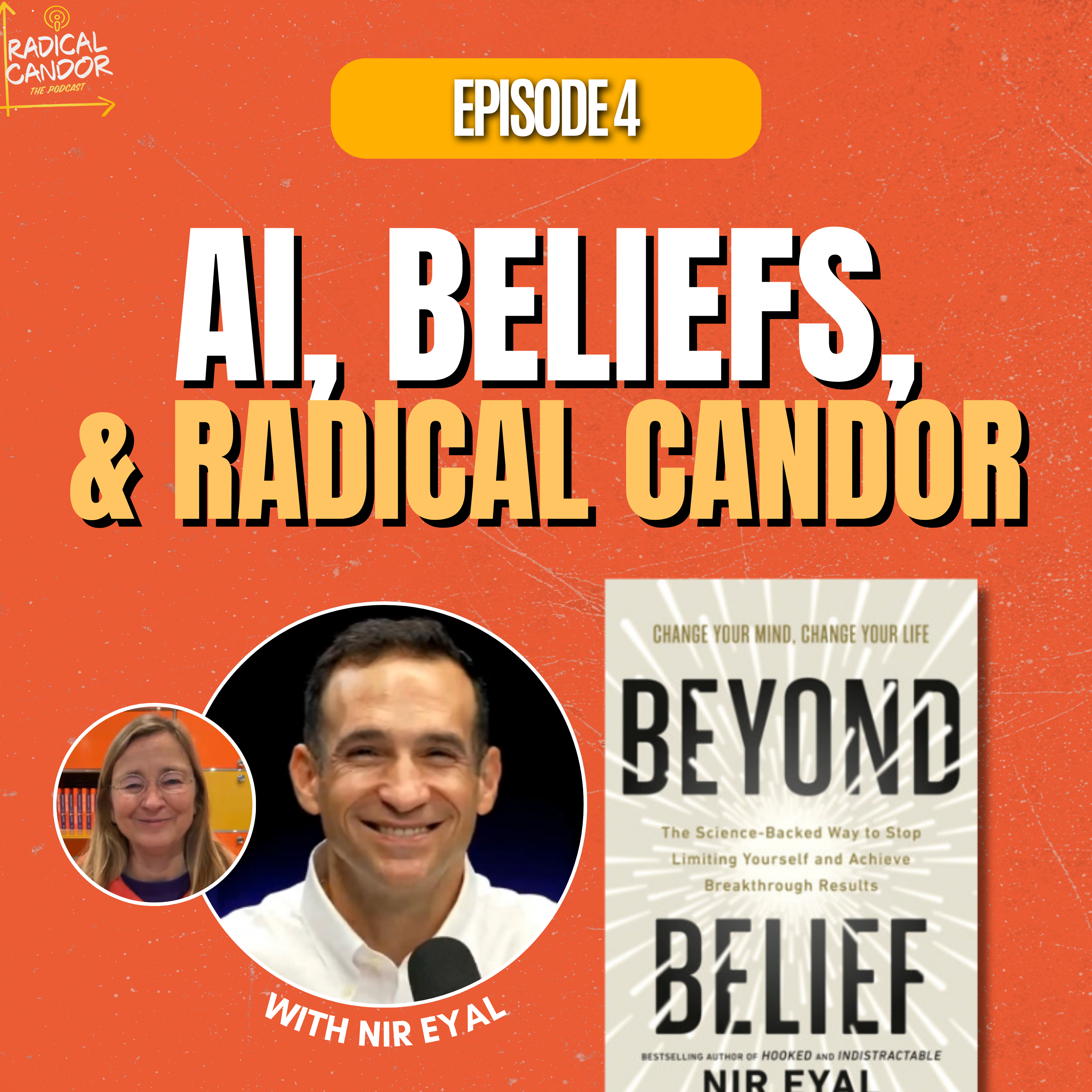
Why We Don’t Do What We Know We Should: Beliefs, Habits, and AI Practice with Nir Eyal
Are Your Beliefs Running Your Leadership? What if the reason you’re not doing what you know you should do isn’t discipline, intelligence, or even...
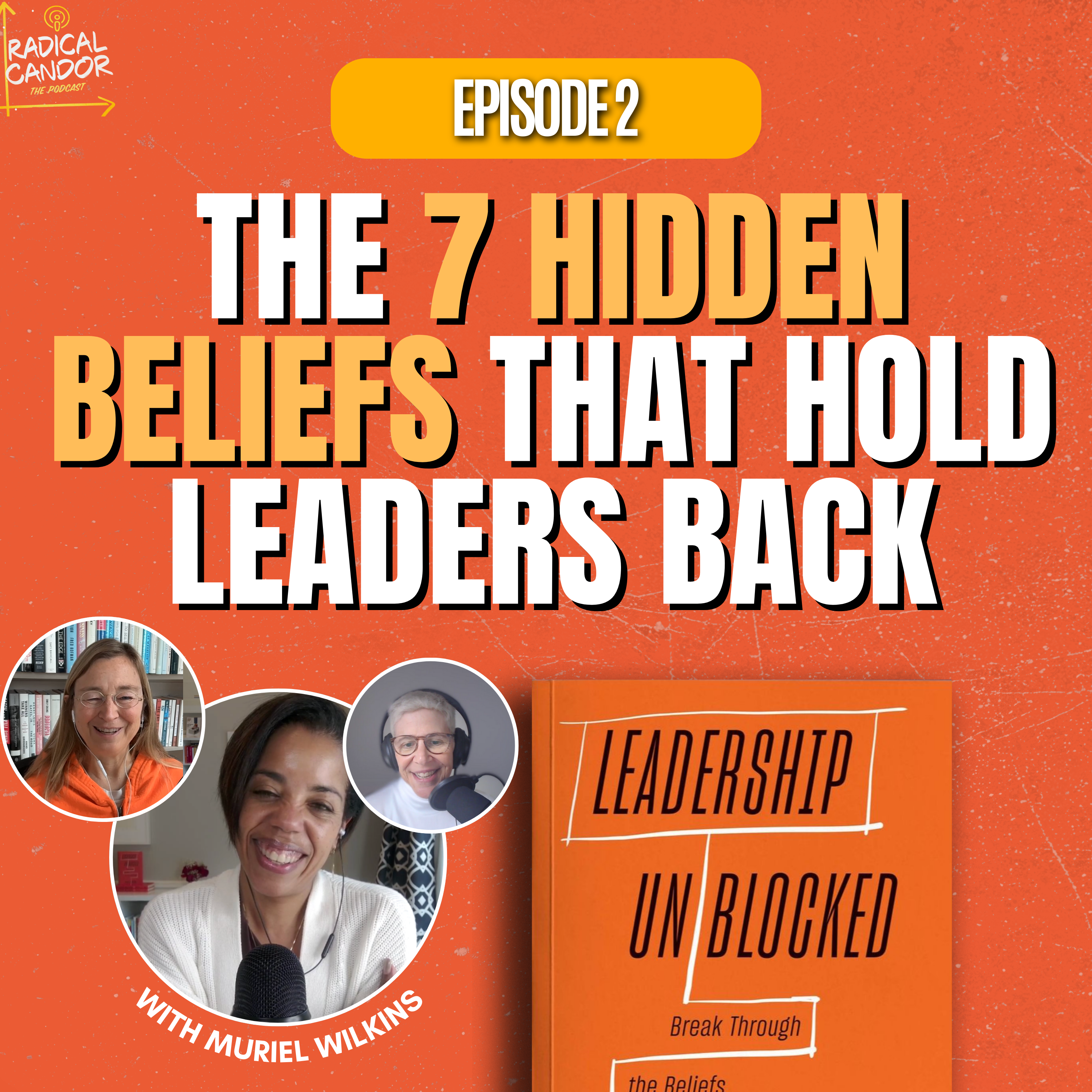
Leadership challenges don’t usually stem from a lack of effort, intelligence, or commitment. More often, they come from something harder to see: the assumptions leaders carry about themselves, their teams, and what it takes to succeed.
In this episode of The Radical Candor Podcast, Kim Scott and Amy Sandler are joined by Muriel Wilkins, executive coach to senior leaders and C-suite executives, host of the Coaching Real Leaders podcast from Harvard Business Review, and author of Leadership Unblocked. Muriel has spent decades helping high performers navigate inflection points in their leadership journeys. In this conversation, she shares what she’s learned about the hidden beliefs that quietly shape behavior, and why sustainable change begins beneath the surface.
What emerges is a clear throughline: leaders don’t get stuck because they aren’t trying hard enough. They get stuck because they’re solving the wrong problem.
Watch the episode:
Why does change feel so hard — even for high performers? Often, it’s not a skills gap. It’s a belief gap.
Muriel Wilkins shares seven “hidden blockers” — unexamined assumptions about control, urgency, belonging, and competence — that quietly shape how leaders show up. Kim Scott and Amy Sandler explore how these beliefs surface in everyday moments, from feedback conversations to high-stakes decisions.
The core insight: sustainable change doesn’t start with doing more. It starts with noticing what you’re believing.
.png?width=617&height=347&name=Muriel%20Wilkins%20-%20YT%20Thumbnail%20(2).png)
Here is your lightly cleaned version — filler words removed, grammar tightened, meaning preserved, and all timestamps kept exactly as provided.
[00:00:04] Kim Scott: Hello everyone, and welcome to the Radical Candor Podcast. I'm Kim Scott.
[00:00:09] Amy Sandler: I'm Amy Sandler. We are so excited to welcome back to the podcast Muriel Wilkins. Muriel is a sought-after C-suite advisor and executive coach with a 20-year track record of helping senior leaders take their performance to the next level. She’s host of the fantastic Harvard Business Review podcast Coaching Real Leaders and co-author of the book Own the Room.
[00:00:33] Now, if you're a listener of the Radical Candor Podcast, you know it was such a great episode the last time Muriel joined us. And since then, Muriel, you've been really busy. You've been shortlisted for the 2025 Thinkers50 Coaching and Mentoring Award, and you've published your newest book, which we love. It’s called Leadership Unblocked: Break Through the Beliefs That Limit Your Potential. It’s going to block my face for a moment if you're watching the video, but we’re going to talk about unblocking our hidden beliefs. So welcome, Muriel.
[00:01:10] Muriel Wilkins: Thank you so much. I am delighted and excited to be here.
[00:01:16] Kim Scott: We’re really looking forward to our conversation today.
[00:01:19] Muriel Wilkins: Me too.
[00:01:20] Amy Sandler: We always like to ask, especially as an author, what motivated you to write this book?
[00:01:31] Muriel Wilkins: First of all, I still get heart flutters when people associate the word “author” with my name. Even two books in, I don’t quite identify with it. I had no plans to write another book. The last one was in 2013. I said I was one and done—never again. And here I am.
[00:01:50] It came from an observation I was making not only about my clients but also about myself. We were trying to create change and growth, but the results weren’t sustainable. We were very action-biased, myself included. We would move quickly to action, and six months later we’d be right back where we started.
[00:02:17] I became curious about that. What I discovered is what I write about in the book.
[00:02:26] Amy Sandler: Before we get into hidden beliefs as blockers, let’s talk about bias to action. Why are leaders biased to action? Where’s the superpower in that?
[00:03:00] Muriel Wilkins: It’s not that we shouldn’t have a propensity to move to action—that’s how we get things done. The issue is when that’s all we focus on. We may not be optimizing what we’re capable of.
[00:03:23] High achievers are go, go, go. When we want to change something, we immediately ask, “What are the three things I need to do?” But research shows it’s just as important—if not more—to recalibrate how you think about what you do, not just what you do.
[00:03:48] Without aligning your internal operating system with your actions, the cracks eventually show.
[00:04:04] Kim Scott: As a coach, spouse, and parent, I’ve had to learn not to jump straight to “Here are the three things you should do.” I’ve had to slow down and ask: Does this person want me to listen? React? Solve? I used to jump too quickly to fixing.
[00:05:08] Muriel Wilkins: When you pause like that, you’re asking: What assumption is this person making about what they need from me? And what assumption am I making that drives me to fix it?
[00:05:18] My daughter once said to me, “Mommy, I’m not asking you to do anything. I’m just asking you to listen.”
[00:05:36] Kim Scott: When someone you love tells you that, it changes how you show up at work. I still hear that voice when I’m tempted to solve.
[00:06:01] Amy Sandler: I’ve noticed that moving quickly to solve can also help us escape discomfort. Sitting in uncertainty feels harder than acting.
[00:07:09] Muriel Wilkins: Absolutely. Acting gives us comfort through a sense of control. And we’re often trying to protect three fundamental human needs: to feel worthy, to feel connected, and to feel safe.
[00:07:59] When I rush to fix someone’s problem, it sounds like it’s about them, but it’s about me. It’s about my discomfort and my fear that things might go wrong.
[00:08:27] That’s a belief and a narrative I’m telling myself.
[00:08:33] Kim Scott: It’s the ABC model. Something happens, we have a belief about it, and that belief drives consequences. Often the consequence comes from the belief, not the activating event.
[00:09:02] Muriel Wilkins: Exactly. It’s about integrating thinking and action so your actions align with beliefs that serve your outcomes.
[00:09:25] Amy Sandler: You call them “hidden blockers.” Why that term?
[00:09:48] Muriel Wilkins: Beliefs are assumptions—like the assumptions in a business plan. We don’t know they’ll come true; they’re informed guesses.
[00:10:21] I reviewed 300 clients over 20 years and looked for common assumptions that held them back from sustainable growth. Seven surfaced repeatedly. They’re hidden because they’ve been key to our success. They’ve become habits, and we’re no longer conscious of them. The problem is our definition of success has evolved, but the beliefs haven’t.
[00:11:48] Kim Scott: What are the seven?
[00:12:09] Muriel Wilkins: The one popping for me right now is “I need it done now.” There’s a fear underneath that things won’t go well if I start the year with loose ends.
[00:13:10] I had to reframe: January 1 is just another day. Everything will be okay.
[00:14:21] Trust that what truly needs to get done will get done.
[00:14:38] Kim Scott: I once threw away my to-do list and told myself: If you’re not dropping some balls, you’re not working on the most important things.
[00:15:16] Muriel Wilkins: For me, it’s not about things getting done—it’s about fearing I’ll feel out of control later. That script came from childhood. But that script doesn’t serve me now.
[00:16:21] Kim Scott: Andy Grove wrote, “My day is over when I am tired.” That was liberating.
[00:16:47] Amy Sandler: As we get better at this, we may still have the same thoughts, but we notice them sooner. How do you build that muscle?
[00:18:14] Muriel Wilkins: Most people don’t come to coaching saying, “I need to work on my beliefs.” They come because something feels off—externally or internally.
[00:19:17] Start with curiosity. Instead of asking, “What do I do?” ask, “What is going on?” Specifically: What am I thinking about this situation?
[00:20:10] It doesn’t take extra time. It’s about building awareness.
[00:21:10] Kim Scott: I realized I was late getting home because I believed I had no agency to say no. I wrote on a Post-it: “You have two legs and a butt. You can walk out.”
[00:21:43] Muriel Wilkins: That’s “I can’t say no,” one of the seven blockers. Your reframe gave you agency.
[00:26:54] Amy Sandler: What are the seven hidden blockers?
[00:27:13] Muriel Wilkins:
[00:28:27] As I wrote each chapter, I realized I carried every one of them.
[00:29:30] Once you recognize a belief, you can see it when it shows up and decide what to do about it.
[00:31:19] I had a client whose feedback was that he shut people down in meetings. His belief was “I know I’m right.” The question was: What are you thinking when you interrupt? He believed he already had the answer.
[00:33:14] Questioning the belief is key. Ask: What am I thinking that’s leading to this outcome?
[00:34:41] When clients start anticipating my questions, I know we’re done. They’ve built the capacity to coach themselves.
[00:35:21] Your ability to coach others is capped by your ability to coach yourself.
[00:37:59] If you notice you’re not going down the path you want, that’s your opportunity. Either you decide to change, or you get tired of being tired.
[00:38:49] The challenges don’t go away. But if you come back to them differently, that’s growth.
[00:40:16] I had a client who believed “I don’t belong here.” I asked, “Are you in the meeting?” He said yes. I asked, “What tells you you don’t belong?” He realized the invitation had already come—he was hired.
[00:42:05] Ask simple questions about what’s right in front of you. And ask without attachment to the answer.
[00:44:27] If you’re afraid to ask because you won’t like the answer, you’ll keep returning to the same place.
[00:47:17] The Buddha’s story of the two arrows: the first arrow is life’s pain; the second arrow is our reaction. Pain is inevitable. Suffering is optional.
[00:47:59] Leaders can face challenges with more ease if they don’t add the second arrow.
[00:48:51] This year, I’ve leaned into community. I used to think I could do it all alone. Now I see how important belonging is.
[00:49:59] I’ve been invited to more in-person speaking engagements lately. It feels aligned.
[00:52:17] I’ve realized that instead of forcing outcomes, I can allow alignment. When internal shifts happen, external alignment often follows.
[00:53:19] You can find me at murielwilkins.com, on LinkedIn, or on Instagram @CoachMurielWilkins.
[00:53:33] Amy Sandler: For show notes, visit radicalcandor.com/podcast. Please rate and review. Share the episode. Email us at podcast@radicalcandor.com.
[00:54:10] Thank you, Muriel, for helping us unblock ourselves and become better leaders.
[00:54:15] Muriel Wilkins: My pleasure.
[00:54:16] Kim Scott: Take care.
Follow Us
Instagram
TikTok
LinkedIn
YouTube
Episodes are written and produced by Brandi Neal with script editing by Amy Sandler. The show features Radical Candor co-founders Kim Scott and Jason Rosoff and is hosted by Amy Sandler. Nick Carissimi is our audio engineer.
The Radical Candor Podcast theme music was composed by Cliff Goldmacher. Order his book: The Reason For The Rhymes: Mastering the Seven Essential Skills of Innovation by Learning to Write Songs.
Are Your Beliefs Running Your Leadership? What if the reason you’re not doing what you know you should do isn’t discipline, intelligence, or even...
What if the advice to “just be yourself” is quietly sabotaging your leadership? What if the reason your feedback lands poorly, your team feels...
.png)
What do you do when the career path that once felt clear no longer is? What if that stuck, uneasy feeling in the middle of your career isn’t a...
Share your perspective
Leave a comment below.