How Practicing Radical Candor Can Help Remove the Stigma Around Mental Health Discussions at Work
*This post about Radical Candor and mental health discussions at work was contributed by Chris Harley, an expert in mental health with a background...
7 min read
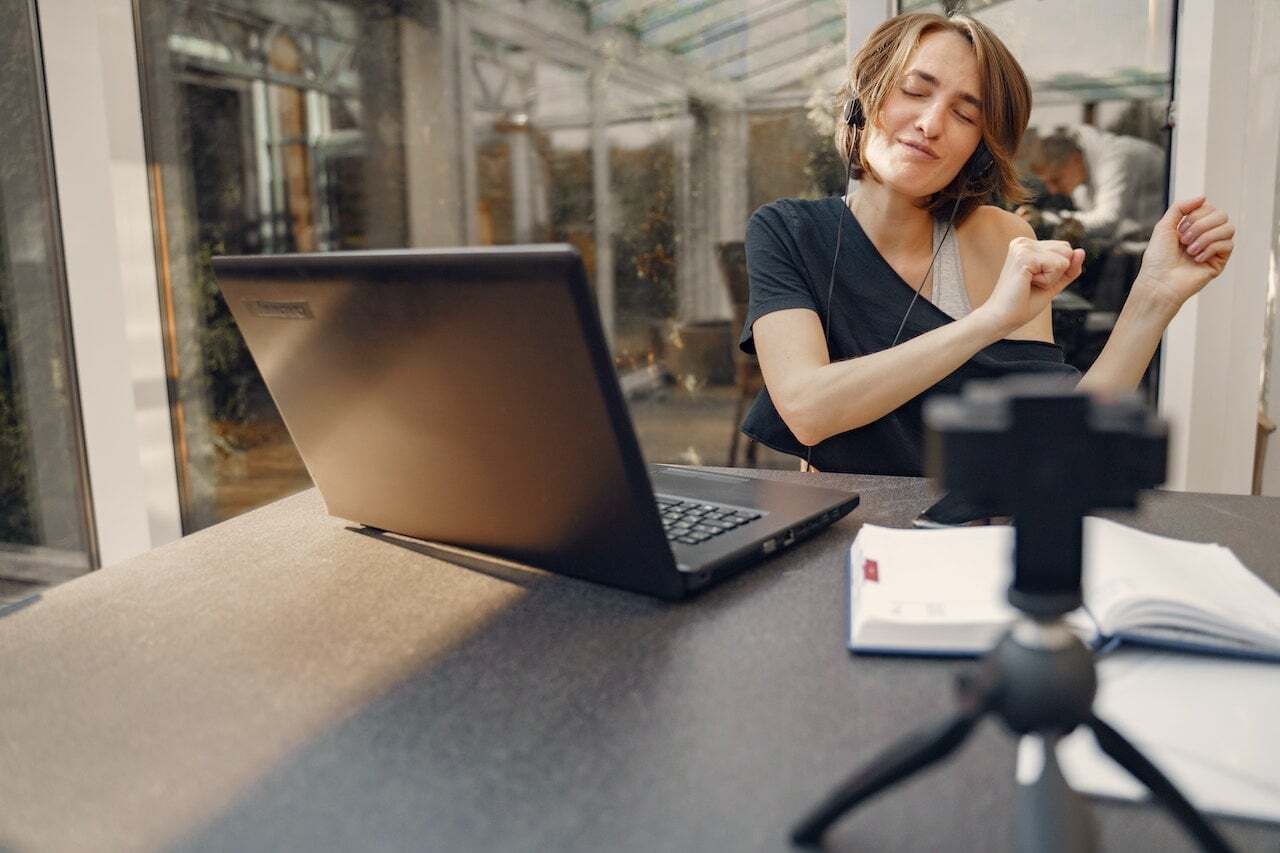
If you're not already talking about mental health at work, it's time to start. Even though I have a wonderful job with amazing people who walk the Radical Candor talk, I have never felt so exhausted or felt less productive.
While I’ve been working from home for over a decade, I have spent more time in video conferencing meetings during the past three years than I have with actual three-dimensional humans.
I started asking myself why I seem to struggle to complete simple tasks or maintain focus for any significant length of time (you don’t want to know how long I put off writing this article), and I realized that in all of my previous work-from-home jobs, I often worked asynchronously and rarely, if ever, used video conferencing tools like Zoom.
I used the phone. Yes, you can actually use it to make calls!
What's more, in the before times, I traveled often and socialized primarily in the real world versus the virtual one.
If you, like me, are feeling the effects of the last few years begin to weigh on your mental health, you're not alone.
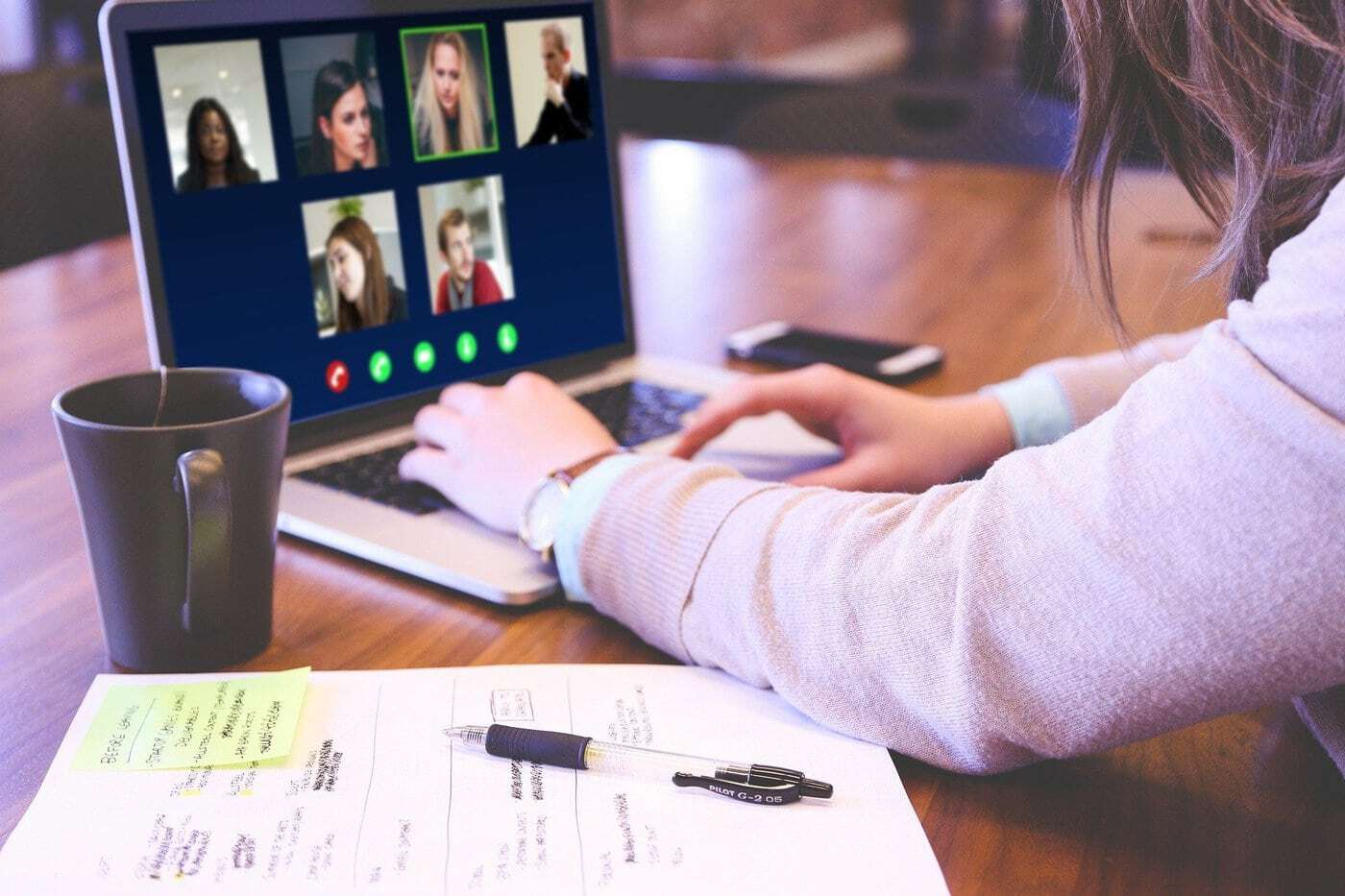
A 2022 study published by the journal CyberPsychology, Social Networking, and Behavior noted that the increased time we're spending on Zoom and other videoconferencing apps can lead to feeling anxious, socially isolated, or emotionally exhausted.

In fact, according to the Wall Street Journal, even the CEO of Zoom has experienced Zoom fatigue.
Other factors aside from social isolation can make constant video meetings triggering for some folks.
In the first Zoom fatigue peer-reviewed study of its kind published in the journal Technology, Mind, and Behavior in early 2021, Jeremy Bailenson, director of Stanford University’s Virtual Human Interaction Lab notes, “Excessive amounts of close-up eye gaze, cognitive load, increased self-evaluation from staring at video of oneself, and constraints on physical mobility” can make you feel a little bajiggity.
Personally, the excessive self-evaluation (Do I really look like that when I’m talking? Why didn’t anyone tell me I don’t have an upper lip when I speak?) and the constraint on physical mobility are the factors that contribute most to my Zoom distress.
If you are experiencing Zoom fatigue or other work-related stress, I crowdsourced the Radical Candor team for some remedies.
Talking on the phone is making a comeback. If you haven’t used your phone for actual talking in years, now is the time to get reacquainted with it.
“When it comes to your meetings, what kind of conversation does this actually need to be? Lately, I have been having my 1:1s with Jason (my manager) on the phone; I like to be by the computer so I can take notes, but we don’t need to do video,” says Radical Candor Lead Coach & Podcast Host Amy Sandler.
“Or we’ll start with video to say hi and then switch to audio-only. If there is something to discuss that I don’t need to take notes on, I enjoy walking while having these calls with Jason.”
Kim Scott, Radical Candor and Just Work author and co-founder of Radical Candor, seconds this. “Offer to do a walk and talk instead of a Zoom and talk,” she says.
If it’s a one-on-one meeting and/or you don’t need to share your screen to accomplish your goals, opt for a phone call instead of a video meeting.
If your boss or co-workers are under the impression that video calls are more productive or create a stronger connection, researchers at Carnegie Mellon University debunked that theory in a 2021 study that found that phone calls actually facilitated more collaboration than video meetings.
For me, a phone call removes the excessive self-evaluation from the equation, too. This means I am better able to pay attention to what's being said.
Between work being hella stressful ( a new survey from Resumelab found that 66% of respondents have experienced work-induced mental health problems in the past two years) and the general dumpster-fire state of the world, you might be wound a little tight these days.
You know that long-term stress is bad for your physical and mental health. And while I know it’s akin to finding a unicorn, try to develop a personalized relaxation routine that helps you unwind at the end of the day.
“I have instituted a nighttime routine to help me decompress every day — some quiet time for me to be with myself,” says Radical Candor Operations Director Nora Wilcox.
“At the same time every night, I pour a cup of tea, grab a piece of chocolate (Hu Kitchen & JoJo's are my fave) and either read a book or watch a couple of episodes of whatever I'm streaming. I have been enjoying finding shows on Netflix that have lots of seasons so I have something I can watch over a long period of time.”
My relaxation routine includes a lot of true-crime shows, a daily breathwork meditation practice and daily swimming when the weather cooperates. I also see a therapist every week.
“My weekly Qi Gong sessions with Fabrice and another friend have provided me with tools to improve my posture, overall well-being, and energy levels,” she says.
“What I love about Qi Gong is that it has been a powerful counterweight to all the time that I am spending sitting at my desk in front of the computer. Even though I am doing these sessions over Zoom, there are a few differences between them and a typical Zoom meeting:
After a year of study, my favorite practice remains yawning and then laughing. Yes, you can try that one at home!”
For Kim, it’s doing things that get her out of her head and allow her to just chill. “I spend more time watching mindless T.V. shows than I ever have in my life,” she says.
If being camera-ready five days a week is making you anxious, consider picking one day each week when you either don’t schedule any meetings or don’t turn on your camera.
“I have recently started to have call-free Fridays whenever possible,” Nora says. “I have found that I wrap up the week feeling much less anxious about all the things that didn't get done when I have that day to catch up on stuff and to just be off-camera the whole day. It also enables me to only book internal calls or other priority calls on this day, as needed.”
How to make meetings less awful >>
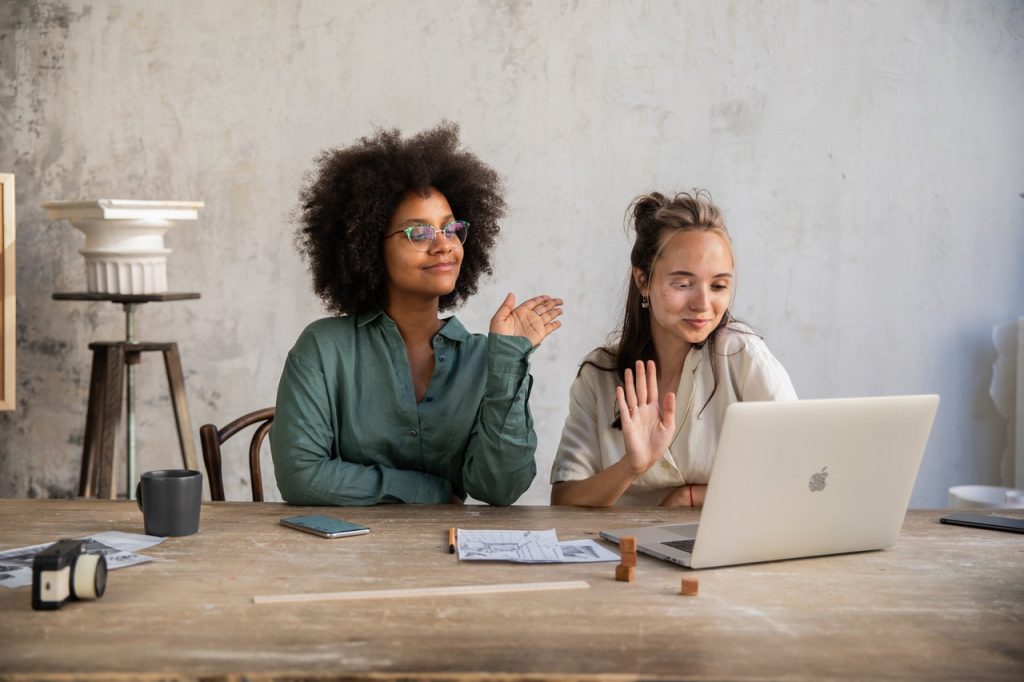
Maybe your instinct during meetings is to jump right into the agenda and get the meeting over with as fast as possible. A better approach might be to actually take some time at the top of the meeting to check in with other folks on the call versus plowing ahead with your list.
“Try to connect at a human level about a shared experience,” Kim suggests. “Personally, I try to share something about how I'm coping with these times and to learn something about how others are coping.”
We make a point of doing this at Radical Candor, which is why everyone on the team knows my downstairs neighbors think my roommate and I walk and talk too loudly.
One of the best ways to rid yourself of accumulated stress from being stationary all day is to move your body.
“I make sure I have at least one hour a day to get outside and take a walk,” Kim says. “This has always been really important for my mental health but it's more important than ever now.”
Amy also touts the benefits of walking and she makes a point to play an active game of fetch with her dog when she has a few minutes in between meetings.
Radical Candor CEO Jason Rosoff can often be found starting or ending his day with a ride on his Peloton bike. I like to do 20 minutes of exercise in the morning and then go for a walk after work in the evening.
Why you should put 'Think Time' on your calendar >>
Learn how to talk about mental health at work >>
If there is a lack of awareness about mental health at your workplace, and it feels safe for you to do so, there are some things you can do that will improve the well-being of everyone.*
*Sourced from the CDC's Mental Health in the Workplace resources.
You can also propose allowing each team member to schedule restorative mental health days to unplug, relax and recharge.
@kencoleman Crappy leaders create a crappy work environment, and it’s bad for those who deal with the fallout. According to a new study by The Workforce Institute at UKG, 69% of people said their managers had the greatest impact on their mental health. 71% say stress at work negatively impinges on their home life, 64% say it detracts from their wellbeing, and 62% say it degrades their relationships. On the flip side, when people report a positive work environment, 63% say they are committed to their work, and 80% say they’re energized. Leaders need to wake up to this reality and focus more on people. Productivity and profits will improve when leaders improve on caring for people. #leaders #leadership #workenvironment #workculture #workculturematters #menatlhealth #careertok #careertiktok #leadertok ♬ original sound - Ken Coleman
If your manager is having a negative impact on your mental health, it's time to look for a new job. And so don't end up replacing one bad boss with another, you can listen to our How to Choose a Radically Candid Boss podcast episode for more information about how to get the boss you want.
If you need more help, and your employer has an employee assistance program, take advantage of it. In addition, there are myriad resources available for finding a therapist, including Psychology Today, Octave (not available in every state), your health insurance directory, these top-rated providers, and Mental Health America.
If you need resources for mental health support at work in the U.S., Mental Health America offers toolkits for employees and employers. The Center for Workplace Mental Health offers information about anxiety in the workplace.
If you or someone you know is seeking help for mental health concerns, visit the National Alliance on Mental Health (NAMI) website, or call 1-800-950-NAMI(6264). In an emergency, contact the National Suicide Prevention Lifeline at 1-800-273-TALK(8255) or call 911.
————————————————————————————————————————————————————————————–
This post was updated May 17, 2023.
*This post about Radical Candor and mental health discussions at work was contributed by Chris Harley, an expert in mental health with a background...
March 2, 2020: I finished a Radical Candor keynote at the airport hotel in Newark, NJ; but instead of going to Miami to deliver another keynote, I...

By Melissa Andrada, (Mel — she/they), a Candor Coach, DEI & Mental Health strategic consultant, leadership coach, workshop facilitator, and...
Share your perspective
Leave a comment below.