 Kim Scott
Speak Truth to Power by Embracing the Principles of Radical Candor
Brandi Neal is the Radical Candor podcast writer and producer, and director of content creation for Radical Candor. She has 20 years experience as a...

The pressure to be silent comes in a dizzying array of disguises, internal and external. Here are some common excuses or rationalizations I’ve used for remaining silent when it would have been better for me to speak up.
My purpose in writing this is not to tell you that you “should” speak up. You may have very good reasons not to respond to bias, prejudice or bullying when they are directed at you.
But I have observed over the course of my career that I too often defaulted to silence, and, as Audre Lorde warned me, my silence did not protect me.

One of the reasons I wrote Radical Candor was to confront my deeply ingrained tendency to remain silent when it would be better for everyone if I spoke up. That instinct is hardwired into my brain, probably a result of all the times as a child I was told, “If you don’t have anything nice to say, don’t say anything at all.”
But I’ve learned that I’m not doing anyone a favor by ignoring problematic behavior. It’s bad for the other person, whom I’m ostensibly trying to protect because the person is “nice.” If someone says something that is biased and I don’t point it out, that person is going to keep saying it until one day it gets them in real trouble.
It’s also bad for the other people on my team. The bias that is bothering me probably bothers others as well. And it’s bad for me. If I hear the bias enough, I’m likely to internalize it, so my failure to confront it becomes a form of self-harm.
With Radical Candor, I also wanted to change the way we define “nice.” It’s not actually nice to withhold critical feedback simply to avoid making someone feel bad. When we deliver critical feedback kindly and clearly, we help colleagues improve—and, in some cases, avoid being fired. Now that’s nice.
In truth, silence in such situations, far from being nice, is little more than a selfish and ultimately unkind attempt to avoid conflict.
When I explained this idea in Radical Candor, I used examples such as pointing out to people that they had spinach in their teeth or their fly was open. Most people would agree that it’s uncaring not to point those things out. But if someone makes a casually sexist or racially biased remark or uses “gay” as a pejorative or refers to someone using the wrong pronouns, our instinct is often to let it slide rather than confront it.
And yet these are the moments that truly call for Radical Candor. If you care about your colleague who said the problematic thing, you don’t want them to keep saying it. And if you care about the other people on your team, you don’t want them exposed to harmful comments and attitudes.
This is not as difficult when the problem is bias. Prejudice and bullying can be less comfortable to confront. But if what a person is saying or doing violates a norm or a rule or a law, I am doing them a kindness when I say “It is degrading to . . .” or “It is a policy violation to . . .” or “It is illegal to . . .” And in most cases, I am protecting myself and the others on my team by speaking up.
Same with bullying. Bullying that runs unopposed escalates until the bully does real harm to me and others, and eventually, such bullying gets the bully into real trouble, but not before it has caused huge problems for everyone else. The world would truly be a better place if everyone confronted bullying early and often.
If I clam up in these moments out of concern for my friend’s or colleague’s feelings, I actually put the person at risk of greater harm. People rely on others to point out their mistakes. My failure to confront them prevents them from addressing a fixable problem. Not so nice of me after all.
Let’s say someone I like makes a comment that is off. Because the person is one of my favorite colleagues, I start to rationalize why the person said it. The person is older or younger, or from a different part of the country, or maybe the remark reflects religious beliefs. I don’t want to come down hard, hurt feelings, or expose the person to criticism or worse from colleagues and management. So I don’t say anything.
In Radical Candor, I called this Ruinous Empathy—a failure to deliver feedback for fear of hurting someone’s feelings. When gender is added to the equation, there’s another dynamic as well: the tendency of many of us to feel the pain of men and dismiss the pain of women. In other words, I might feel that I have to tiptoe around the “fragile male ego,” even though such a thing is just a figment of my imagination.
Moral philosopher Kate Manne calls this himpathy. So perhaps the “I don’t want to hurt his feelings” argument is best characterized as Ruinous Himpathy.
Ruinous Himpathy is bad for me, bad for my colleagues, and even bad for the “him” in question. That’s why I’ve tried to eliminate the phrase “He’s a good guy” from my vocabulary. We all do good things and bad things. People who are committed to being good people want to know about the bad things they do so they can make amends and avoid doing them again.
Minimizing is a really common rationalization for keeping silent. But if it’s no big deal, why am I still thinking about it? And if it’s no big deal, then it’s also no big deal for me to correct it. Furthermore, if bias, prejudice, and bullying were rare, they wouldn’t be that big a deal. And yet I experience all three all the time—bias most often.
To combat the rationalization that such moments are no big deal, I think about the cumulative impact that experiencing these attitudes and behaviors and then ignoring them will have on me. The one thing may be not a big deal, but when it happens over and over, ignoring it becomes like a repetitive stress injury on my sense of agency.
Then I compare that to the cumulative impact on me of experiencing it and then responding. Sometimes people are mad, but often they are grateful. Responding has deepened more relationships than it has strained. This calculation leaves me more likely to respond.

I once worked with a man who tended to refer to the women in the office using derogatory words. I didn’t know him well, so I kept silent and told myself I’d talk to him about this once I got to know him better.
These things were irritating, but he was a creative, interesting person and I wanted to learn from him. But my annoyance was building. Meanwhile, he was pushing the boundaries.
When he got away with “girls,” he moved on to “babycakes” and “puddums.” I just rolled my eyes, but I was getting madder and madder, and he was getting worse and worse. Then one day he walked by me and said, “Hey, toots.” I went absolutely apeshit.
The damage wasn’t irreparable, but it took some time for us to feel comfortable around each other again, and some more time for us to be able to laugh about the incident.
It would’ve been so much better for our relationship if I had responded the first time. When I express my anger early, it’s usually a small thing. When I repress my anger, it usually blows up into a big thing.
A common technique of bullies is to punish anyone who calls them on their behavior. So the fear of retribution is not irrational.
At the same time, I have had a big negativity bias when it comes to confronting injustice. I have consistently overestimated the risks and underestimated the benefits. As a result, I’ve feared challenging injustice more than I needed to.
Over time I’ve found the cost of not speaking up is also real—for me and for my colleagues. When I’ve stopped to ask myself how likely retribution really is, the answer is often not that likely. Your answer may be different. But ask yourself the question.
I get questions like this from young women all the time:
“The literature shows that when women are funny, they don’t get taken seriously. Is humor dangerous for me in the office? Will being funny hurt my reputation?”
“This study shows that when women negotiate hard, they are punished. Will being a good negotiator hurt my reputation? Should I quit negotiating so hard?”
“When I am as aggressive as I must be to get the job done, I get a reputation for being ‘abrasive’ or ‘not likable’ and dinged in my performance review. Should I just quit? I can’t succeed in this catch-22.”
All these questions make me want to scream, “Nooooo! Do what you have to do to combat bias; don’t conform to it. Don’t allow it to make you less than you are.”
The worst thing you can do for your career and your reputation in the long term is to hide your talents or suppress your voice or not do your best work. But that is exactly what bias, especially the “likability” bias, pressures us to do.
My advice? If you’re funny, be as funny as you can be, even if you read an article that says that when a woman is funny, she’s taken less seriously; if you’re a good negotiator, negotiate, and if you are punished for it, use those negotiation skills to go get a new job; if you must be aggressive to get the job done, be aggressive and confront the “she’s abrasive” barbs by taking a few moments to show you care; if you know what you’re talking about, don’t pretend you don’t just because the people in the room might prefer the experts to be men.
As Audre Lorde warned me, my silence did not protect me.
As Target’s chief diversity officer Caroline Wanga explains eloquently, you can’t be great at your job if you can’t be who you are at your job, and you are well served to focus first on earning credibility at the basics of your job in order to accomplish everything you want to accomplish. Focus on being great at your job, staying true to yourself, and building real relationships; if you do that, a good reputation will follow.
A good reputation is the result of being your best self, not something you can achieve by trying to be what you think others want you to be.
One thing that will help you get better at your job, build better relationships on the job, and be yourself at work is feedback. Ask for criticism, don’t tune it out. But when what I got was biased feedback, I wish I’d challenged it rather than ignoring it. The rap that most bedeviled me, especially early in my career when I felt most vulnerable, was being called “not likable” or “abrasive.”
In my first job out of college, it was whispered that the CEO of the company called me a “pushy broad.” This was name-calling, not feedback. Being told I was “not likable” made it tempting to back off. But when I did, I didn’t do as well at my job, and, surprise, surprise, people didn’t like me any better. I liked myself best when I was doing my best.
And it turns out that when I liked myself, other people liked me better, too. I have found that when I confront the bias and hold my ground, I do better work, build better relationships, and wind up with a better reputation. Paradoxically it was learning not to care about my “likability” that made me feel more “likable.”
I’ll never forget a management offsite with one of my peers. We had to go around and describe one another with a word that began with the first sound of our first name. I braced myself for what he might say because we’d just worked on a project together and I’d been, well, intense about it. “Kim cares,” he said. “Some days you might wish she cared a little less. But she really cares. About the people and the work.”
At another company, I worked with a man who made the usual “Kim is abrasive” or “Kim is a pain in the ass” comments. But after about a year of working closely together, he explained my style to a new team member: “Kim really loves to debate. At first, you might think she’s doing it to drive you nuts. But she’s just trying to help you do great work.”
Don’t get pushed around by bias; push back on it!
————————————————————————————————————————————————————————————–
Download our free learning guides to start putting Radical Candor into practice.
Sign up for our Radical Candor email newsletter >>
Shop the Radial Candor store >>
Book a keynote or workshop >>

Brandi Neal is the Radical Candor podcast writer and producer, and director of content creation for Radical Candor. She has 20 years experience as a...
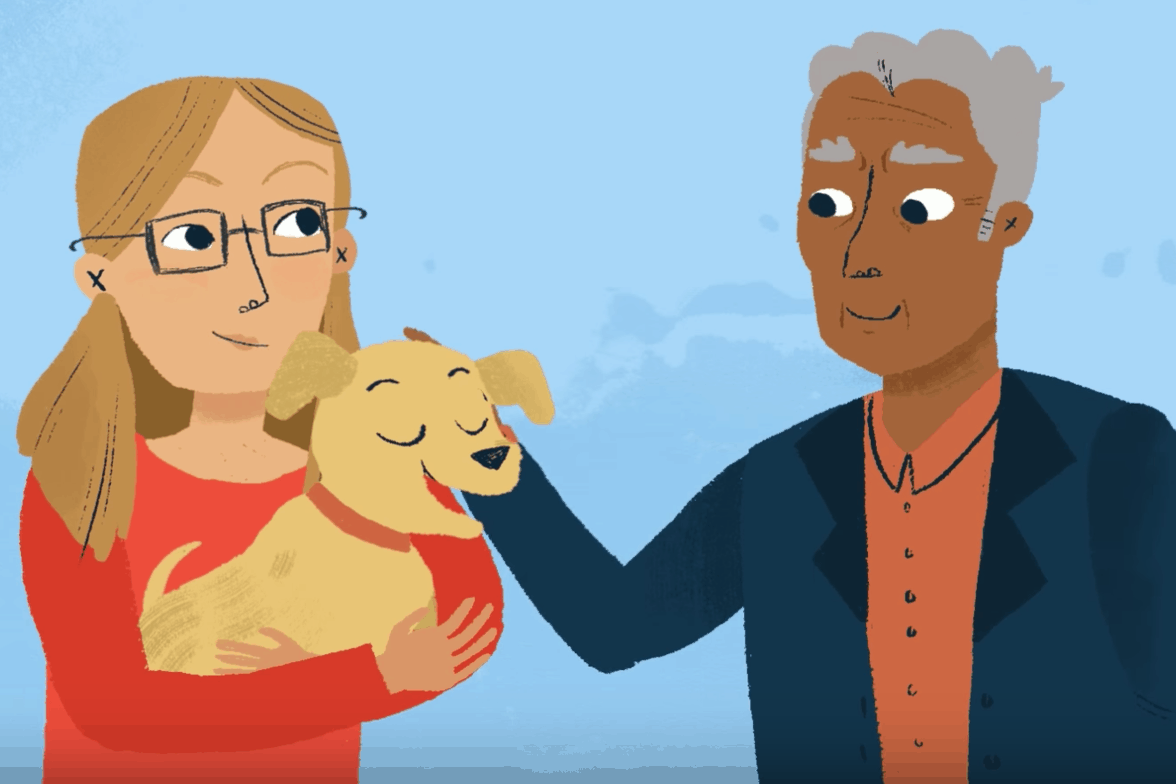
"I can see how Radical Candor works when I already have a relationship... but what about with people I barely know? Isn’t it too risky to give...
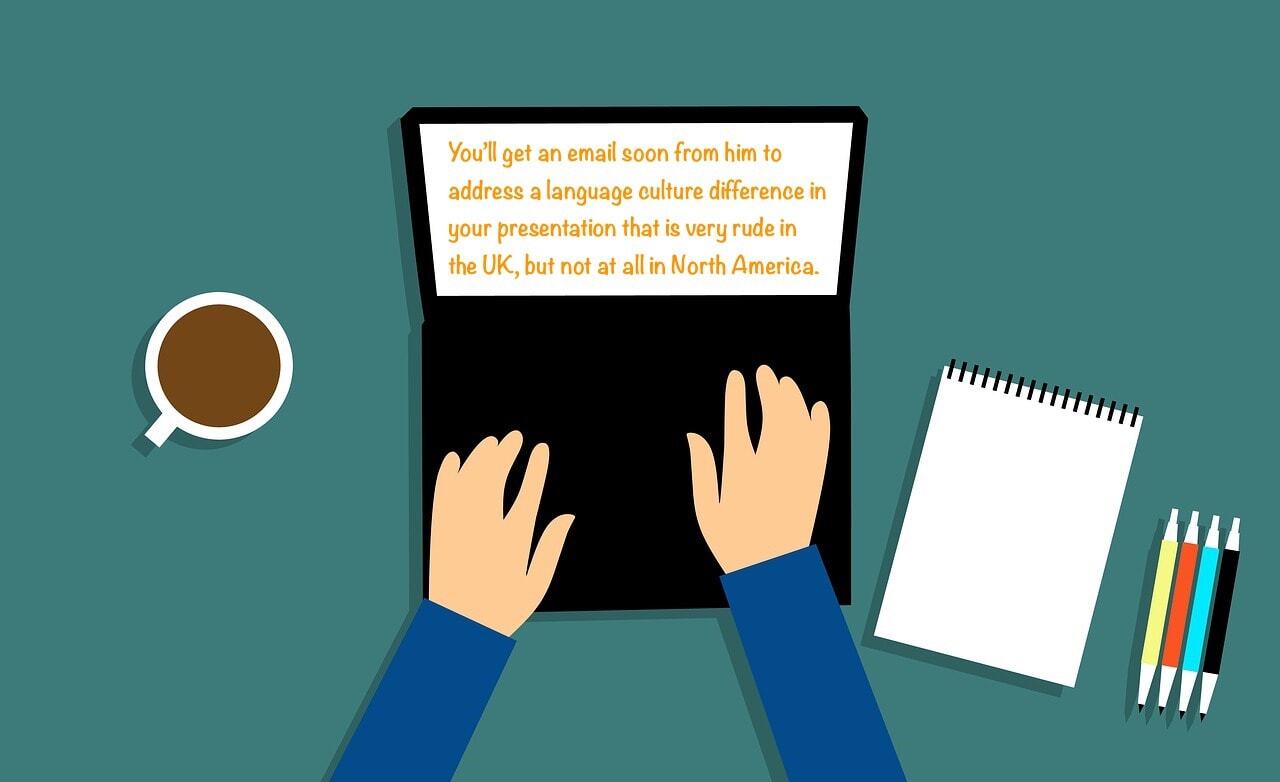
I spend a lot of time these days showing people how to put the Radical Candor framework of “Care Personally + Challenge Directly” into practice by...
Share your perspective
Leave a comment below.