 Kim Scott
The Myth of the Flat Organization: Why Collaboration, Not Collapse, Drives Innovation
Edited By Brandi Neal. Flat organizations are often touted as the future of efficient work. But when you remove managers and collapse hierarchies,...
The most important question, the question that goes to the heart of being a good boss, doesn’t usually get asked. An exception was Ryan Smith, the CEO of Qualtrics. I’d just started coaching him, and his first question to me was, “I have just hired several new leaders on my team. How can I build a relationship with each of them quickly, so that I can trust them and they can trust me?”
Very few people focus first on the central difficulty of management that Ryan hit on: establishing a trusting relationship with each person who reports directly to you. If you lead a big organization, you can’t have a relationship with everyone. But you can really get to know the people who report directly to you. Many things get in the way, though: power dynamics first and foremost, but also fear of conflict, worry about the boundaries of what’s appropriate or “professional,” fear of losing credibility, time pressure.
Nevertheless, these relationships are core to your job. They determine whether you can fulfill your three responsibilities as a manager:
If you think that you can do these things without strong relationships, you are kidding yourself. I’m not saying that unchecked power, control, or authority can’t work. They work especially well in a baboon troop or a totalitarian regime. But hopefully that’s not what you’re shooting for.
There is a virtuous cycle between your responsibilities and your relationships. You strengthen your relationships by learning the best ways to get, give, and encourage guidance; by putting the right people in the right roles on your team; and by achieving results collectively that you couldn’t dream of individually.
Of course, there can be a vicious cycle between your responsibilities and your relationships, too. When you fail to give people the guidance they need to succeed in their work, or put people into roles they don’t want or aren’t well-suited for, or push people to achieve results they feel are unrealistic, you erode trust.
Your relationships and your responsibilities reinforce each other positively or negatively, and this dynamic is what drives you forward as a manager, or leaves you dead in the water.
Your relationships with your direct reports affect the relationships they have with their direct reports, and your team’s culture. Your ability to build trusting, human connections with the people who report directly to you will determine the quality of everything that follows.
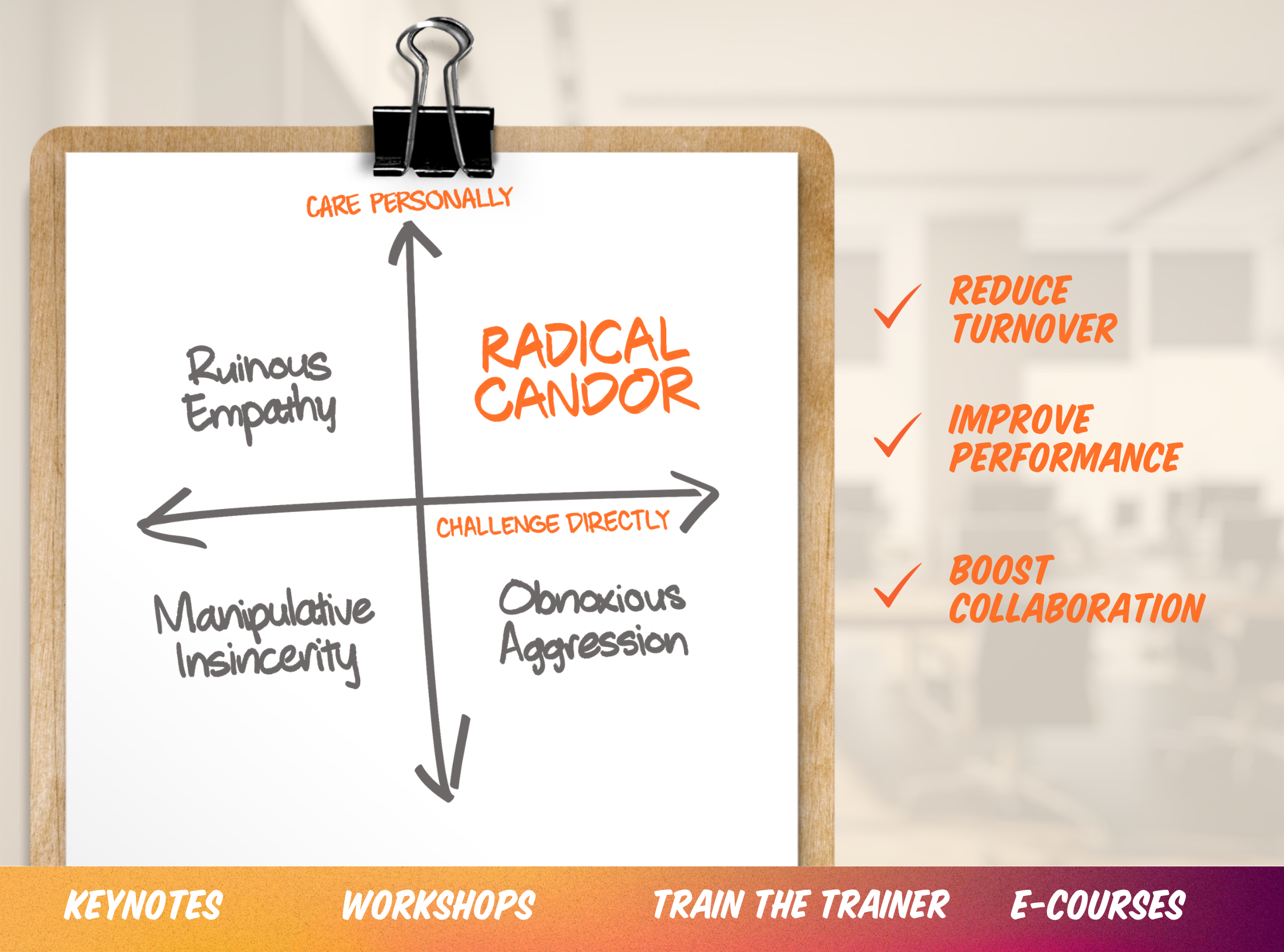
Defining those relationships is vital. They’re deeply personal, and they’re not like any other relationships in your life. But most of us are at a loss when we set about to build those relationships. Radical Candor can help guide you. It starts with caring personally and challenging directly at the same time, so the people who report to you know you have their backs and will tell them the truth.
The fastest way to build trust across a team is to learn these skills together. We’re booking Radical Candor keynotes and workshops for team off-sites now, and spots are filling up quickly.
.png)
Edited By Brandi Neal. Flat organizations are often touted as the future of efficient work. But when you remove managers and collapse hierarchies,...

Russ Laraway wrote this post about Care Personally examples and advice. The chief people officer at Goodwater Capital who also developed Career...

According to Gallup's Leadership and Management Indicator, only 21% of employees in the U.S. trust the leadership in their organization. In addition,...
Share your perspective
Leave a comment below.