What It Means to Care Personally About Your Team
Russ Laraway wrote this post about Care Personally examples and advice. The chief people officer at Goodwater Capital who also developed Career...
4 min read
Edited By Brandi Neal, Radical Candor podcast writer and producer, and director of content creation for Radical Candor. This article about Russ Laraway's Big 3 Leadership Framework has been adapted from the Radical Candor podcast S7, Ep. 5 transcript about the same topic.
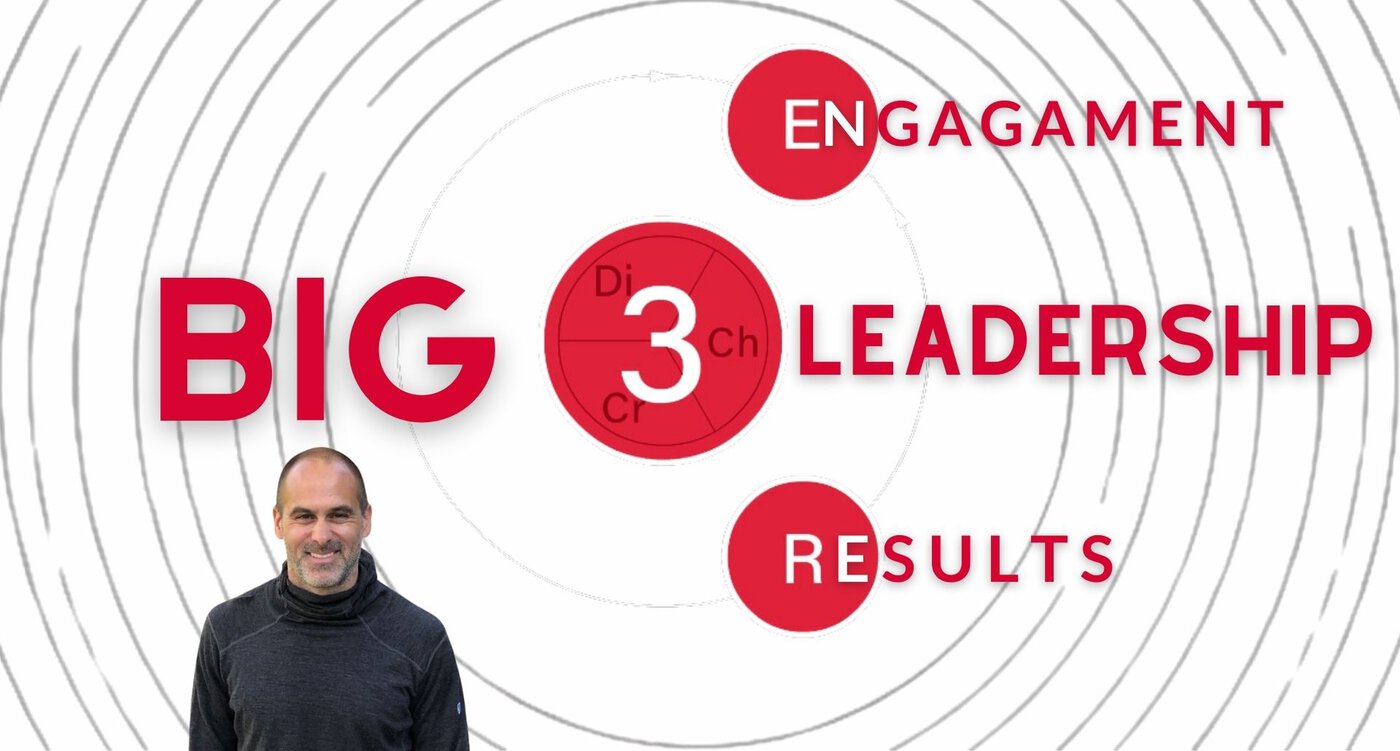
Leadership can often feel overwhelming. Balancing clarity, engagement, and team development is a tall order. But Russ Laraway, author of When They Win, You Win, distills leadership down to three core elements: direction, coaching, and career.
This simple yet powerful framework, backed by years of research, has the potential to transform team dynamics and outcomes, particularly when implemented alongside the principles of Radical Candor.
“The framework actually started with hundreds of conversations,” Laraway explained. “When I asked companies about their leadership challenges, three words came up consistently: direction, coaching, and career. But just because companies said it didn’t make it true, so we tested it.”
Laraway and his team analyzed specific manager behaviors under these three categories, conducting rigorous statistical regressions to measure their impact on employee engagement and business results. “We found these behaviors were highly predictive of success,” he said.
“The key is ensuring that every team member knows exactly what is expected and when it is expected,” he said. “Direction isn’t just about telling people what to do—it’s about subtracting until you get to the few things that really matter.”
Laraway emphasizes long-term purpose and vision as the backbone of direction, which cascades down into measurable quarterly goals and weekly priorities.
“If the manager doesn’t help people subtract work, who will?” he asked. Collaboration is also essential. “When employees help shape expectations, they’re far more likely to follow through enthusiastically,” he noted, referencing leadership expert Peter Drucker.
Scott added, “If you as a leader ask your team to set the goals, your job becomes helping them do less, not more. It flips everything on its head.”
“One of the most important things a manager can do is notice what their people are doing well and say it out loud,” Laraway said. He shared a vivid example from his time coaching Little League baseball, where he kept a notebook, affectionately called “The Book,” to record and celebrate players’ efforts.
“When you make it a habit to recognize good work, it builds trust. Then, when it’s time for a tougher conversation, your feedback is more likely to be received.”
Soliciting feedback is equally critical. Laraway shared a story about Philadelphia Eagles head coach Nick Sirianni, who changed his team’s offensive strategy after listening to input from his players.
“All he did was listen to his team, and now they’re on a ten-game winning streak,” Laraway said. “If it’s good enough for the NFL, it’s good enough for the workplace.”
Career development is the third pillar of Laraway’s framework. “It’s about helping your team see their future and supporting their growth in a way that aligns with both their goals and the needs of the organization,” he said.
Radical Candor emphasizes that one of the most important things you can do for your team is to understand what motivates each person and how their current role fits into their broader life goals.
This starts with having meaningful Career Conversations with your team members. The key to these conversations is combining genuine personal care with direct challenges that help people grow.
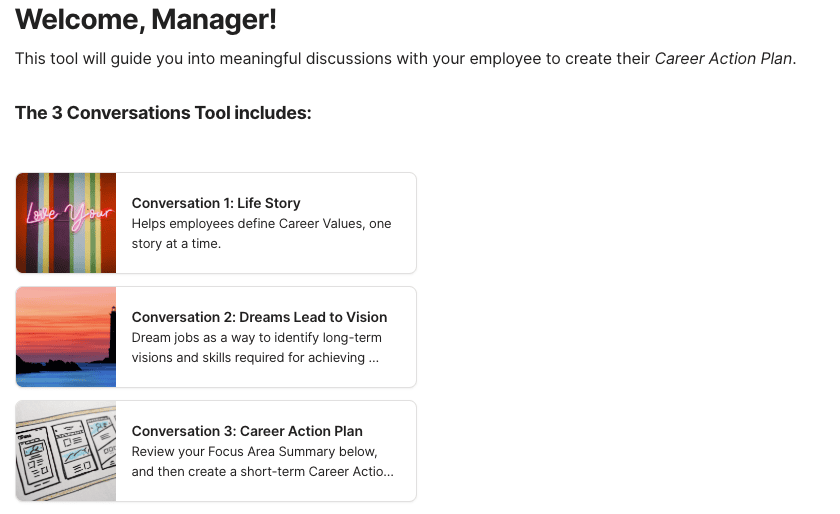
Laraway urged leaders to view Career Conversations as an essential part of their responsibility, not a nice-to-have. Here's a quick breakdown of the three Career Conversations.
Start with the Past – Life Story
The first step is to understand people’s motivations and values, the things that drive them. It’s amazing what you can learn from a person’s life story if you pay close attention to and ask about their major pivots and transitions. Why did they make them? What did those transitions teach them about what they love and hate about their work?
Talk about the Future – Dreams
Step two is understanding where people want to be at the pinnacle of their careers. Some are skeptical that our younger workers know what they want to be when they grow up. Everyone has dreams, though, and we just have to help people make them a little more tangible. Others worry about honing in on a single vision too early in their career. Don’t use those worries as excuses; there are ways to deal with them.
Plan for the Present – Career Action Plan
With an understanding of the past and the future, we’re only now able to build a relevant and thoughtful action plan with clear owners and clear timelines. We can see the path behind us, we can see the lighthouse in the distance, and now we just need to start laying some flagstones on the ground to connect the two.
You can use Laraway's Career Conversations tool to get started.
“The Big 3 may sound obvious, but they’re not easy,” Laraway said. “They require humility, vulnerability, and a willingness to prioritize the needs of your team over your own ego.”
Scott agreed, noting that leadership is a balancing act. “You have to lay down your power to create an environment where people feel safe sharing ideas and taking risks,” she said. “That’s how you get the best out of people.”
Ultimately, Laraway’s framework offers managers a clear, actionable roadmap for leading with purpose, building trust, and driving results. As Sandler put it, “It’s about making leadership simpler—not easy, but simpler.”

Russ Laraway wrote this post about Care Personally examples and advice. The chief people officer at Goodwater Capital who also developed Career...
Helping each person on your team grow in the direction of their dreams is part of being a kick-ass boss, and it's the key to successful growth...

Edited By Brandi Neal, Radical Candor podcast writer and producer, and director of content creation for Radical Candor. This article about how to...
Share your perspective
Leave a comment below.