What Does Gen Z Want at Work? Radical Candor is Just the Beginning
If you’re a manager today, you’re likely managing Gen Z workers, and asking yourself: What does Gen Z want at work? As Marketing advisor Chantel...
4 min read

By Lee Li, a project manager and B2B copywriter based out of Singapore
Remote work is more than just a luxury. The flexibility offered by working from home can increase efficacy and open doors to employees who otherwise are limited by office locations and hours.
One challenge posed by a virtual workplace, however, is the obstacle it presents in creating a workplace community that nurtures shared values and encourages open dialogues and challenging conversations about important issues. With a potentially widespread workplace, coworkers can have drastically different experiences, all without the benefit of being able to have “water cooler” chats about their lives with colleagues.
This is why it’s important for companies to create Employee Resource Groups (ERGs) to help boost productivity, inclusivity and anti-racism work in the virtual office, and help to create a diverse yet supportive and cohesive remote team.

One of the major changes that has occurred in regard to the way we work is how much easier it is to work from home. There are now more opportunities for making a full-time income from home than ever before. As a result, the virtual workforce has grown as teams of employees or contractors who previously worked in person together are now working predominantly online instead.
Unfortunately, Covid-19 has also exposed the many inequalities that exist in our society. It has highlighted the people who have access to adequate health care, flexible work policies, spacious living conditions and healthy resources for coping with stress, and those who do not.
Black, Indigenous and People of Color are more likely to have jobs as essential workers or work in fields adversely affected by the pandemic like retail and hospitality. Rampant unemployment levels coupled with continued exposure to the general public during the pandemic have combined to create a uniquely high coronavirus risk factor for many BIPOC families and communities.
Furthermore, statistics show that BIPOC are more likely to live in crowded urban settings, and are more likely to have unreliable access to health care. These factors have all played an important part in infection rates.
Black small businesses, which have statistically struggled to find investors even before the pandemic, have been disproportionately hurt by strict lockdowns and capacity restrictions. If BIPOC employees at your company are not experiencing these issues themselves, it’s important to keep in mind that many folks in their communities and families do.
After all, most companies have, in recent times, come to understand the value of having a diverse customer base. Corporations understand that most people react positively to inclusivity and compassion when incorporated in their brand messaging. It’s time for these same corporations to embrace inclusivity and compassion in their workplaces, behind the door of boardrooms and in the very fabric of their company’s culture.
Instead of thinking how to adapt your brand’s style to your ideal customer profile, companies should focus on how to cultivate sincere values that will truly resonate with their customers and employees alike.
There has been a bombardment of compassionate coronavirus advertisements lately, and it’s most effective when it truly reflects the attitudes held by these companies toward their employees, rather than just empathy reserved for paying customers. Companies that truly want to practice what they preach must focus on building supportive communities and engage in anti-racist, pro-justice dialogue at all levels, not just in marketing.

To encourage an anti-racist virtual workplace, it’s important to bring remote workers together as part of an Employee Resource Group. Regular meetings for this group should be scheduled during the workday (usually monthly or biweekly). The community must exist for employees to exchange resources, offer support, commit to open dialogue and learn to give, receive and accept feedback using Radical Candor.
Like any group, ERGs should have clearly assigned leadership that reflects the diversity of the group they serve. These leaders must receive the support, funding and decision-making capabilities of true leaders. However, these ERGS must enable everyone to have a voice and to feel safe when speaking out, as well as feel heard.
This can be as simple as enabling a chat function that everyone can contribute and comment on, or allowing certain subsegments of the group to have their own Facebook group or virtual meetings to discuss their own professional and personal goals.
The goal and mission statement of an ERG for a virtual workplace must align with the overall values of the company. The goal of an ERG is to facilitate clear communication between all levels of a company, from corporate leadership to entry-level workers.
Lastly, but most importantly, members must feel empowered to openly identify, confront and correct workplace racism, sexism and other forms of discrimination that can have lingering negative effects in an organization if left unheeded.
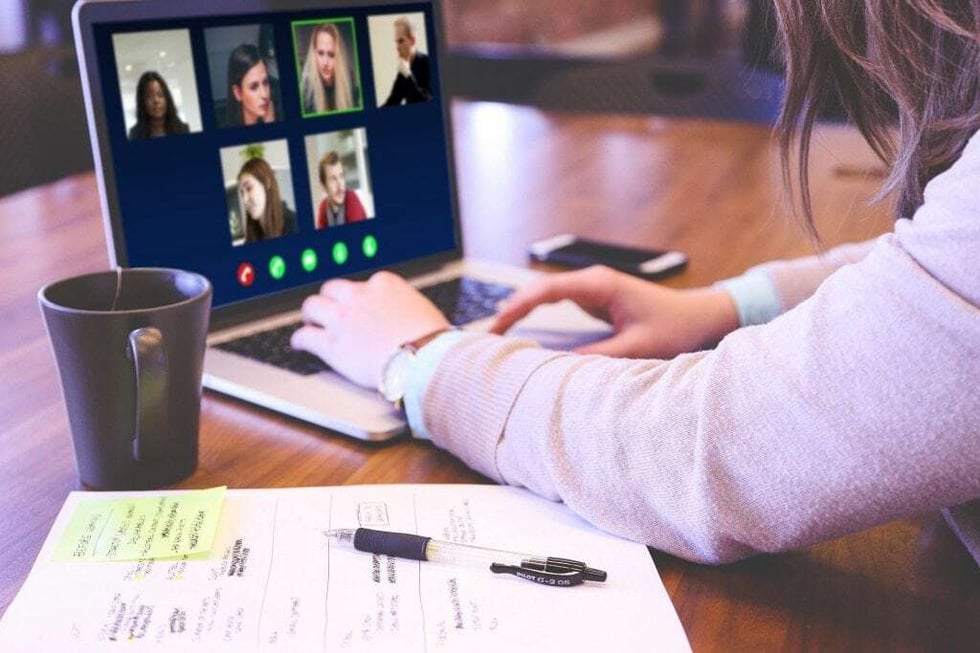
Interestingly, virtual workplaces and remote work policies can help organizations promote equality. Many lucrative industries, such as the fintech industry, suffer from a lack of female participation that is at least in part due to inflexible childcare arrangements that are the societal norm. With remote work, parents and other caretakers are given more opportunities to arrange childcare to fit their own schedule, and to complete work even when a child is home sick or has after-school activities.
Remote employees are no longer beholden to long commutes or spotty public transit options to get into the office. They no longer are forced to live in areas with exorbitant rents and high living costs in order to make sure they can pull late nights in the office when needed. For a broke, first-generation college student, this flexibility can be life-altering. It can give those in disadvantaged situations the tools to focus on their career without all the other variables holding them back.
Most importantly, a virtual workforce allows organizations to access a diverse pool of talent, unconstrained by geolocation. Companies must provide their remote workers with the tools they need to get the job done, as well as the adequate cybersecurity software to keep company data safe, but otherwise are unconstrained by office rent, local talent pools and other encumbrances that come with physical locations. For a company looking to scale and hire workers from diverse backgrounds, a virtual workplace is ideal.
Virtual workplaces will allow enhanced productivity, a broader selection of talent and flexible policies that will result in overall enhanced employee satisfaction, retention and loyalty. However, it’s important for organizations to actively cultivate connections between employees and open up an important dialogue about challenging issues if these organizations really want to improve.
The best way to facilitate this conversation is to create an ERG that will bring workers together to resolve issues as part of a community. Only together can we fight the racism, sexism and other deeply ingrained prejudices that so often casually rear their ugly head in the workplace. Although ignoring these incidents may be easier in a virtual workplace, growth is never easy — and growth is always the main goal.

Lee Li is a project manager and B2B copywriter from ShenZhen, China, and currently based out of Singapore.
She has a decade of experience in the Chinese fintech startup space as a PM for TaoBao, MeitTuan and DouYin (now TikTok).
————————————————————————————————————————————————————————————–

If you’re a manager today, you’re likely managing Gen Z workers, and asking yourself: What does Gen Z want at work? As Marketing advisor Chantel...

By Nahla Davies, a software developer and tech writer. Before devoting her work full-time to technical writing, she managed—among other intriguing...
By Zachary Amos, a features editor focused on trending technology topics, including how to fix communications issues in the workplace.
Share your perspective
Leave a comment below.