Use the GSD Wheel So No One Feels Sad, Bad or Left Out 4 | 2
As we continue into 2022, or more accurately what feels like the third year of 2020, the mere idea of trying to get stuff done at work likely feels...
2 min read
Once everyone is on board with your idea, it’s time for action, which brings us to step 6 of the Get Shit Done Wheel. On this episode of the Radical Candor Podcast, Kim, Jason and Amy discuss the good, the bad and the ugly as it relates to the implementation of that decision you’ve just persuaded everyone to get behind. Listen to learn how to toggle between leading and implementing personally. You can't abandon the first for the second. You have to integrate the two.
Listen to the episode:
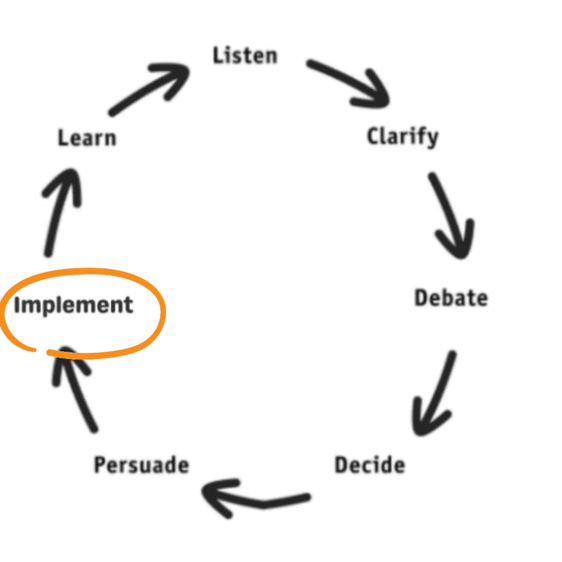
If you become a conductor, you need to keep playing your instrument. If you become a sales manager, you need to keep going on sales calls yourself. If you manage a team of plumbers, fix some faucets.
Of course, you need to spend time listening to people in 1:1s, leading debates, and so on.
But you need to learn to toggle between leading and implementing personally. Don’t abandon the first for the second; integrate the two.
If you get too far away from the work your team is doing, you won’t understand their ideas well enough to help them clarify, to participate in debates, to know which decisions to push them to make, to teach them to be more persuasive.
The GSD wheel will grind to a halt if you don’t understand intimately the “stuff ” your team is trying to get done.
As the boss, part of your job is to take a lot of the “collaboration tax” on yourself so that your team can spend more time implementing. The responsibilities you have as a boss take up a tremendous amount of time.
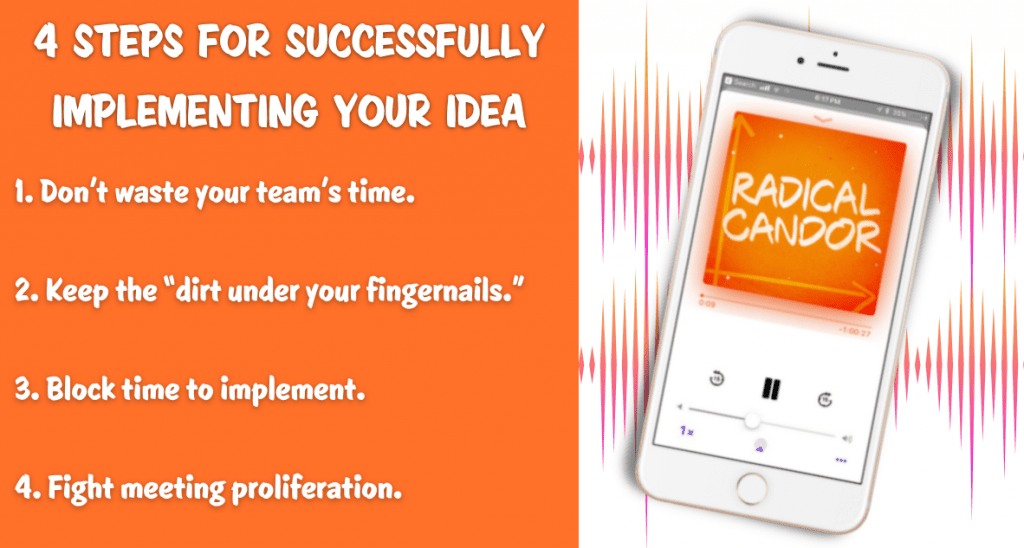
One of the hardest things about being a boss is balancing these responsibilities with the work you need to do personally in your area of expertise. There are four things to know about how to get this balance right (see the steps in the tips below).
Have questions about Radical Candor? Let's talk >>
————————————————————————————————————————————————————————————–
As we continue into 2022, or more accurately what feels like the third year of 2020, the mere idea of trying to get stuff done at work likely feels...
On this episode of the Radical Candor Podcast, Kim, Jason and Amy discuss how to make a decision after you've listened, clarified and debated your...
It's time for part two of how to clarify your thinking for yourself and others as part of the Get Sh*t Done Wheel (listen to part one). On this...
Share your perspective
Leave a comment below.