Manipulative Insincerity, Talking ABOUT People Instead of TO Them 2 | 14
Manipulative Insincerity is what happens when you neither Care Personally nor Challenge Directly. It’s praise that is non-specific and insincere or...
3 min read
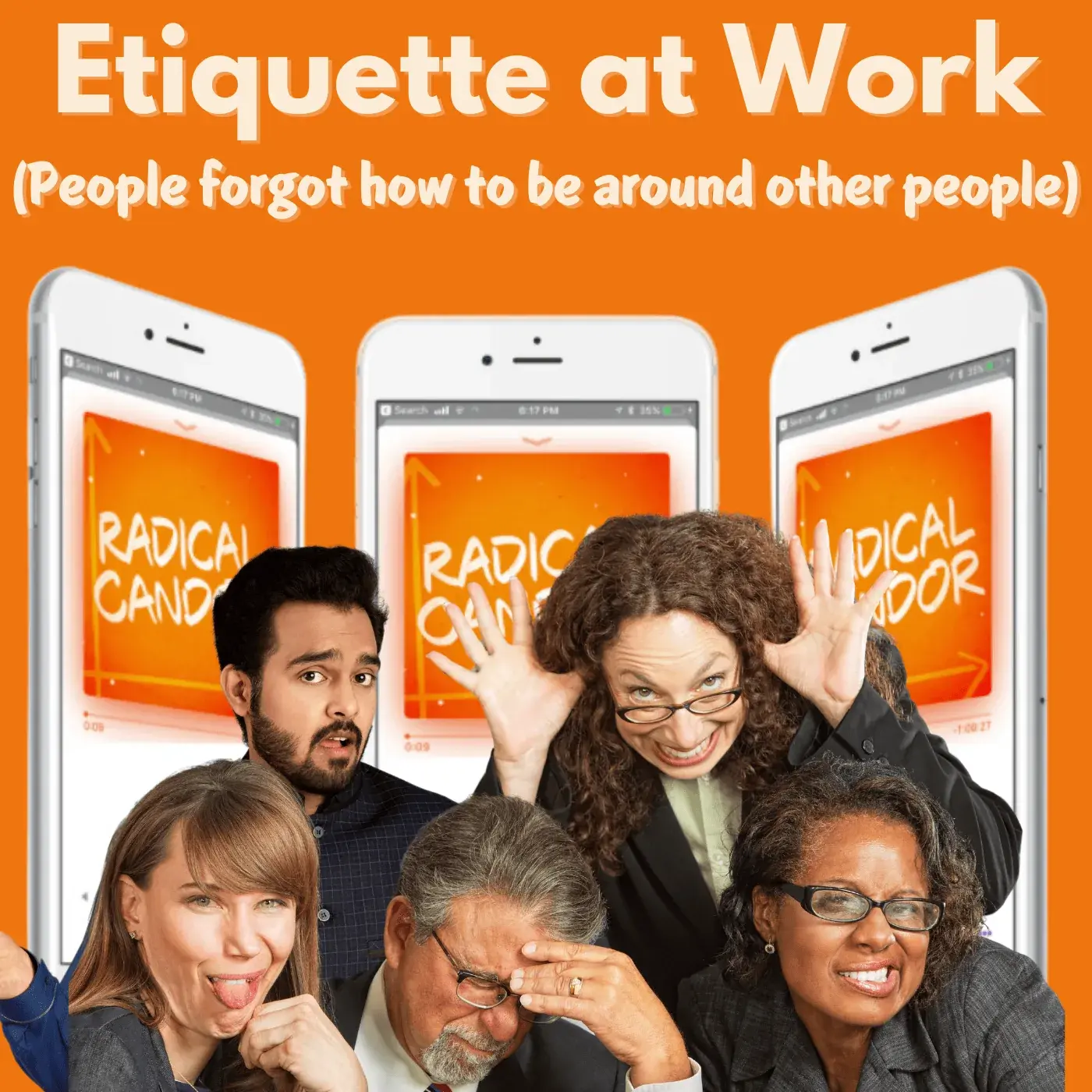
Sixty percent of employers will reportedly send employees to “office etiquette” training in 2024. Whether it’s folks returning to the office after years of working remotely, or recent college grads without office experience — apparently people don’t know how to act around one another anymore. The team discusses the impact of decreased human interactions and the need to establish office behavior norms. Kim, Brandi and Jason also emphasize the importance of open communication and creating explicit norms, especially in hybrid and remote work environments. And if you work in person, don't touch other people's keyboards or drop Dorito crumbs onto their desks.
Listen to the episode:
@champagnecruze Welcome to virtual office etiquette class! —Which one should I do next? #generations #corporate #workhumor #relateable ♬ Monkeys Spinning Monkeys - Kevin MacLeod & Kevin The Monkey
*Our robot makes some mistakes—listen to the episode for a 100% accurate account of Kim and Amy's conversation.
The conversation explores the challenges of workplace etiquette and respect in the modern world. It discusses the impact of decreased interactions and the need to establish norms for behavior in the office. The importance of open communication and creating explicit norms is emphasized, especially in hybrid and remote work environments.
The conversation also touches on the significance of respecting boundaries and cleanliness in the workplace. Overall, the key takeaway is the need to have conversations and make the implicit explicit to foster a respectful and productive work environment.
The conversation explores the importance of connecting through conversation and the role of technology in facilitating or hindering communication. It also delves into the distinction between bottom-up norm-setting and top-down rulemaking, highlighting the potential biases and inefficiencies of the latter.
The concept of inefficiency as a path to efficiency is discussed, emphasizing the value of having conversations to foster understanding and long-term effectiveness. The conversation concludes with practical tips for implementing radical candor and a checklist for resolving conflicts about workplace norms.
00:00 Introduction
00:44 Lack of Etiquette in the Workplace
02:08 Decreased Interactions in the Modern World
03:04 Respect as the Key
05:08 Challenges of Returning to the Office
08:07 Navigating Social Interactions
09:02 Respecting Boundaries in an Open Office
10:27 Creating Norms for Office Spaces
11:26 Accommodating Different Work Styles
12:10 The Importance of Norms over Rules
13:58 Having Conversations to Establish Norms
14:54 The Challenge of Remote Work
16:39 Respecting Cleanliness in the Workplace
19:30 Setting Norms for Hybrid Teams
20:55 Managing Time Zones and Communication
23:45 Creating Explicit Norms for Remote Work
27:10 Encouraging Open Communication
32:21 Addressing Time Zone Challenges
35:21 Recreating Social Interactions in Remote Work
37:42 Making the Implicit Explicit
39:18 The Goal of Radical Candor: Connecting Through Conversation
40:21 Bottoms Up Norm Setting vs Top Down Rulemaking
41:21 Inefficiency as a Path to Efficiency
43:31 Radical Candor Checklist
@chelseahandler This is why everyone wants to continue working remotely. Please forgive my outfit.
Have questions about Radical Candor? Let's talk >>
————————————————————————————————————————————————————————————–
The Radical Candor Podcast is based on the book Radical Candor: Be A Kickass Boss Without Losing Your Humanity by Kim Scott.Episodes are written and produced by Brandi Neal with script editing by Amy Sandler. The show features Radical Candor co-founders Kim Scott and Jason Rosoff and is hosted by Amy Sandler. Nick Carissimi is our audio engineer.
The Radical Candor Podcast theme music was composed by Cliff Goldmacher. Order his book: The Reason For The Rhymes: Mastering the Seven Essential Skills of Innovation by Learning to Write Songs.

Manipulative Insincerity is what happens when you neither Care Personally nor Challenge Directly. It’s praise that is non-specific and insincere or...

What do NDAs, forced arbitration, and emotionally manipulating teenagers have in common? Sadly, more than you'd hope. Kim, Jason and Amy rip the lid...

Talking to people shouldn’t feel like a struggle—but let’s be honest, it often does. Maybe you’re stuck in small talk hell, getting ignored in...
Share your perspective
Leave a comment below.