
I once led a workshop with the CEOs of several fast-growing tech companies. These were all leaders I respect enormously. Every single one of them had a story about having to fire an employee they really cared about but saying it so gently that the person didn't realize they had been fired.
In one case, the note went out saying the person was no longer with the company, but the person, unaware they'd been fired, showed up the next morning. Needless to say, this was even more humiliating than if his boss had been clearer. Plus, it was painful for the whole team. Nobody knew what to say when the person walked in the door.
In another situation, the person who'd been fired came into the CEO's office two hours after the dreaded conversation and asked, "Did you fire me a couple of hours ago?" Recalling this situation, the CEO clutched his head in pain. He felt his own pain and, even more acutely, his employee's.
These are painful examples of Ruinous Empathy, which happens when we care so much about someone's feelings that we fail to say what they need to know clearly enough for them to hear it. That's the mistake I believe most of us make most of the time. However, we all act like jerks occasionally and fall into Obnoxious Aggression. And of course, sometimes we are so concerned about ourselves that we fall into a kind of self-protective Manipulative Insincerity. The terms Ruinous Empathy, Obnoxious Aggression, and Manipulative Insincerity are NOT personality traits. These are mistakes that all of us make every single day.
I developed the Radical Candor framework to help you understand how your feedback is landing and what to do to move a specific conversation with a specific person to a better place. I didn't come up with these terms to judge you, to give you a label to hang around someone else's neck. I came up with them so that you could identify where you've landed, even if that wasn't your intention, and choose what "vector" you need to get things to a better place.
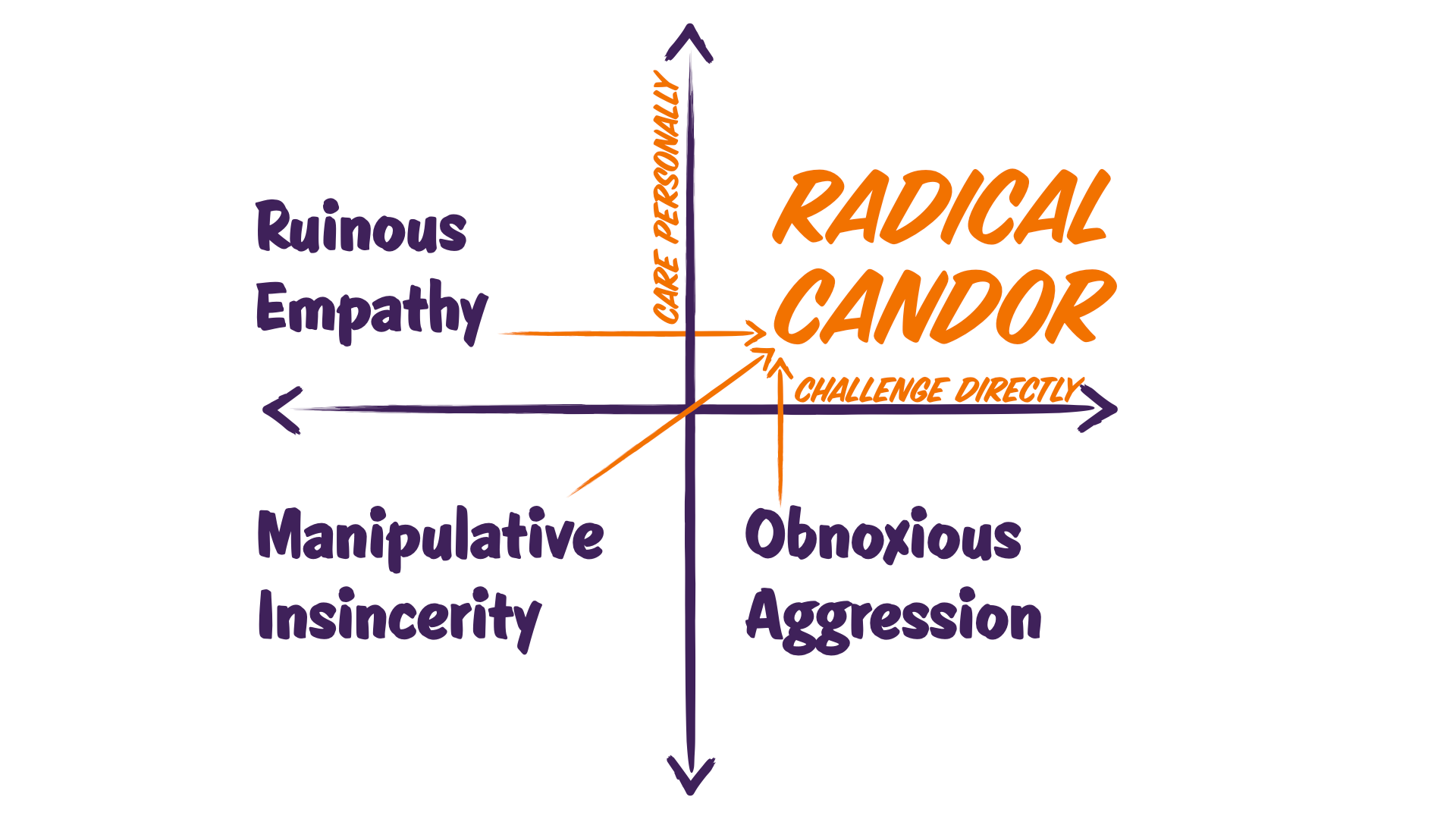
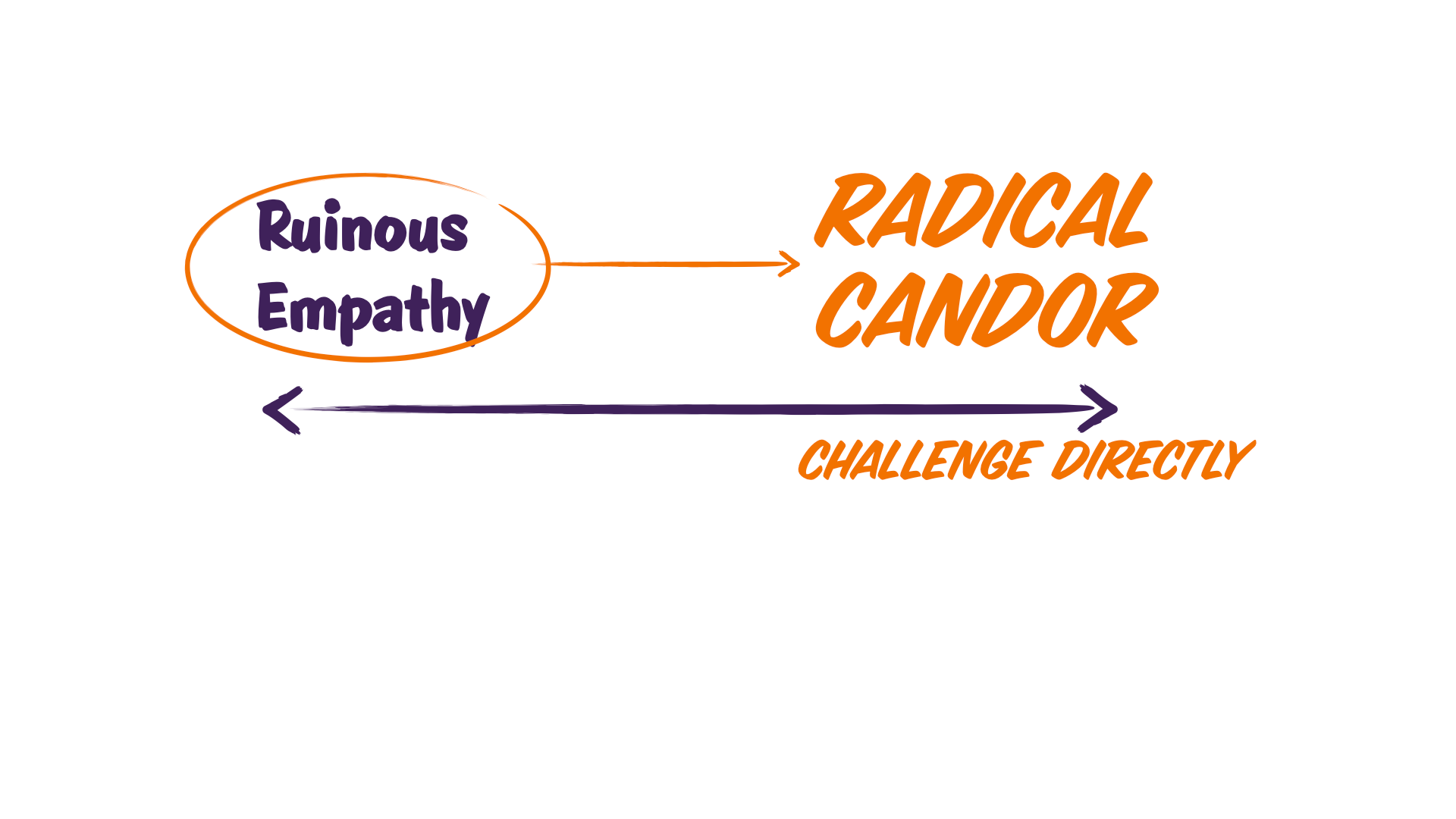
What do you do if your feedback is ruinously empathetic?
The biggest problem with communication is the illusion that it has happened. You dreaded saying the thing. You screwed up your courage, and you said it. But the person doesn't seem to have heard you. Now what? This is when you choose the "challenge directly" vector. You have to say it again, even more clearly! Remember, you're not being mean; you're being clear!
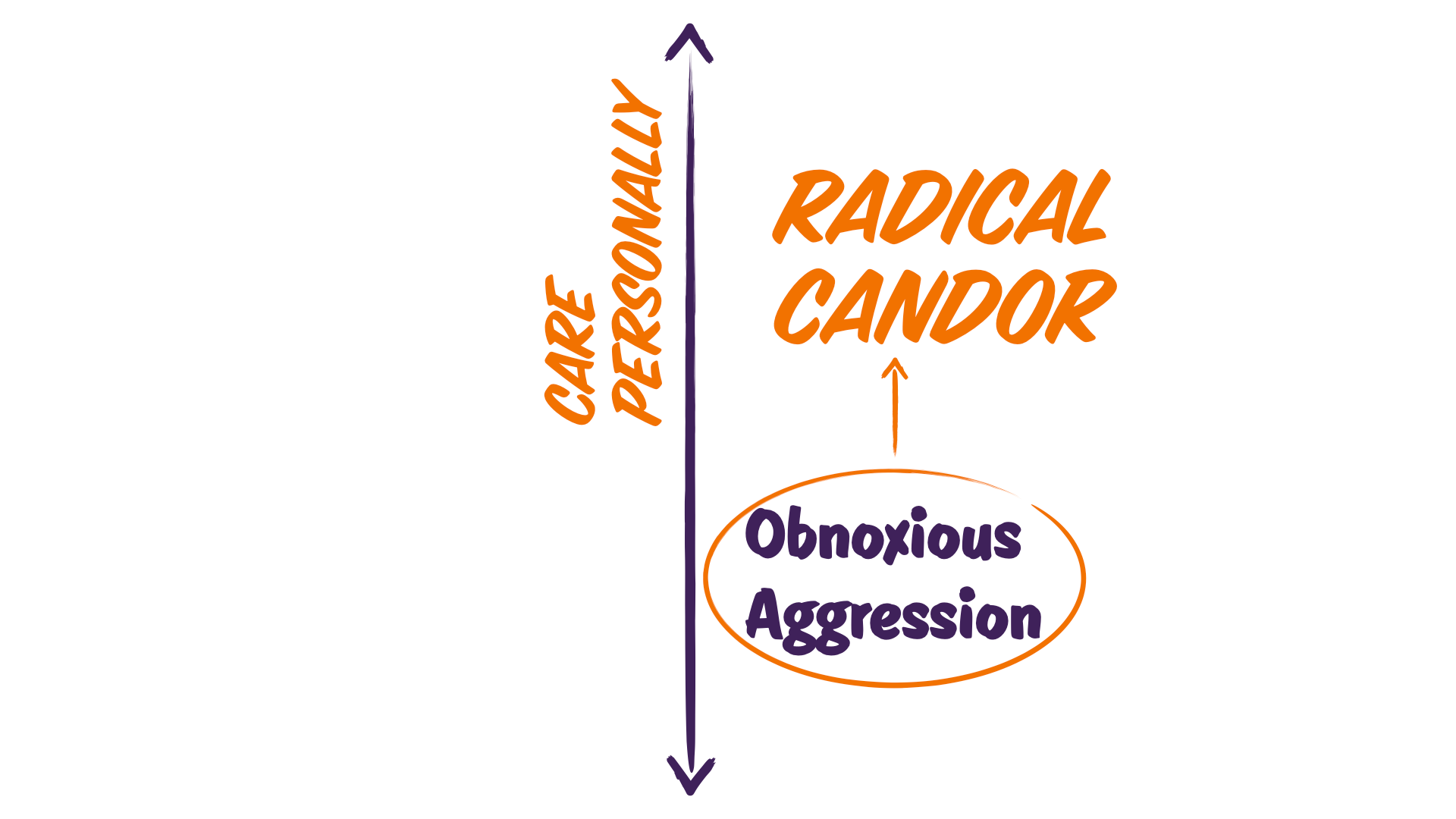
What do you do if your feedback is obnoxiously aggressive?
Your intention was to help the person succeed, so you pointed out a big mistake they were making so they could fix it. But now, instead of fixing the problem and winning the quarter, you realize you forgot to show you care, you discouraged them, and now you feel like an asshole. Now what do you do? This is your cue to move up on the Care Personally dimension of Radical Candor.
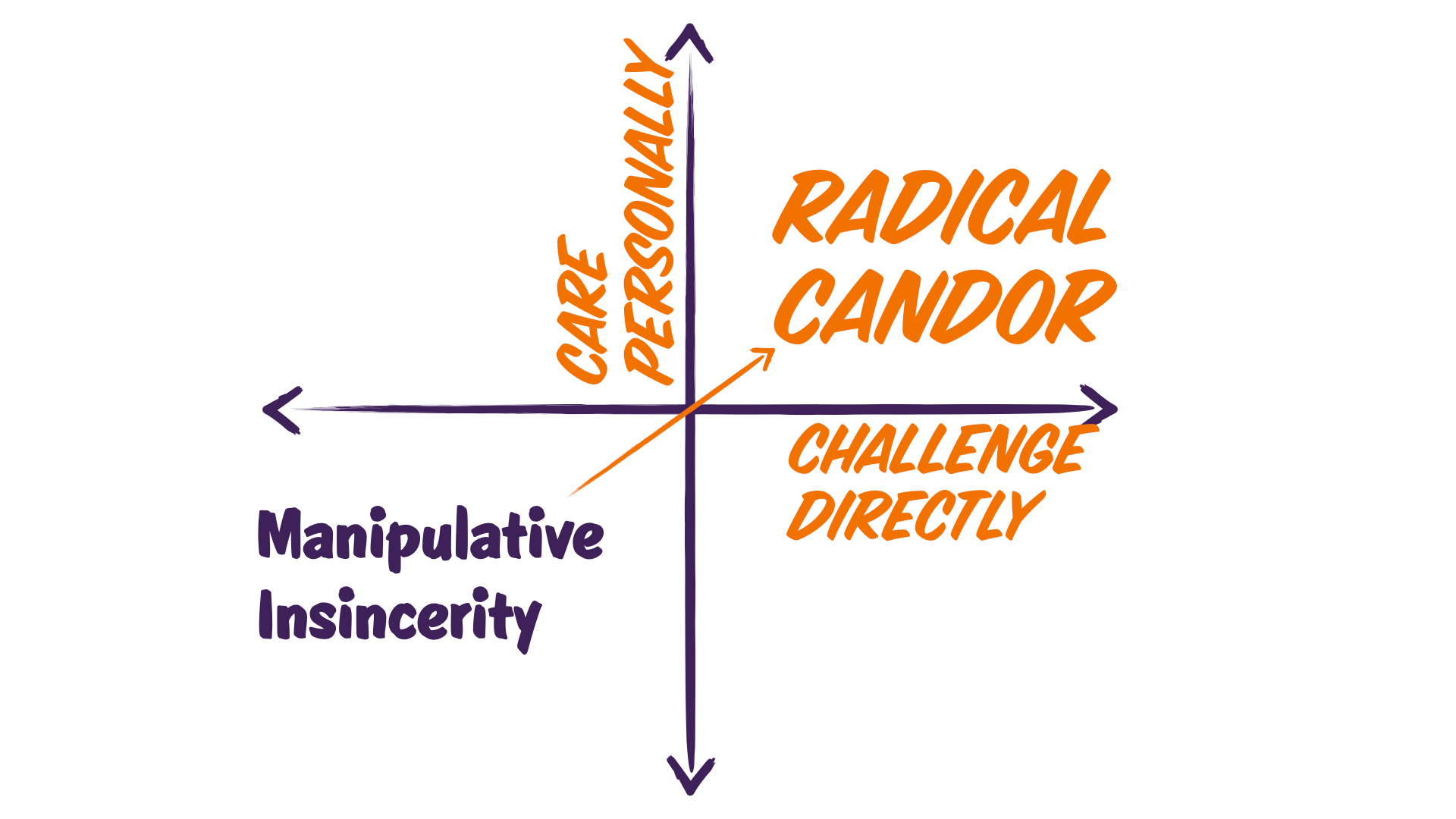
What do you do if your feedback was manipulatively insincere?
It's hard to self-identify as manipulatively insincere. But there are times when all of us land here. I tend to land here when I feel afraid of someone who has just been obnoxious. Rather than confronting them on their bad behavior, I go talk about them behind their back. When we are gossiping we are being manipulatively insincere. We don't care much about a person when we are talking badly about them behind their back — and we are doing just the opposite of challenging them directly. Now we have to work on two vectors at once — both caring and challenging.
As G.I. Joe always said, knowing is half the battle! Be aware of which quadrant you're falling into from the other person's perspective, and whether you need to show more care or challenge more directly to get the conversation to a better place.
Which quadrant did you just land in?
Nobody hits Radical Candor every time. The work isn't getting it right on the first try — it's noticing where you actually landed from the other person's perspective, then choosing your vector from there.
Take the Radical Candor quiz to see how radically candid your communication is, and which quadrant you tend to fall into when a conversation gets hard: https://www.radicalcandor.com/quiz
More from Radical Candor
How Do You Ask for Feedback? The Three Tests of a Good Go-To Question
The idea Get it. Don’t just be open to it.
How Do You Get Feedback? The Four Steps to Solicit Radical Candor®
A Story People often focus on feedback they get from their bosses. But the best feedback comes from the people who work for you. It can be difficult to get it—unless you create a …
Fixing the Employee Experience (with Tiffani Bova) 8 | 26
While the podcast team is on a Radical Sabbatical, Kim Scott is spending the season talking to authors of the books that have shaped her thinking. This week: Tiffani Bova, whose …
Share your perspective
This site is protected by reCAPTCHA and the Google Privacy Policy and Terms of Service apply.