 Kim Scott
4 Steps to Building Strong Relationships With Your Peers, Boss & Direct Reports
The importance of good work relationships rooted in psychological safety cannot be overstated. Your ability to build strong work relationships...

Practicing Radical Candor with clients can feel tricky when “the client always knows best” is the unspoken rule. But avoiding hard truths risks slipping into Ruinous Empathy — caring without challenging — which helps no one in the long run.
Our Candor Coaches, myself included, frequently field questions about how to apply the principles of Radical Candor beyond employee-manager relationships.
Often we are asked how to practice Radical Candor with clients. Similar to the old adage that’s been instilled in us since kindergarten, “if you don’t have anything nice to say, don’t say anything at all,” many operate from the idea that “the client always knows best.” Unfortunately, this can sometimes be a straight line to Ruinous Empathy — when you care personally about someone, but don’t challenge them.
For example, you see your client making poor decisions that don’t align with their goals, but fear of damaging the relationship keeps you from speaking up.
A new study, “The State of Client Understandings,” from Capital Preferences, T. Rowe Price and the Financial Planning Association, found that financial advisors who took the time to get to know their clients and actively challenged them, while also showing they cared, had significantly higher growth opportunities and better client relationships.
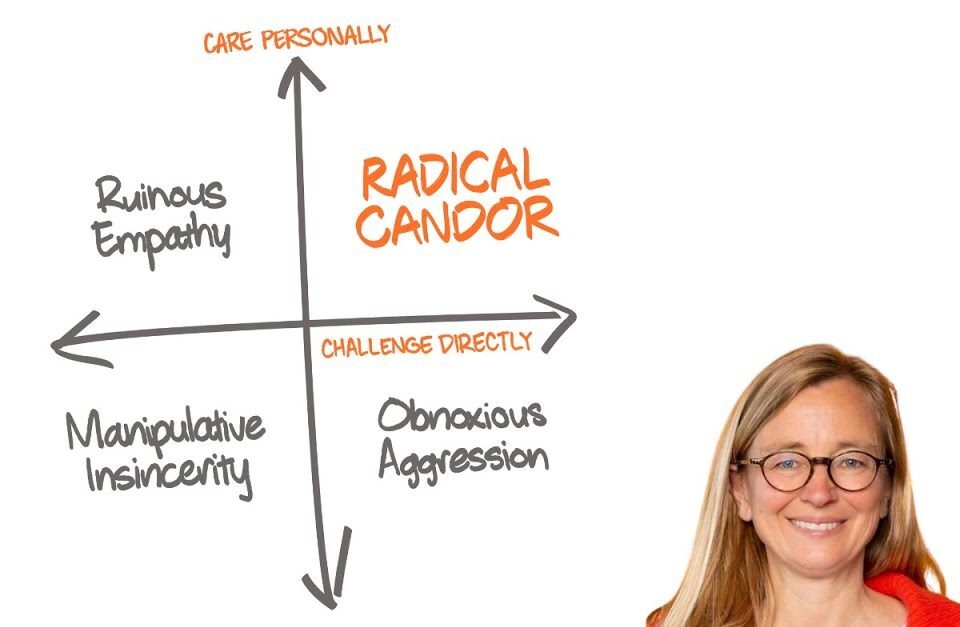
In short, these successful advisors were practicing Radical Candor — Caring Personally while Challenging Directly. And while this study focused on financial advisors, the data could be applicable to anyone who interacts with another person in an advisor or mentor role — teachers, lawyers, coaches, etc.
Actively showing that you care for someone helps facilitate a relationship based on trust and respect so that when you do offer guidance, the recipient knows you actually care about them and want them to succeed.
The study found that high-performing advisors are much more successful than their counterparts because they are adept at balancing human emotions with the technical aspects of their roles with clients, and they aren’t afraid to Challenge Directly when they see a contradiction. The study found that the most successful advisors were:
Behavioralists, who excel at balancing the human and the technical, and are taking greater advantage of cutting-edge science and technology (e.g., data aggregation, planning software, revealed preferences tools) to get a more evidence-based, holistic picture of clients’ actual behaviors and underlying values and preferences.”
These planners are essentially skilled facilitators with unprecedented depth of insight into client behavior. Think of it like this. If you seek out an advisor, teacher, coach, attorney, etc., it’s because this person has expertise that you lack, and you need their guidance to meet a particular goal. If your advisor operates from the Ruinous Empathy quadrant, they will defer to you because they might fear that challenging your ideas will hurt the relationship.
In reality, the opposite is true. Maybe you’ve heard me talk about Bob, an employee I hired at one of my start-ups. Despite having a stellar resume, Bob was doing terrible work. Instead of letting Bob know that his work wasn’t up to par, I picked up his slack and failed to offer him the feedback and guidance he needed to improve.
Because I was operating from a place of Ruinous Empathy, I left a lot of important things unsaid. Just like financial debt, or technical debt, there’s also “feedback debt,” and that’s what I was creating with Bob. I ultimately had to fire Bob or risk losing the trust of my entire team. So, not so caring after all.
Bob’s first reaction was, “Why didn’t you tell me?” The short answer: I didn’t want to hurt his feelings. But by not seizing the opportunity to utilize “constructive tension” — taking on a difficult conversation when Bob wasn’t meeting his stated objectives — I created additional problems that might have been solvable had I offered guidance as soon as I noticed there was a problem.
Now consider you’ve put your financial security or the outcome of a legal battle in the hands of someone you assume has your best interests at heart. Perhaps you make suggestions, but of course you want the guidance of the expert you’ve hired to ensure you’re on the right track. If your expert is operating from a place of Ruinous Empathy, and isn’t challenging hair-brained ideas that won’t move you closer to your goals, you could lose a lot of money, your court case, etc.
The study encourages advisors/mentors to see tension as opportunity, and found that clients prefer those who point out contradictions between their goal statements and actual behavior. Basically, they want someone who will both Care Personally and Challenge Directly. Someone who operates from a place of Radical Candor.
When an advisor points out these inconsistencies, it takes the judgment out. You can hold it up to a client and say ‘this is what you say you want, but this is what you’re doing,’ and the client can answer it for themselves.” — Frank Paré, president of the Financial Planning Association, Financial Planning magazine
The study found that those who look to quickly resolve tension instead of using it as an opportunity to support their clients by offering guidance are less likely to be recommended to others. This is no surprise — would you recommend someone who allowed you to make a poor investment just because they didn’t want to challenge you?
While my book focuses on how to create a culture of Radical Candor at work, Radical Candor can be applied to most any relationship. This study backs up one of the most basic principles of Radical Candor — when you approach your relationships from a place of Ruinous Empathy, you’re not just unintentionally sabotaging the other person — you’re also hurting yourself.

The importance of good work relationships rooted in psychological safety cannot be overstated. Your ability to build strong work relationships...
What is Radical Candor? People often get confused about what Radical Candor really means.
What makes Radical Candor radical is that it’s a deviation from the norm, which tends to fall somewhere between acting like a jerk and avoiding...
Share your perspective
Leave a comment below.