


5 min read

Emotional Labor and The Great Resignation — 2 Things to Know

Emotional Labor and The Great Resignation — 2 Things to Know

Table of Contents

The story below is from a time in my career 20 years ago, long before we were in the grips of the current global Covid-19 pandemic. I’m sharing it now because I thought it might help managers who are struggling with the emotional labor of being the boss during the Great Resignation.

I described this story in the section of Radical Candor about why caring personally about each employee is central to your job as a leader. That is more true now than ever before as people are leaving their jobs in record numbers.

And, according to Gallup, managers are even likelier than the people they manage to experience burnout.

Showing compassion is real work, and, like all real work, it is rewarding and also taxing. All over the world, leaders are being called upon to listen to stories that are hard to hear and to respond to emotions that are hard to witness.

Caring for others starts with caring for yourself. Don’t beat yourself up if you’re feeling burned out. Give yourself the break you need. You can’t possibly Care Personally about others if you don’t care about yourself!

Understanding Emotional Labor

emotional labor

In 2000, our engineers had been working nights and weekends on an early beta version of our product, which would be ready in a week. The sales team had gotten 30 big-name customers lined up for beta testing. If those customers were using our product, we’d be able to raise another round of funding. If not, we’d run out of money in six months.

There was one blocker: me. The night before, one of our angel investors, Dave Roux, had told me he thought our pricing was all wrong. I knew in my gut Dave was right, but I couldn’t go to my sales team or my board and change everything just based on a gut feeling. I needed to sit down and do some analysis—fast. I’d cleared my calendar of meetings for the morning so I could do just that.

I’d gotten only a few steps into the office when a colleague suddenly ran up. He needed to talk right away. He had just learned that he might need a kidney transplant, and he was completely freaked out. After an hour and two cups of tea, he seemed calmer.

I walked toward my desk, past an engineer whose child was in the ICU. Must check in. “How’d your son do last night?” I asked. He hadn’t improved—and as he told me how the night had gone we both had tears in our eyes. I convinced him to leave the office and go and take care of himself for an hour before returning to the hospital.


This is not babysitting. It’s called management, and it is your job!”


I left his desk drained, passing by our quality assurance manager. His child had better news: she’d just received the highest score in the entire state on a standardized math test. He wanted to talk about it. I felt emotional whiplash as I jumped from sympathy to celebration. This kind of emotional labor—feeling the need to suppress my emotions for the good of the organization—left me feeling completely wrung out.

By the time I got back to my desk, I had no time or emotional reserves to think about pricing. I cared about each of these people, but I also felt worn out—frustrated that I couldn’t get any “real” work done. Later that day, I called my CEO coach, Leslie Koch, to complain.

“Is my job to build a great company,” I asked, “or am I really just some sort of emotional babysitter?”

Leslie, a fiercely opinionated ex-Microsoft executive, could barely contain herself. “This is not babysitting,” she said. “It’s called management, and it is your job!”

Every time I feel I have something more “important” to do than listen to people, I remember Leslie’s words: “It is your job!” I’ve used Leslie’s line on dozens of new managers who’ve come to me after a few weeks in their new role, moaning that they feel like “babysitters” or “shrinks.”

We undervalue the emotional labor of being the boss. But this emotional labor is not just part of the job; it’s the key to being a good boss.

1. Set Yourself Up for Success

emotional labor

That being said, it's important to recognize that being the boss can be exhausting during the best of times, and during times of crisis, it can feel downright paralyzing. If you don't identify ways to take care of your emotional, physical and mental health, you won't be able to be there for anyone else.

A 2018 study published in the Yonsei Medical Journal reported that the sustained stress of emotional labor can quickly lead to burnout, psychological distress and depression. Now more than ever, it's important to find ways to manage that stress—to take care of yourself so you can lead your team through uncertainty. This means knowing what you need to stay centered and making sure you make time for it.

Since that day in 2000, I have learned to focus first on staying centered myself, so that I could build real relationships with each of the people who work for me. Only when I am centered and my relationships are strong can I fulfill my responsibilities as a manager to guide my team.

It's also OK to admit that you don't have all the answers. However, when you do have information that affects your team, commit to delivering it as soon as possible in a way that's kind and clear.

Things are difficult right now, and there's no doubt that it might get worse before it gets better. This is why it's more important than ever to be kind and clear, not only with the people you work with, but with yourself.

2. Set Your Team Up For Success

Everyone can be exceptional somewhere and that it is a boss’s job to help them find that role. It’s also a boss’s job to strive to have 100 percent of the team doing exceptional work.

According to Gallup, "The best managers position every team member so that they can spend most of their time playing to their strengths. And when managers are thinking about each person's strengths, they can individualize feedback and goal setting in a way that feels inspiring rather than daunting."

"For teams, focusing on strengths improves collaboration and lessens the strain on each member while inspiring a sense of shared purpose and camaraderie. Doing things outside of our talent comfort zone is more exhausting -- thus, more likely to lead to burnout. But when we know that someone on our team can handle (and even love) those tasks we dread, it lifts our work burden considerably. Teams that know how to play to their strengths together are more productive, are safer and have less turnover."

Radical Candor 2nd edition

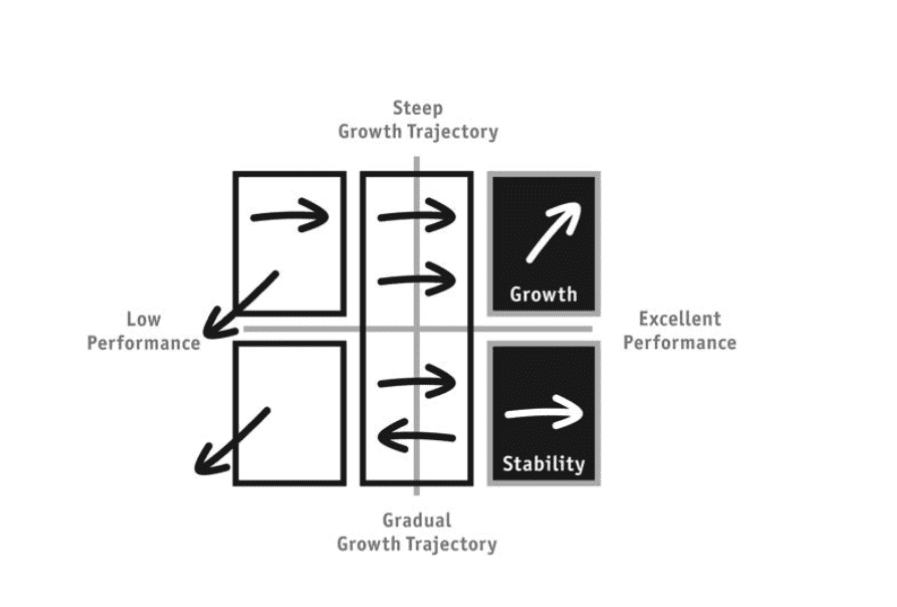
In order to build a great team, you need to understand what motivates each team member, and how each person’s job fits into their life goals. A leader at Apple had a good way to think about different types of ambition: those in rock star mode are solid as a rock, and a force for stability at work (think Rock of Gibraltar, not Bruce Springsteen), while people in superstar mode are highly-ambitious change agents, constantly seeking new opportunities.

The most important thing you can do for your team collectively is to understand what growth trajectory each team member wants to be on at a given time, and whether that matches the needs and opportunities of the overall team. (Learn more about our Growth Management philosophy in First Round Capital’s Warning: This is Not Your Grandfather’s Talent Planning.)

To be successful at growth management, we recommend a series of three Career Conversations you’ll have with each team member. Begin with people you’ve been working with the longest. (Review “Career Conversations” in Chapter Seven and The Problem with Career Conversations Today for more background.)

When done well, these conversations should connect a person’s past – gaining a detailed understanding of who they are and what motivates them at work through their life story – with their future – the wildest dreams they have for themselves at the pinnacle of their career.

  • Conversation 1: Learn what motivates your team member, what they value, the things that drive them; their Life Story.
  • Conversation 2: Understand where someone wants to be at the pinnacle of their career; their Dreams.
  • Conversation 3: Plan for the present with a Career Action Plan.

Career Conversations are not something you do once and check off the list. Remember, people change, their growth trajectory changes, and you need to change with them! That’s why it’s a good idea to do one round of Career Conversations a year with each of your direct reports during your 1:1 time.

Read more in Radical Candor: Fully Revised & Updated Edition: Be a Kick-Ass Boss Without Losing Your Humanity, e-book and audio version available.

*This post was updated 11/18/21

————————————————————————————————————————————————————————————–

Key Questions Covered

What is emotional labor, and why does it matter for managers?

Emotional labor is the work of managing your own feelings — suppressing, expressing, or shifting emotions — for the benefit of others and the organization. For managers, it shows up constantly: listening to a team member's health crisis, celebrating a colleague's win, and then pivoting back to a high-stakes business problem. The Radical Candor framework treats this as real, legitimate work. It's not babysitting — it is the job. Undervaluing it leads to burnout; recognizing it lets you plan for and sustain it.

How can managers avoid burnout from the emotional demands of leadership?

The key is staying centered yourself before trying to care for others. Practically, this means identifying what keeps you grounded — exercise, rest, boundaries around your calendar — and protecting that time. A 2018 study in the Yonsei Medical Journal found that sustained emotional labor leads rapidly to burnout, psychological distress, and depression. Radical Candor also encourages managers to admit when they don't have all the answers, and to be kind and clear with themselves, not just their teams.

What are Career Conversations, and how do they help retain employees during the Great Resignation?

Career Conversations are a three-part framework from Radical Candor designed to connect each team member's personal motivations with their professional growth. The three conversations cover: (1) their Life Story — what drives and motivates them; (2) their Dreams — where they want to be at the pinnacle of their career; and (3) a Career Action Plan for the present. Done well and revisited annually, these conversations help managers understand what each person needs to stay engaged, which directly addresses the root causes of voluntary turnover.

What is the difference between 'rock star mode' and 'superstar mode' on a team?

These are two growth trajectories described in Radical Candor. People in rock star mode are stable, deeply reliable contributors — the bedrock of a team. People in superstar mode are highly ambitious and actively seeking new challenges and opportunities. Neither is better; great teams need both. A manager's job is to understand which mode each person is in at a given time, match them to the right role and opportunities, and adjust as people's goals evolve.

How does playing to team members' strengths reduce burnout?

According to Gallup research cited in the post, doing tasks outside your natural strengths is more exhausting than doing work that comes naturally — making burnout more likely. When managers deliberately position people in roles that leverage their strengths, it reduces individual strain, improves collaboration, and creates a sense of shared purpose. Teams that collectively play to their strengths are more productive, safer, and have lower turnover — all of which matters even more during periods of mass attrition like the Great Resignation.

Why do managers experience higher rates of burnout than the people they manage?

Managers carry a dual burden: they must perform their own work while also absorbing and responding to the emotional needs of everyone on their team. Gallup data cited in this post shows managers are even more likely than individual contributors to experience burnout. This is partly because emotional labor compounds — a manager might move from a colleague's health crisis to a celebration to a high-stakes business problem all within an hour, with no recovery time in between. Recognizing this reality is the first step to managing it sustainably.

Keep going.

Three ways to put this into practice.

Apply what you've learned Get personalized coaching with Compass
Your AI-powered Radical Candor coach. Free to try.
Used by managers at Apple, Dropbox, and Twitter Try Compass free
Stay sharp More like this, every week
Practical leadership tips in your inbox.
Join 25,000+ leaders Subscribe free
For your whole team Bring Radical Candor to your organization
Workshops, keynotes, and rollouts for teams of 50+.
Trusted by 100+ Fortune 500 leadership teams Talk to our team

EXPLORE MORE FROM RADICAL CANDOR

To Be Successful at Growth Management, You Need to Know How To Have Radically Candid Career Conversations

To Be Successful at Growth Management, You Need to Know How To Have Radically Candid Career Conversations

Helping each person on your team grow in the direction of their dreams is part of being a kick-ass boss, and it's the key to successful growth...

Read More
Balancing Growth and Stability: Why Your Team Needs People On Both Steep and Gradual Growth Trajectories

Balancing Growth and Stability: Why Your Team Needs People On Both Steep and Gradual Growth Trajectories

This post about balancing team growth and stability is an adapted excerpt from Radical Candor: Be a Kickass Boss Without Losing Your Humanity. Get ...

Read More
What Do Kick-Ass Bosses Do to Stop Quiet Quitting? They Actually Care About Their Employees

What Do Kick-Ass Bosses Do to Stop Quiet Quitting? They Actually Care About Their Employees

Do you want to know how to stop quiet quitting? The answer is simple, but it's not easy. Learn to practice Radical Candor.

Read More