 Kim Scott
Compassionate Candor vs. Radical Candor: Two Names, One Framework
People have been asking lately if we have ‘rebranded’ Radical Candor as Compassionate Candor. Nope. These terms are synonymous. Use whichever you...
I am no better than the rest of us on this. A couple of years ago, I was invited to give a talk at a company whose policies I vehemently disagreed with. I was tempted not to go.
Then I thought, that isn't in the spirit of Radical Candor. In fact, I believe very deeply that unchallenged beliefs become prejudices. I went to give the talk at this company, not because I was going in prepared to change my mind; if I'm honest, I wasn't. And I also wasn't going to try to change their minds. My goal was to understand their point of view. What was in that for me? One, understanding another point of view would help me deepen my thinking. Two, if we met, maybe we could find some things we liked about each other. A person is much more than their beliefs about this or that policy.
After I gave the talk, I got to the Q&A, and we were having a great conversation. Suddenly, there was this voice booming inside my head, saying, “Kim, these people are not your enemies. These are your fellow humans.” I felt ashamed that I'd ever considered refusing to speak with these people.
Then, after the talk was over, somebody came up to me and said, “Kim, do you believe this, do you believe that?” I said, yes, I did. And this person kind of cocked their head and said, “Huh. You don't seem like an evil person.” And I would have thought that saying such a thing was ridiculous, except that I had just had pretty much the same thought myself five minutes previously.
Some of the best relationships of my career are with people whose politics are totally different from mine. It's possible to despise a policy and care about the person who holds it. The reason I'm able to work so well with people whom I disagree with is that when I care about a person, it's easier for me to challenge them. And because I challenge them, it's easier to care. It's a virtuous cycle, Radical Candor. We can disagree about a whole host of things and still work well together.
The reason why it works is that we both believe that the floor on the “Care Personally” dimension of Radical Candor is respect. Respect is something we owe to everyone. When we can show respect and common human decency, we can work together. And when we work together well, and when we are lucky, we may wind up loving the people whom we work with, not in the HR-disaster sense of the word, but in the true sense of collegiality.
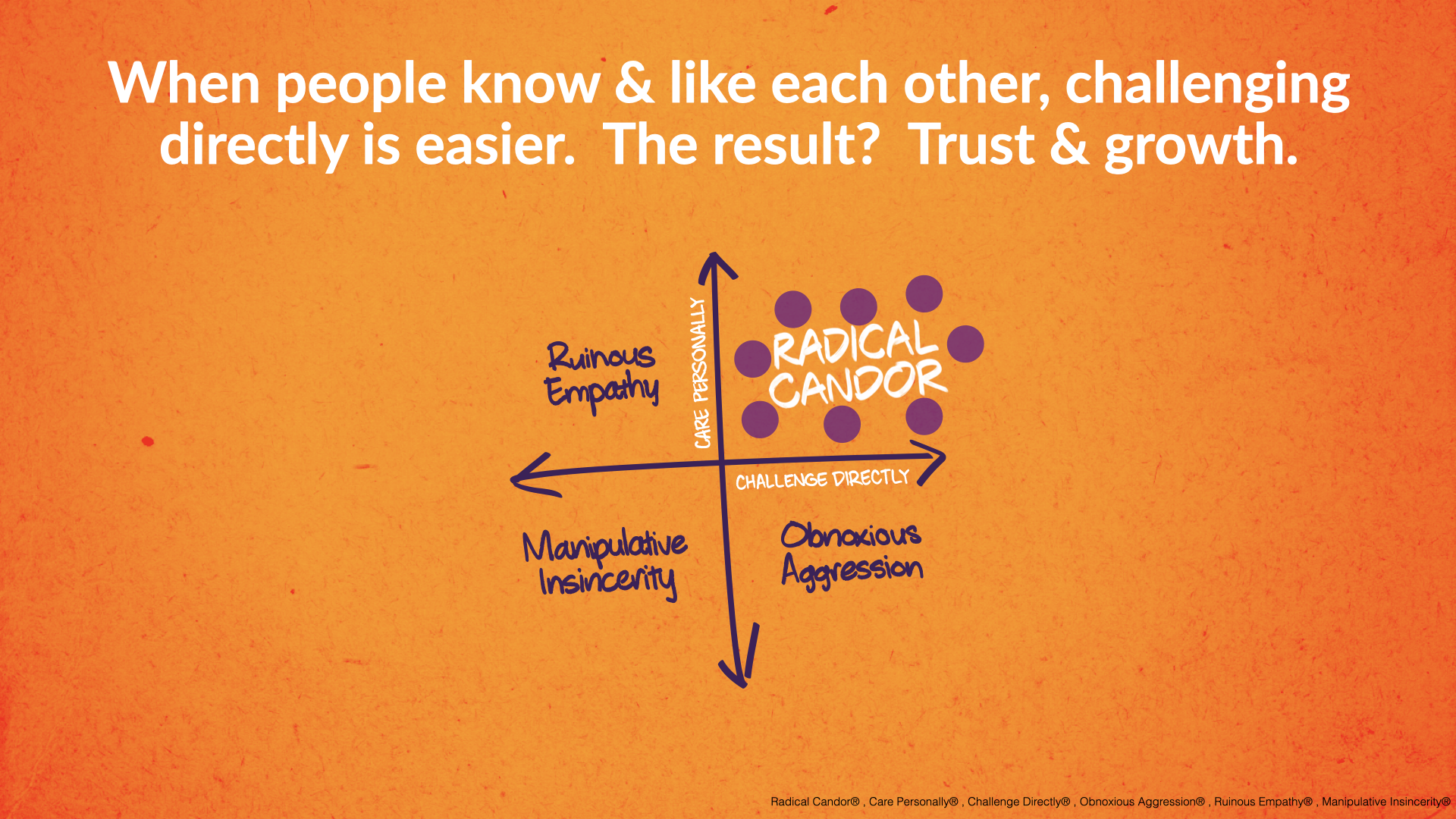
SUCCESSFUL teams often begin with a small group of people who know each other well. They have a culture where they challenge one another directly and even fiercely, and also show they care personally. In part thanks to that Radical Candor, the team scores some early wins. Hurray!
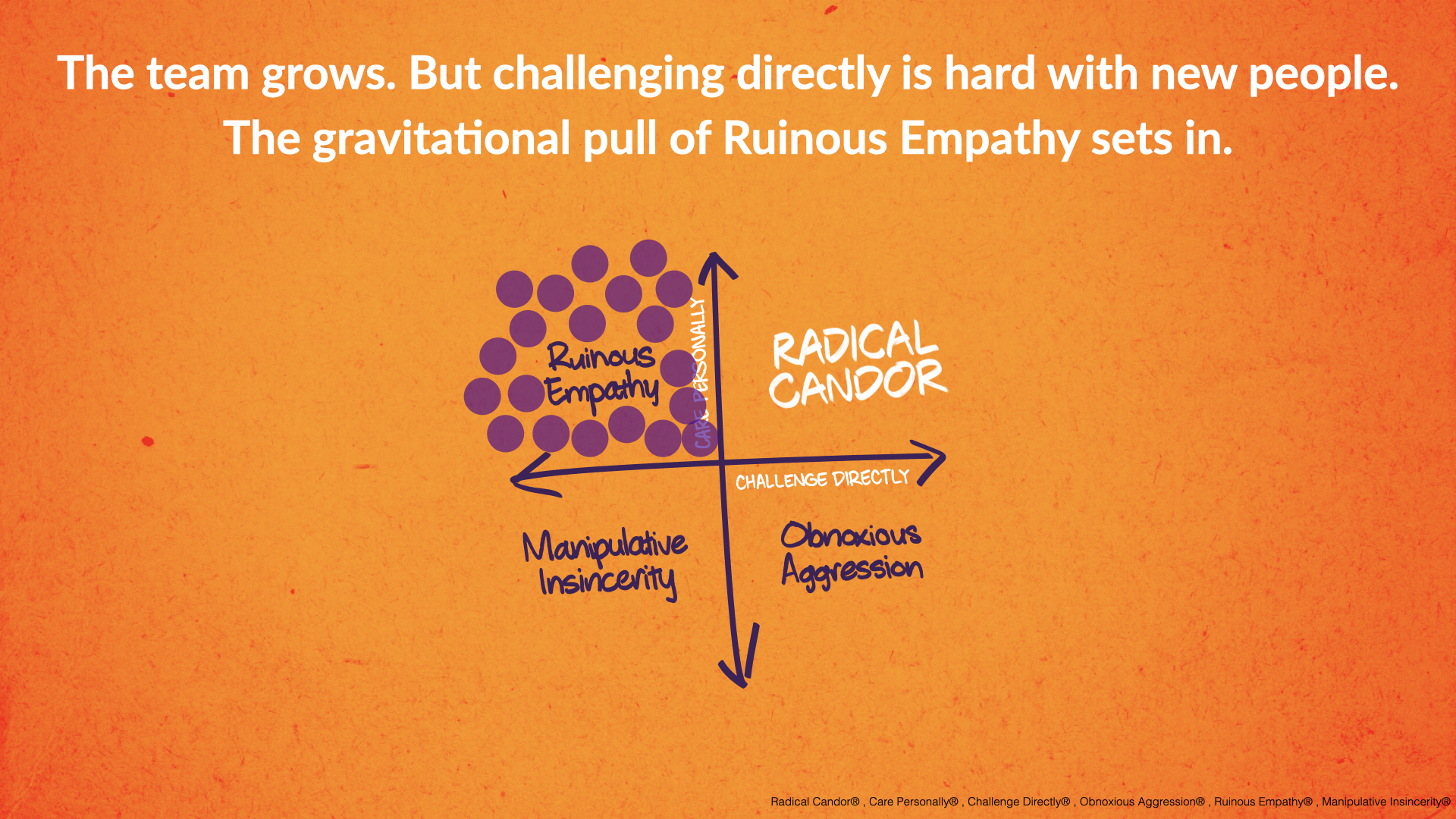
As a result of these wins, the business grows. The team needs to hire more people. As new people join the team, it's impossible to have strong relationships with everyone. The kind of super-direct challenges that were easy when everyone knew each other well become difficult. Not wanting to lose the friendly culture of the early days, many hesitate to speak up when they see problems, backing off from challenging directly. Another part of the dynamic is that as the team grows, the likelihood that people hold different political views or are different from each other along some other dimension grows.
They succumb to the gravitational pull of Ruinous Empathy.
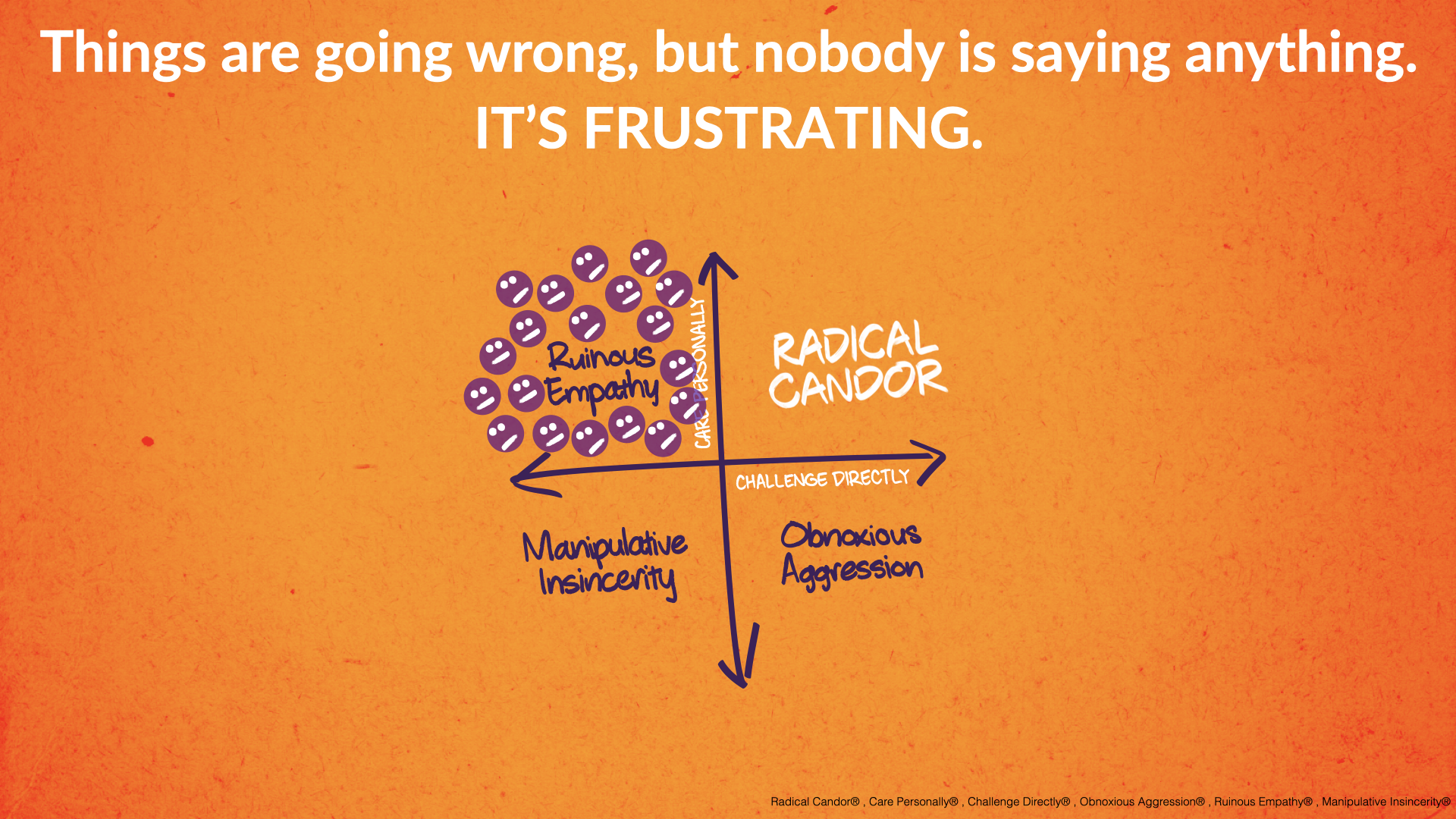
But mistakes are being made, things are going wrong, and it's frustrating. It's not the mistakes that are frustrating—those are inevitable. It's the fact that nobody is saying anything for fear of hurting or offending someone. Everyone notices the problems, but nobody says anything, so they don't get fixed. It's exhausting. Then, finally, someone does point out what's going wrong—probably not in the best way because they're motivated as much by the anger at feeling silenced as by a desire to help.
But, at least the person has said the thing. It's a relief. Everyone gives their harsh behavior a pass.
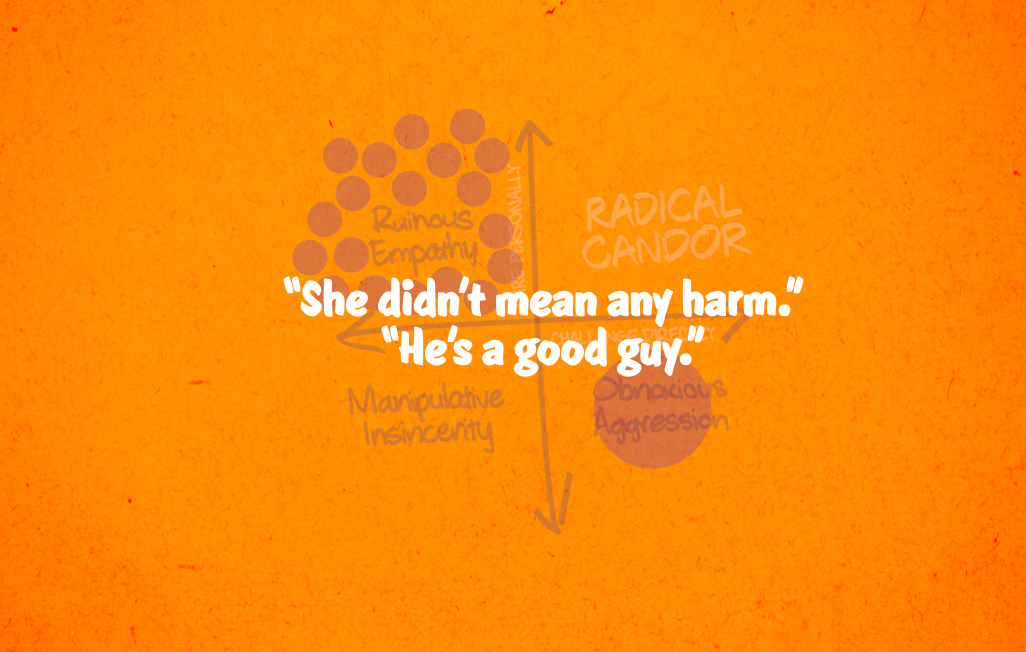
Now the person has been given a pass or even rewarded for acting kind of like a jerk. Because Obnoxious Aggression is more effective than Ruinous Empathy, that kind of behavior has an advantage; and so people who behave badly begin to win. Maybe someone whose behavior is particularly harsh even gets a promotion. Meanwhile, everyone around them is worried about hurting their feelings or offending them, so they don't let the person know they are hurting others. It's not surprising they don't change their behavior. After all, they just got promoted for it. How could they know?
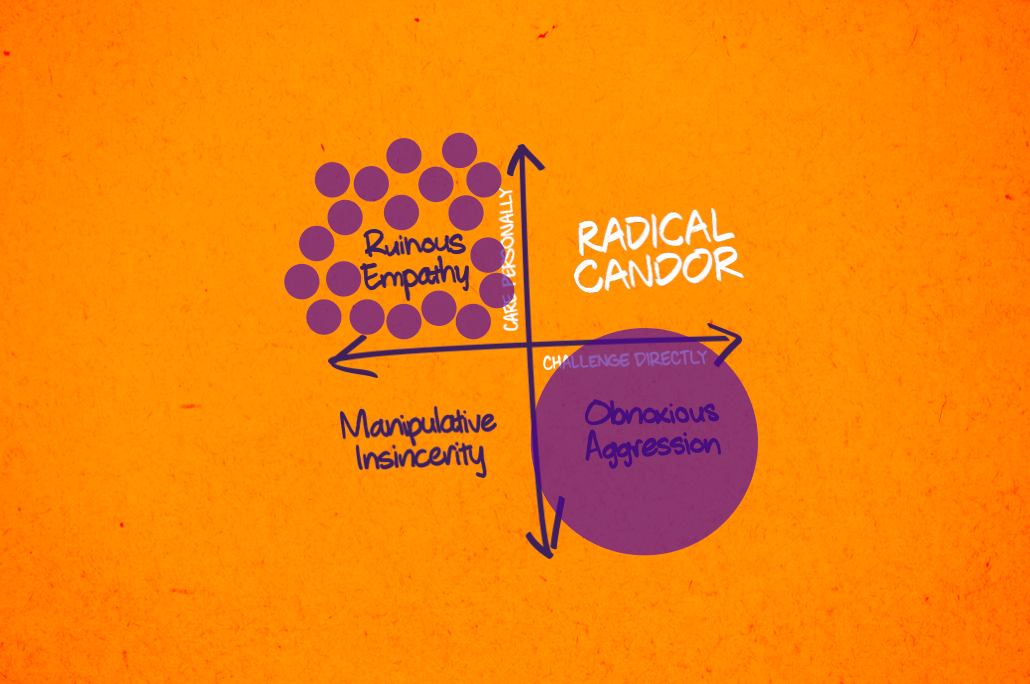
When confronted with someone in a position of power who is acting like a jerk, most people retreat to Manipulative Insincerity, more out of instinctive self-protectiveness than intentional wrongdoing.
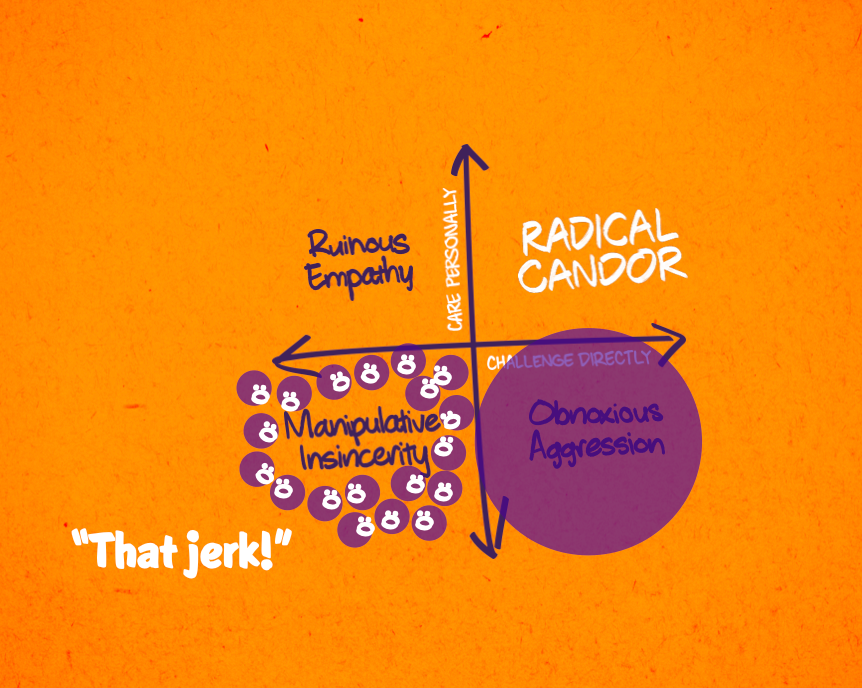
The person in a position of power who is acting like a jerk may not be a bona fide asshole; they may, in fact, simply be unaware of how their behavior is landing because nobody is telling them. So their behavior gets worse. Meanwhile, everyone is talking badly about them behind their back. So a dose of understandable paranoia gets stirred into the mix. The recently promoted person suspects something is wrong, but doesn't know what it is because nobody is telling them. Nobody is saying anything now, not because they are reluctant to hurt the person's feelings, but because they fear retribution from this person who is now in a position to dish it out. Now the fear and mistrust between the powerful and the powerless are mutual.
In this kind of environment, there's an incentive for everyone to retreat to Manipulative Insincerity in front of those more senior than them, and to resort to Obnoxious Aggression with those less powerful. The culture becomes malignant—a lot of kissing up and kicking down, and much reluctance to speak truth to power. The silent, angry powerless form a mob; the paranoid powerful seek more control.
This kind of behavior won't kill a company right away. Instead, it leads to a slow, painful death of innovation and lives of quiet desperation. That's the bad news.
The good news is that none of this is inevitable. Many companies, large and small, are now taking active steps to shift to a culture in which caring personally and challenging directly go hand in hand. When people learn to do both simultaneously, bad behavior no longer gives anyone an advantage. Bad behavior is corrected, not rewarded; people say what they really think; it's not just safe but expected to speak truth to power; there are fewer meetings after the meeting, less back-stabbing, and the environment is more conducive to both success and happiness.
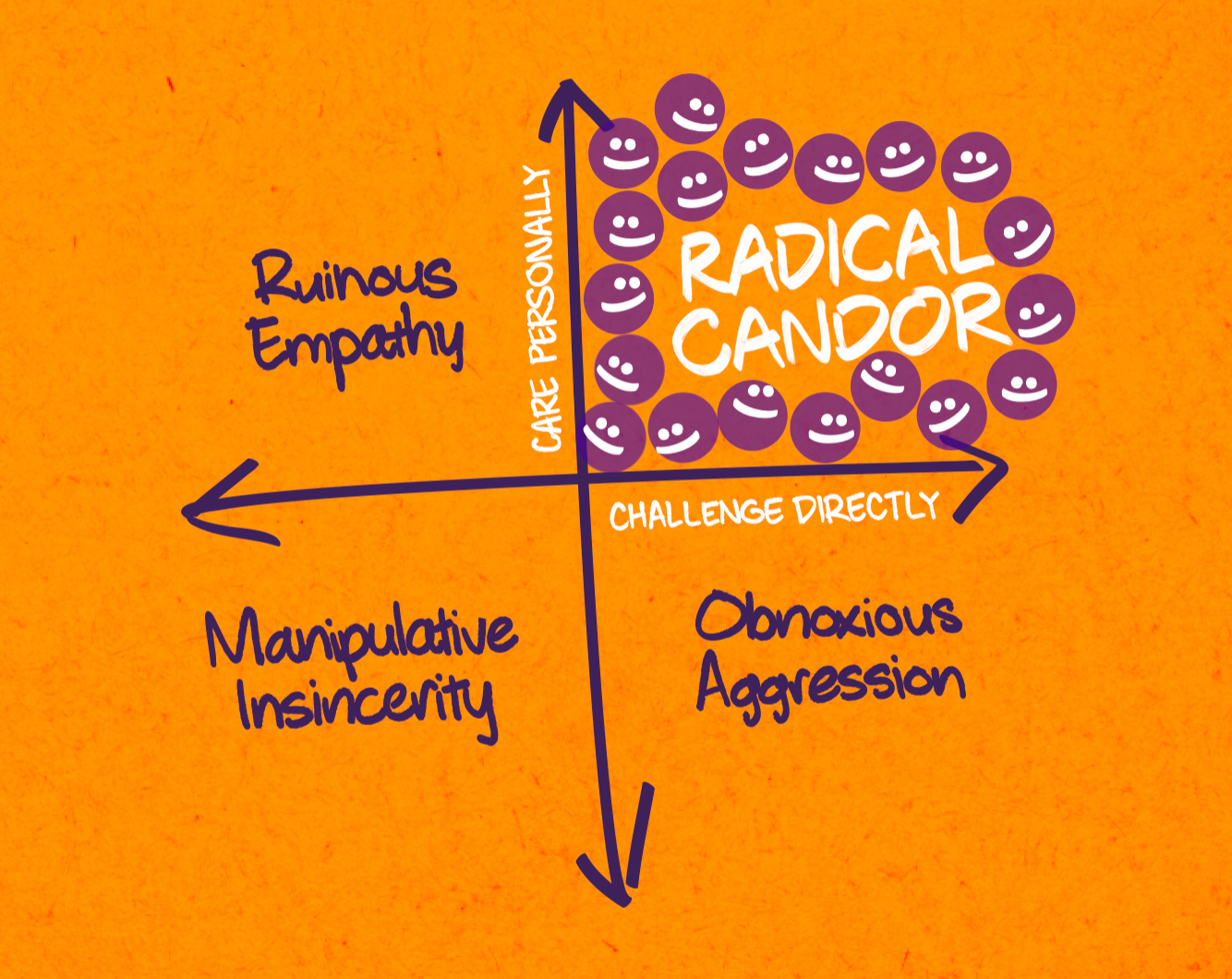
I HOPE THAT you will join me in making sure that Radical Candor is not used as an excuse for bad behavior on your team. Putting Radical Candor into practice can help you find a way to be your best, most fully expressed self at work.
You CAN create teams on which people do the best work of their lives and build the best relationships of their careers. You can love your work and the people you work with.
We can help. We offer workshops, a short sitcom about Radical Candor that you can watch with your team, an AI coach that will answer your questions, and even do role-plays with you for conversations you're worried about.
Join us in our quest to get more done with less drama and more real human affection.
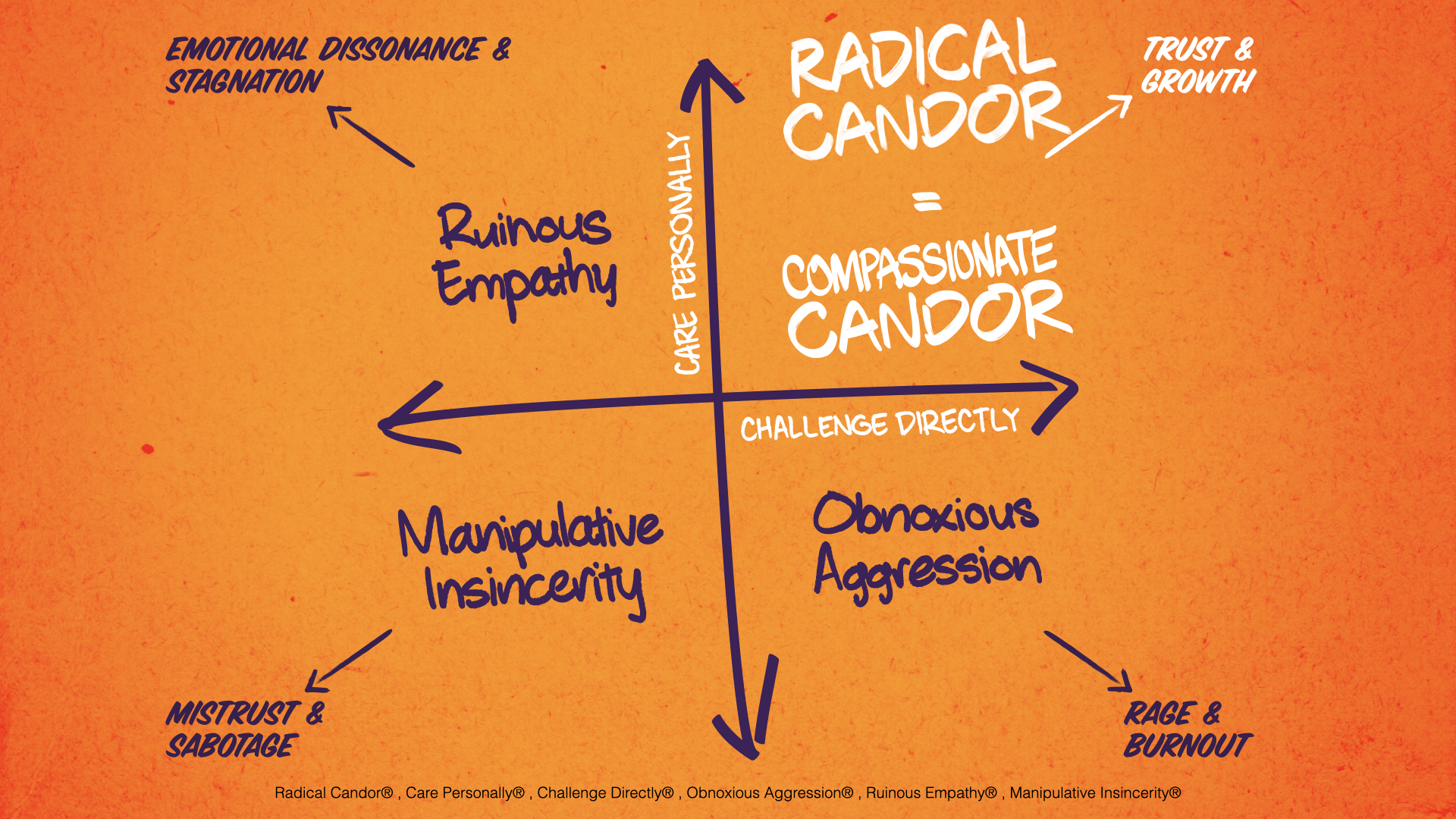
People have been asking lately if we have ‘rebranded’ Radical Candor as Compassionate Candor. Nope. These terms are synonymous. Use whichever you...

Hi there - I'm Russ, and this is my first blog post for Candor, Incorporated. My Little League baseball players call me Coach Russ, and I'm going to...
Do you think your feedback is often Ruinously Empathetic? If so, you're not alone. In our experience, most feedback mistakes fall in the Ruinous...
Share your perspective
Leave a comment below.