Radical Candor Q&A: Kim Answers Our Most Frequently Asked Questions 6 | 27
On this episode of Radical Candor podcast, Kim and Amy answer some of the most frequently asked questions about Radical Candor in a fun and engaging...
3 min read
If someone has approached you and said, "In the spirit of Radical Candor ..." and then proceeded to act like a total jerk, you've experienced how some people use Radical Candor to justify being their worst selves. This behavior is not Radical Candor; it's what we call Obnoxious Aggression. On this episode of the Radical Candor podcast, Kim, Jason and Amy agree that nobody should have to pay the asshole tax or work for a seagull swoop-and-poop boss. They also explain why "Radical" Candor is actually Compassionate Candor versus a license to act like a jerk.
Listen to the episode:
The whole point of Radical Candor is that it really is possible to Care Personally and Challenge Directly at the same time. We can break free of a false dichotomy that leaves too many people feeling they have to choose between being a jerk and being incompetent.
That’s a terrible choice, and nobody has to make it. In fact, if you really care personally about somebody, you will tell them if you think they are making a mistake — and when they are doing something great.
Radical Candor happens at the intersection of Care Personally and Challenge Directly. Care Personally means that you care about the other person, not about whether you are winning a popularity contest. Challenge Directly means that you share your perspective and invite the other person to do the same.
Radical Candor is actually Compassionate Candor. It engages the heart (Care Personally) and the mind (Challenge Directly). Unfortunately, the phrase “Radical Candor” doesn’t communicate that to everyone. (You can read more about Compassionate Candor in the fully revised and updated edition of Radical Candor: Be a Kick-Ass Boss Without Losing Your Humanity.)
It's important to know that there is a world of difference between Radical Candor and brutal honesty, or as we call it, Obnoxious Aggression.
Obnoxious Aggression is what happens when you challenge someone directly, but don’t care about them personally. It’s being clear, but not kind; praise that doesn’t feel sincere or criticism that isn’t delivered kindly. Obnoxious Aggression is also called “brutal honesty” or “front stabbing.” This is often how the seagull swoop-and-poop boss behaves. They barge in, crap all over everything.

Helpful framing for productive feedback conversations is the Center for Creative Leadership’s SBI Model.

The Radical Candor Podcast theme music was composed by Cliff Goldmacher. Pre-order his book: The Reason For The Rhymes: Mastering the Seven Essential Skills of Innovation by Learning toWrite Songs.
The Reason For The Rhymes will rekindle your innate creativity and significantly enhance your ability to innovate.
By mixing practical how-tos with song-based examples that everyone knows, GRAMMY-recognized #1 hit songwriter, Cliff Goldmacher, will show you how to explore, shape and sell your ideas by teaching you how to write songs.
Using the book's fun and accessible exercises, you will develop the essential skills of lateral thinking, creativity, communication, empathy, collaboration, risk-taking and the diffusion of ideas which will, quite simply, make you a better innovator.

On this episode of Radical Candor podcast, Kim and Amy answer some of the most frequently asked questions about Radical Candor in a fun and engaging...
In its most basic form, Radical Candor is a framework to facilitate communication that is kind, clear, specific and sincere. It’s about being able to...
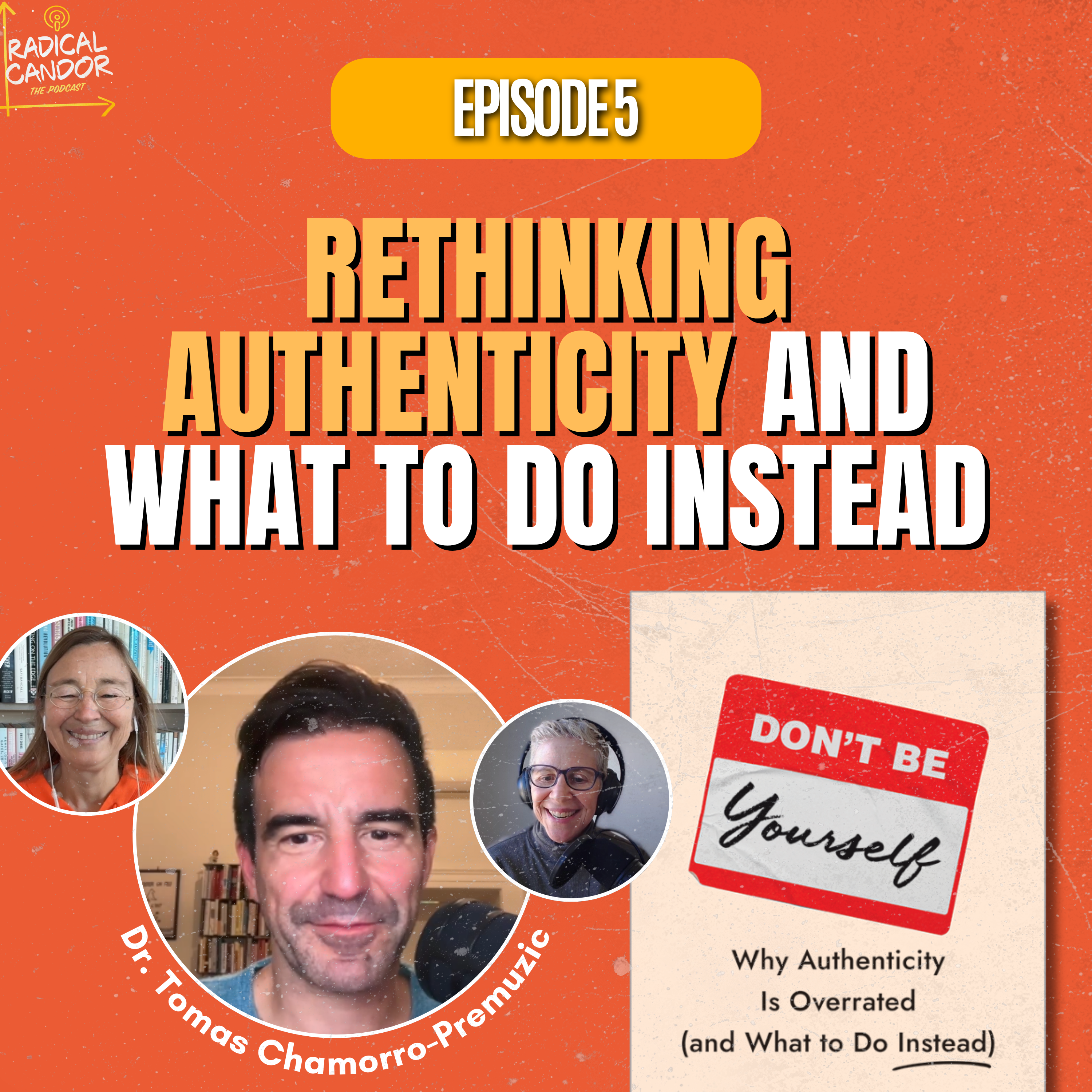
What if the advice to “just be yourself” is quietly sabotaging your leadership? What if the reason your feedback lands poorly, your team feels...
Share your perspective
Leave a comment below.