Two Managers, One Team: Making Co-Management Work 6 | 20
Kim, Amy, and Jason address a listener's question about the challenges of implementing Radical Candor within a co-managed team. They dive into how...
26 min read
 Kim Scott
Mar 18, 2026, 12:00:00 AM
Kim Scott
Mar 18, 2026, 12:00:00 AM
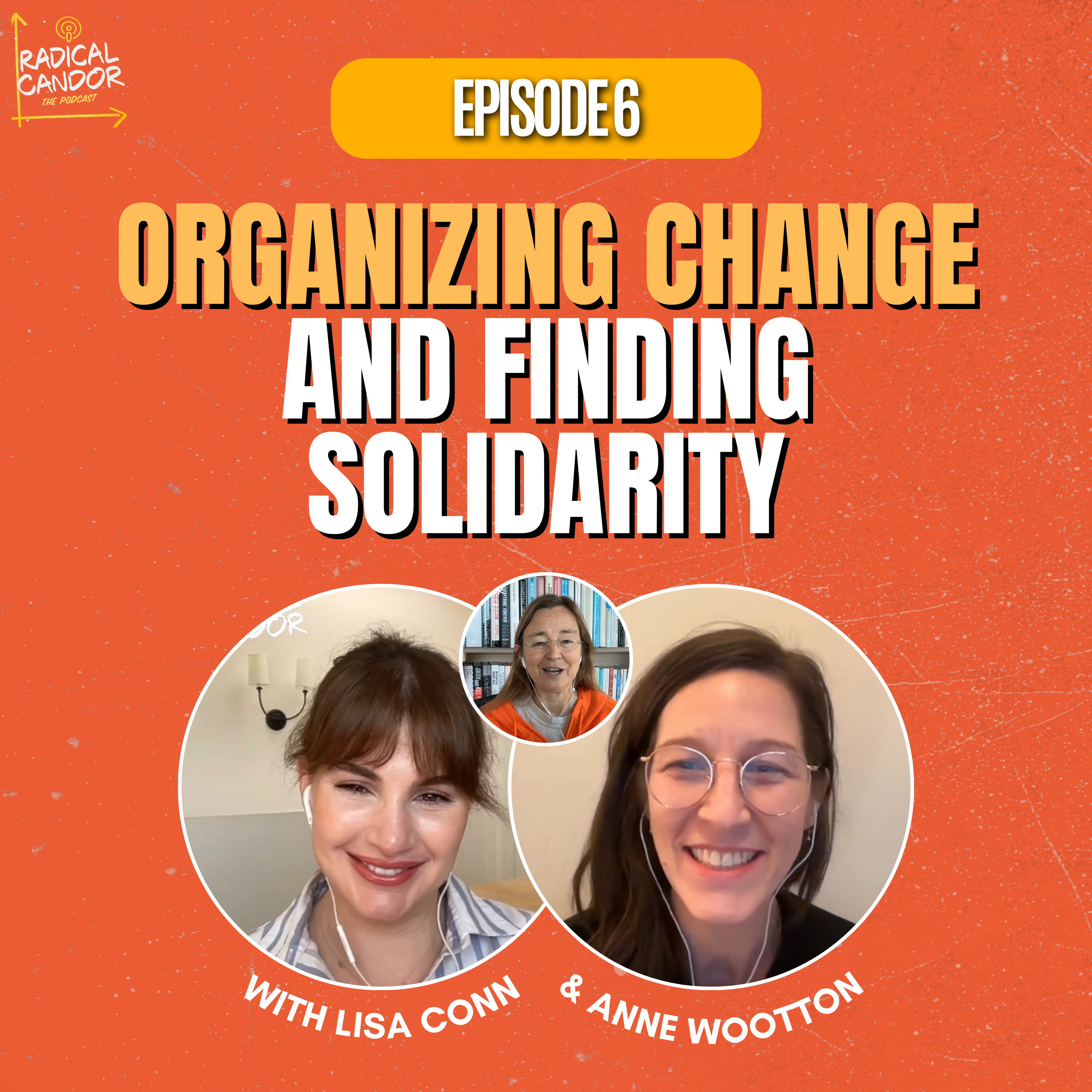
Table of Contents
When tech is at its best, it’s a group of people working together to solve hard problems in a way that makes the world a better place. That goal is what motivated so many folks in Silicon Valley to come here. How then did we cede the microphone to a small number of people who espouse an authoritarian, rich-get-richer algorithm? How can we take action to advocate for our vision of a better future?
On this episode of the Radical Candor Podcast, Kim talks with Lisa Conn — founder of Gatheround and former Meta employee — and Anne Wootton — co-founder of Pop Up Archive and current senior engineering manager at Apple — about the ICEout.tech movement, why they signed the pledge, and how tech employees can organize for change without compromising their day jobs.
Watch the episode:
ICEout.tech, started by and for people in tech, wants the tech industry to use its influential position in our economy to stop ICE. The pledge, which was started after Renee Good was murdered in Minneapolis, has more than 2,000 verified signatures from people across major companies including NVIDIA, Anthropic, OpenAI, Google, Microsoft, Amazon, Meta, and dozens more. The call to speak up against ICE in tech gained momentum after Border Patrol agents killed Alex Pretti, an ICU nurse, and has drawn public support from leaders like Dario and Daniela Amodei (Anthropic), Reid Hoffman, and Vinod Khosla. Tech professionals want their CEOs to join them in this effort, to protect our neighbors and communities and stop ICE’s terror.
Kim, Lisa and Anne discuss ideas for people who are frustrated with the state of affairs at their companies or in tech more broadly, but aren’t sure where to start or how to find a community of similarly civic-minded people to take action. They talk through ways to host meetups for like-minded co-workers while still working hard at your day job and staying within your company’s policies.
They also talk about how important it is to speak respectfully with people who disagree with you. A good goal is to deepen your own thinking, not to change a person’s mind. You probably won’t change theirs, and they probably won’t change yours. That doesn’t mean you’re wasting your breath. When you invite discussion about your beliefs with people who disagree, two good things can happen. One, you get to know them a bit better. Two, you challenge yourself to think more deeply. JS Mill said that belief without discussion can give way to prejudice.
[00:04] Kim Scott: Hello everybody and welcome to the Radical Candor podcast. I'm Kim Scott and the rest of the team is on the Radical sabbatical. So for the next two or three months, I'm just going to be talking about the things that I'm thinking about. And one of the most interesting conversations I had over the last few weeks is with Lisa and Anne who are here with me today. Wave.
[00:33] Lisa Conn: Hello.
[00:34] Kim Scott: Lisa is the founder of Gather Round ⁓ and former Meta employee. And Anne is the founder of Pop-Up Archive, ⁓ which got bought by Apple. So welcome Anne and Lisa.
[00:49] Anne Wootton: Thank you, glad to be here Kim.
[00:50] Lisa Conn: Thank you.
[00:52] Kim Scott: So we are here talking about ⁓ sort of a movement that they helped to foster, I should say, called Ice Out Tech. I want to acknowledge before we jump into the conversation that not everyone shares the same beliefs that we do. So if you have comments or concerns ⁓ or disagreement, please send me an email, podcastatradicalkander.com. We are always eager to hear other points of view.
But ⁓ Lisa and Anne and I share a belief that what ICE is doing in our cities is completely unacceptable. And also, think that tech, ⁓ the majority of people in tech, sort of the vast majority agree with us, but tech somehow has this reputation as the tech right, which I think does not represent, Elon Musk does not represent the vast majority of us, or Peter Thiel.
That's my spiel, Lisa and Anne. Why don't you all jump in and describe what IceOut Tech is doing. And then we can talk about this question that came up on a call last week.
[02:00] Lisa Conn: Yeah, Ice Out Tech ⁓ is a pledge that folks throughout the tech industry are signing. lot of different companies, different roles, different levels of seniority, and we are condemning the actions that ICE is taking in our cities. As Kim mentioned, we all witnessed ICE brutally kill a U.S. citizen on the streets of Minneapolis, not once, but twice. ⁓ And then we all...
[02:21] Kim Scott: And it was just
as bad as when they brutally kill a non-US citizen. Of course.
[02:25] Lisa Conn: Absolutely, absolutely.
And then we see Trump lie about it and the administration mischaracterize what we see happening with our own eyes. And this did not happen overnight. Federal agents have been in cities terrorizing communities over the course of the last year. I live in Los Angeles, so we experienced this with lot of intensity just a few months after we had our fires. So last June, it was terrifying and really terrible. They're still here and they're still terrorizing our community, but we experienced much more intensity.
[02:47] Kim Scott: Yes. .
[02:55] Lisa Conn: last June. And so we created this pledge asking people to sign with three demands. they're all asking CEOs of the big tech companies to pick up the phone, call the White House, demand that ICE leave our cities, cancel company contracts with ICE, and speak out publicly against ICE's violence. I don't think these things are particularly controversial. And the fact that we've gotten so many signatures from so many different kinds of people suggests that a lot of people agree with us.
[03:22] Kim Scott: Amazing. Anne, you want to say a couple of words about how you got involved?
[03:27] Anne Wootton: Sure. And I was also just going to add to the hype a little bit around the pledge because we have seen over 1600 people sign and that number has ⁓ swelled significantly ⁓ just in the last few weeks.
[03:42] Kim Scott: Congratulations. It's really
impressive what you all are doing.
[03:47] Anne Wootton: And yeah, I feel like it's not even my place to say thank you. the reason I'm here is ⁓ what I would say to that, it feels like kind of the least I can do. ⁓ There are people who have signed now a cross tech, Nvidia, Anthropic, OpenAI, Google, Apple, Salesforce, Adobe, Oracle, the list goes on and on. And I found myself feeling like...
It was a really odd sensation to feel so insulated and protected and isolated from so much of the reality that so much of the country is experiencing. And I think a lot of people in my position have a hard time viscerally connecting to what is happening because it is so overwhelming and so hard to grapple with. And so these tech-focused actions feel like one small way that I can try to contribute.
[04:40] Kim Scott: Well, thank you. mean, I've been looking for someone to follow on this and I'm following you too. So thank you for your leadership here. It's really, really important what you're doing and important on multiple different levels. ⁓ So we had a call last week.
[04:46] Lisa Conn: you
[05:04] Kim Scott: And you invited me to participate in the call. So thank you. And someone on the call had a really ⁓ important question that I think a lot of our listeners are also asking themselves. And the question is, if you work in tech or in any industry where you feel like the leaders are not doing the right thing, what do you do? What are your options? And we had a really rich conversation. So I thought the three of us could sort of, I don't.
I don't, there's no capital A answer to that question. It's, but I think a lot of people feel ⁓ isolated and helpless. And mostly I just want to let folks know that you're not alone. So that's part of the goal. And that was part of the joy of that call that you all organized. But also I think that there were a lot of good ideas.
[05:35] Lisa Conn: Mm-hmm.
Mm-hmm.
Mm-hmm. Yeah, I think there's, when we talk about a company not living your values or doing things that you're uncomfortable with, there's the company's actions. And we could talk about Project Maven as an example of that, which was a Google project where employees really pushed back and Google ended up not doing the project with the Department of Defense. Then there's the leader of the company, the CEO or anyone who is external and public, and them doing things in their semi-personal capacity, but...
[06:06] Kim Scott: Mm-hmm.
[06:22] Lisa Conn: That doesn't totally exist when you're the CEO of a large company. And then there's the work you yourself are doing. And I think if all three of those things are misaligned, that's one thing. But if two are misaligned, one isn't, so on and so forth, ⁓ I think each of the situations are a little bit different. Anne, what do you think?
[06:28] Kim Scott: Mm-hmm.
Mm-hmm.
[06:43] Anne Wootton: Yeah, ⁓ right. I love the work that I do. ⁓ And I don't think that ⁓ this is a question necessarily of bringing politics into work even. feels like ⁓ you put this really well actually in the op-ed that you wrote for the Times, about that it shouldn't be seen as brave to speak out in a country ostensibly. That's a democracy with free speech.
[07:08] Kim Scott: Yeah.
[07:11] Anne Wootton: but that the risk is in not speaking out ⁓ and that silence can enable all sorts of terrifying, horrifying things. ⁓ And so for me, a lot of sort of what to do has centered around just being willing to talk about it and to get over whatever instinctual, and I'm very sensitized now, I think, to that instinctual sort of fear or.
[07:13] Kim Scott: Yes.
Yes.
[07:38] Anne Wootton: or pullback impulse to like play it safe or to not speak about something that like Lisa said, ⁓ at the end of the day, doesn't feel like a particular leftist issue, but maybe more common sense. ⁓
[07:53] Lisa Conn: Mm-hmm.
[07:53] Kim Scott: Yeah,
we don't want we don't want people getting randomly shot on the street like that that's not right or left. Yeah. ⁓
[07:58] Lisa Conn: Yeah. Right. Nobody should want that.
[08:00] Anne Wootton: Yeah. ⁓ Yeah. And so
in terms of what to do, for me, that was a pretty simple but significant realization that it's important to talk to the people around me and the people I work with to try to gather with as many others like we did on the call where we all... ⁓
were together recently. And yeah, to not err on the side of caution or safety when the stakes are so high. speaking for myself, at least I'm in a position of relative security. And I know you also have said some smart stuff about the... ⁓
[08:32] Kim Scott: you
[08:58] Anne Wootton: roles of affluence and courage and maybe potentially negative correlation there. ⁓ And that really resonated with me too. Like I said, it's like the least we can do.
[09:01] Kim Scott: Yes, it seems like they're, yeah. Yeah.
Yeah. Well, and I think everybody, it's important to remember that everybody is in a different situation and like,
Like it's right now I'm in a situation where it's totally easy for me to speak out because I co-founded the company where I work. ⁓ My co-founder and I, you know, see eye to eye about these issues. ⁓ You know, and I was very fortunate in my career. Like I'm gonna be able to put food on the table. And so I don't want anyone listening to this to feel judged for what they're doing or not doing. Like we're all in different situations.
[09:25] Lisa Conn: Right.
[09:46] Kim Scott: Having said that, as I was writing Radical Respect and sort of looking back over my career and thinking about other times when I didn't speak out that I could have, I realized that, and this is kind of what I meant in the Times article when I said that affluence and courage are negatively correlated. There was, I mean, I'm going to put it in business terms, there was a negative ROI for me of speaking out.
because I could just quit and get another job and make more money. And if I made waves, it was going to make it more complicated for me to get another job and make more money. But at a certain point, I had to ask myself, how much better can I eat? At some point, enough has got to be enough. And ⁓
[10:16] Lisa Conn: Mm-hmm.
[10:39] Kim Scott: Everybody is at a different stage and has different needs. So I don't want to say what anybody else's number should be, but I had hit my number where enough was enough. And so it's quite easy for me to speak out. I want to express a lot of compassion for people who are working for companies who might be doing things that they vehemently disagree with. you're in an uncomfortable situation in that moment.
I want to hold some space for that feeling as well.
[11:13] Lisa Conn: Why do you think the top most affluent CEOs in tech today seem to have so little courage? Or do you think it is just that they are expressing their ideology? Like, do they actually, are they actually okay with some of this stuff? I don't think so.
[11:26] Kim Scott: I
don't think so. I don't know. I don't know the answer to that question. It's really puzzling to me because I, you know.
[11:31] Lisa Conn: So where's their courage?
[11:42] Kim Scott: I really have the utmost respect for Tim Cook and ⁓ it's puzzling. ⁓ I have the utmost respect for Sundar Pichai and it's puzzling to me. So I wanna say that ⁓ a bunch of people wrote to me and asked me to criticize the letter that the CEOs wrote. And the way that I replied is,
[11:52] Lisa Conn: Mm-hmm.
[12:10] Kim Scott: What I did was I signed your letter. I signed what you all wrote because I felt that it was a very strong statement. And I think we're at this moment where we've got to sort of lead by example, even if we're not in charge. And so that's why I think it's so important what you all are doing. You're speaking out. You're saying what you think. You're not insisting that ⁓ a CEO who knows what kind of pressure these people are under. ⁓
[12:39] Lisa Conn: Yeah.
[12:40] Kim Scott: I mean, I know them to be good and strong people. I would not describe them as lacking in courage in general. So it's ominous. mean, having spent much of my career, well, the early four years, the first four years of my career and what was in the Soviet Union and then Russia, it was it. It's it's really devastating to see what happens in a culture where
[12:47] Lisa Conn: Right.
[13:10] Kim Scott: where people are afraid to say what they really think and where they're afraid for good reason. Like they're going to get shot. Like I have zero fear that, you know, I guess I should knock on wood, but I'm not expected to, I'm not expecting to be arrested and thrown into a Soviet prison as a result of speaking out. So we still do live in a free society, but we may not forever if we don't, if we don't speak out now. And so for me,
[13:13] Lisa Conn: Mm-hmm.
Mm-hmm. Mm-hmm.
[13:40] Kim Scott: at least the ROI of not the return on investment of not speaking out is enormous, like unfathomably huge ⁓ for our world, which is why I admire what you all are doing.
[13:54] Lisa Conn: Mm-hmm.
[13:55] Anne Wootton: Well, and I think that's what you're getting at when you talk about holding space for the different situations that everyone is in. Like, I don't think there's a particular playbook that works for everyone in tech. There are a lot of people who are here on visas who have been told to carry their papers with them, working in big tech. And I think, yeah, you talk about the negative ROI of not speaking out and that.
[14:09] Kim Scott: Yeah. .
[14:21] Anne Wootton: you know, as I think about others who may hear this and be, you know, hearing about this pledge for the first time or contemplating signing it, every person makes the right decision for themselves, I hope. But for me, that feeling of helplessness and isolation is a pretty strong motivator also to then, you know, take a step, however small. ⁓ And in this case, you know, for me to
[14:41] Kim Scott: Yeah.
[14:50] Anne Wootton: to try to spread the word that this pledge exists as something that others can also do and that we can connect and talk about and not feel maybe quite so lonely in the particular work that we may be doing, which, like I said, maybe work that we love, I think those three buckets that you talked about, Lisa, can be separated out and that's okay. ⁓ But ⁓ then, yeah, it's a decision we each have to make.
[15:15] Lisa Conn: Mm-hmm.
[15:20] Kim Scott: So I think there's a few things that we can do to speak truth to power without blowing up our careers. So maybe it's helpful to talk about those things. I think one of the first and most important things we can do that everyone listening can do
is to build solidarity. And that is why I love what you all are doing is you're helping put people in touch with one another so that we can talk about what we are, what we're seeing, what we're reading about and how we feel about it. mean, just knowing that you're not alone is really important because I think there's a term for it that you all probably know that is escaping my my P brain right now. But often
[15:55] Lisa Conn: Mm-hmm
[16:05] Kim Scott: A lot of people agree on something, but then nobody's talking. So they don't know that they feel like they're isolated when in fact they're in the majority.
[16:11] Lisa Conn: Mm-hmm.
I don't know if this
is the term you mean, but mutual visibility is the term that I've used to refer to that. Yeah. Okay.
[16:20] Kim Scott: That's a good one. That's not what I'm thinking of. ⁓
But anyway, I'll put it, I'll think of it and put it in the show notes. But like during, ⁓ in the South, ⁓ the vast majority of people, as it turned out, were actually opposed to segregation. They wanted integrated schools, but nobody was saying it. And so everybody thought they were this radical, isolated person. So build solidarity. That's step number one.
[16:27] Lisa Conn: Great.
Yeah.
Mm-hmm.
[16:47] Kim Scott: So if you don't want to this, the ice out tech, join some other group, but find your people. The second thing that I think is really important ⁓ is to locate the exit nearest to you. ⁓ Figure out like what would it take to get another job? think so often in my career, I have felt more trapped than I really was. Now, again, I want
to acknowledge that some people are well and truly trapped. Some people have a visa situation, but it's important to know what your exit options are before you go in and have these conversations at work. And then before you quit, before you exercise your exit option, have these direct conversations with people at work and see if you can change things because often,
[17:43] Lisa Conn: Mm-hmm. Mm-hmm.
[17:44] Kim Scott: You can as you mentioned
maven you want to talk a little bit about what happened there lisa? Okay.
[17:49] Lisa Conn: Yeah, I think there's actually three interesting examples of tech workers having some kind of influence on tech companies, whether it's the company itself or the CEO or some combination. And I'm happy you talked about the South, my sort of personal family biography. My grandmother was an activist during the civil rights era. And so when I was growing up, I would always hear these stories
of this woman who was Jewish, not wealthy.
[18:15] Kim Scott: Mm-hmm.
[18:16] Lisa Conn: not powerful, not particularly educated, who organized her community and found solidarity and asked for change and was successful. And they did things that seemed small, like they decided to get into the swimming pool next to my dad's elementary school, but those kinds of things, community by community, paved the way. And so I think startups and companies are basically the same thing, people coming together with a shared goal, a shared
[18:27] Kim Scott: That's a big deal. Yeah. Yes.
[18:37] Lisa Conn: purpose, creating something. And so in some ways, we are the most equipped people to organize and to... ⁓
make impact. Okay, so a few examples of this working. The first I want to talk about is the Muslim ban. So
[18:50] Kim Scott: Okay.
[18:52] Lisa Conn: in 2017, we all remember Trump limited entry to the US from certain countries. It was called the Muslim ban. And it was something that was really impacted employees directly. People were stuck and couldn't return home from trips. Others were afraid to leave the country at all. It was really problematic for hiring and hiring pipelines.
[19:08] Kim Scott: Yeah.
[19:14] Lisa Conn: And employees started talking about it internally, not necessarily as a political statement, but because they needed clarity on their jobs and their lives and what was going to happen to them. And as a result, more than a hundred tech companies, including Apple, Microsoft, Google, publicly opposed the policy and actually filed legal briefs against it. And so the courts then blocked early versions and the administration had to rewrite the law.
And the final version was ultimately a lot more constrained as a result of this advocacy. So that's one example where employees really made a difference and the needs of employees made an impact. The second is product maintenance. So in 2018, Google had a contract with the Department of Defense to provide AI tools for analyzing drone footage. So AI tools to contribute and aid in war, right?
[20:00] Kim Scott: Okay. you
[20:04] Lisa Conn: And thousands of employees did not like this. So they organized actions, they signed petitions, some publicly resigned, which is a very extreme way of exercising your exit options. But people did it and it worked. Google ended up not renewing the contract and also issuing very formal AI principles that restricted military use. And then the most recent
example, and I actually don't know the role of employees in this, was in October of 2025, where Trump wanted to send the National Guard
to San Francisco and a bunch of tech CEOs got on the phone, called the White House, their buddy at the White House and said, don't. And he didn't, he listened. So we know that tech companies are impactful and powerful and that employees, workers can organize. And that word sometimes is scary to people. I don't mean for it to be so scary, but find solidarity and ⁓ come up with a strategy.
[20:57] Kim Scott: Organize
should not be a scary word. I'm just going to go out on a limb and say yes. Yeah. People need to ⁓ band together and make their voice heard.
[21:00] Lisa Conn: I think words like organize and power sometimes freak people out, but I agree with you, yeah.
I think there's this perception in the post-2021, 2022 layoffs plus AI world that, yeah, there's this perception that, well, if you want to leave, it saves us on severance. Don't worry about it. And I think that gives employees the feeling that they don't have as much power. ⁓ And I just don't think that's true.
[21:22] Kim Scott: Yeah, it's hard to get a job. There's Yeah, that's what
I'm like, explore your exit options. Even if you have no intention right now of leaving, like figure out where you could go figure out what your exit options are.
[21:40] Lisa Conn: Yeah.
[21:47] Kim Scott: And not because that will make you less, ⁓ not because you're unhappy, but because you will be happier at work if you feel a sense of agency. You're not going to do your best work if you feel trapped.
[21:47] Lisa Conn: Yeah.
Mm-hmm.
Mm-hmm. Very true. In life in general. In any situation, yeah.
[22:04] Kim Scott: Yes, exactly.
Another interesting ⁓ example, or actually there's multiple examples of how people in tech have really had an influence on the industry and on policy is in Cory Doctorow's book, Enchidification. ⁓ And so it's worth reading that book.
Because I think that they're, they're, we've drifted, shall I say, and it's possible to drift back. Have you, have you read that book, Cory Doctorow's book, and I recommend it. I recommend it. Yes.
[22:53] Anne Wootton: No, no, but thank you for the rec. I'm yeah. Yeah.
I think also like this moment more than ever, you know, tech companies are, you know, well, this has been going on for a while, but perhaps now, I don't know, more than ever shaping our lives and our futures in profound ways. You know, we're all being asked to put our trust in tech companies. and so.
you know, looking beyond the short or medium term to what future we're being asked to imagine. think, you know, that's where I get back on ⁓ my silence versus speaking out pulpit ⁓ and feel like, you know, we want technology to create a future of personal empowerment, not fear. ⁓ And so, and that's, you know, ⁓
[23:29] Kim Scott: Yes. Yes.
[23:52] Anne Wootton: mutual visibility or whatever you want to call it. I think we're the value in recognizing, especially when I think, you know, so many of us are like-minded on a lot of these issues, but, know, may not be heard unless we band together.
[24:08] Kim Scott: Yes, I think so much of the impetus for tech was power to the people. It's going to be decentralized. Zadie Smith, there's a great quote from Zadie Smith where she said the internet was going to be great. We were all going to be talking to each other peer to peer, unmediated by the man.
That is not the internet we got. And yet it is possible to get back to those core power to the, know, share the power rather than hoard the power, decentralized rather than centralized. These are choices that we are making ourselves and the work we're doing and that our companies are.
These are decisions. And everyone listening has an influence on those decisions. So let's get sort of practical tactical. What can folks listening do? They can sign the pledge, either sign it with your name or you can sign it anonymously. And you all are checking that real people are signing. So that's awesome. It's not, yeah. So that's awesome. There's also... ⁓
[25:02] Lisa Conn: Yeah.
[25:07] Anne Wootton: Sign the pledge.
[25:15] Lisa Conn: Yes, everyone's verified. Yeah. Yeah.
[25:23] Kim Scott: There's also ⁓ Scott Galloway's ⁓ effort to get people to unsubscribe from a whole host of different products. What do you all think about that?
[25:40] Lisa Conn: think it reminds me a little bit of, maybe I shouldn't say this, but it reminds me a little bit of people who take three minute showers to use less water when, at least in California, just up the coast. Yeah, right? Like it feels a little hard for me to imagine large enough impact that CEOs actually feel the pain. But I think everything's worth trying. These are questions that I ask myself, which are what tactics are and aren't effective.
[25:41] Kim Scott: There's a drought, Yeah.
[26:10] Lisa Conn: what will actually make a CEO bend and what will make them respond is if they're backed into a corner, which is probably not as effective. And so probably employees of companies organizing to boycott their own products, their own companies won't be as effective as, you know, maybe asking questions in town halls or posting on internal Slack channels repeatedly or bringing it up in private.
[26:18] Kim Scott: Yeah. Ha.
[26:38] Lisa Conn: meetings
with leadership until it rises in the in the org org chart ⁓ or just asking questions.
[26:44] Kim Scott: Yeah, or just asking questions, trying to understand the perspet,
like, why are we doing this? Why, what is pushing us to do this and not that? ⁓ Although I do think, I do think, at least for me, I have found it very liberating to look for alternatives, buying everything on Amazon, for example.
[26:49] Lisa Conn: Right.
Right.
[27:06] Kim Scott: And now I'm finding all these cool things to buy and getting cool notes from small manufacturers. So ⁓ I do a search and I try to find some individual who's making the thing that I, I mean, it's not going to work for, you know, well, even, even dental, even like toothpaste. There's like, yes, yeah, there's all these cool, and you can buy them usually directly on the site. So.
[27:13] Lisa Conn: Where do you shop? ⁓
Yeah, there's Coco Floss. There's cool alternatives to things. Yeah.
[27:36] Kim Scott: It turns out that, ⁓ you know, no, no, not at all. There very few things in fact. So I do think also that, that like I'm using, ⁓ I'm obsessive listener to audio books and I'm using Libro FM, which is awesome instead of audible. So there's, there are like, if you just, that neither one of those decisions took very much effort, frankly.
[27:38] Lisa Conn: We don't need Amazon for everything necessarily.
[28:05] Kim Scott: And they actually have been rewarding. So you never know. Anne, looks like you have a thought.
[28:11] Anne Wootton: Yeah,
kind of in the same vein, you know, like it, you don't have to be even the signer of the ice out tech pledge to look for alternatives to buying everything from Amazon, right? And I think that, you know, predates this effort for many people, you know, ⁓ for a long time. ⁓ Similarly, I think the, you know, we've, we've referenced the sort of isolation and, and, ⁓
[28:28] Kim Scott: Yes. .
[28:41] Anne Wootton: Yeah, loneliness that lots of people, not just in tech, are experiencing today, and the role that technology may or may not play in that. one concrete thing that I have ⁓ found through these efforts is a willingness to connect with other people and connect with other people in person even who...
[29:05] Kim Scott: Yes.
you
[29:07] Anne Wootton: I'm in New York, ⁓ it's not where my
company is headquartered, but there are a lot of other tech workers here. just to know that there is, like you said, you find your people, that there are others who I can connect with even in real life, which activates me on so many just fundamentally human levels. There's nothing like... ⁓
[29:18] Kim Scott: Yes.
[29:34] Anne Wootton: truly in-person face-to-face connection. And so I think that serves a lot of purposes.
[29:40] Kim Scott: Yes.
[29:42] Anne Wootton: And if signing the pledge is part of that, then all the better.
[29:48] Lisa Conn: What I will say as a former big tech worker, and maybe meta has changed, but I think this still applies to a variety of tech companies, is there is something about keeping it in the family and sort of keeping it confidential within the family, but being able to be loud and critical internally. And so I think there's a few tactics. If you're a tech worker at a big company and you have the CEO of your company that does have Trump's ear, that
[29:51] Kim Scott: Okay. Thank
[30:15] Lisa Conn: you think whether you ever know about it or not.
but you think could either whisper or yell in a way that might influence him. Some of the things I think you can do that are never public, like you don't ever need to talk to a reporter or post on LinkedIn or post on Instagram. You can do it all internally. And I think some of the tactics are one, figuring out your story, being able to articulate your story. I love the framework of the personal story or the story of self, which is a Marshall Gans concept where you share your values, you explain.
where you landed. So if you're someone who feels strongly about what ICE is doing because of a personal experience that you had, it's a lot harder to argue with a person when they're sharing something vulnerable and true to them. So get clear in your story and be willing to share it as much as you can. ⁓ Learn how to have one-on-ones that are about this. So having coffee with people who you recognize at the company, on your team, on other teams, might share your values and articulate your story, pull out their story, find
[31:04] Kim Scott: Yes.
[31:16] Lisa Conn: areas of commonality and then make a plan of some kind. And then I think internally hosting little meetups that are for coworkers on your team across teams that share your values and strategize. And the more you can start to do those things and where you can kind of build a movement internally while still doing your job and still being respectful of the boundaries of the company, still not risking getting in trouble.
Uh, and I think that that, I, if I were, you as a CEO of a company that was much, it's much, much smaller than any of these companies that we're talking about. If most of my employees are a bunch of my employees were organizing to talk about something that I was doing, I certainly would be aware of that. And at least want to listen in some way, would it change my behavior? Maybe, maybe not, but it would probably influence me to some extent. So learn your personal story, be able to articulate that. really comfortable with it. Practice it.
You can find resources online to articulate that story. Have one-on-ones with people who share your values, and then host internal meetups and make a plan.
[32:22] Kim Scott: Yeah, such good advice. think also in addition to that, it's a great idea to learn how to talk respectfully with people who disagree with you at work and outside of work. Because even if like,
[32:36] Lisa Conn: Yeah.
[32:39] Kim Scott: don't think there's any likelihood that I'm going to change my mind on how I feel about what ICE is doing in our cities. I think it's really wrong. And at the same time, I know there are a lot of other people out there who disagree with me and people I love actually who disagree with me. And it's really important, I think, to learn how to have conversations with people about
[32:56] Lisa Conn: Mm-hmm. Mm-hmm.
[33:07] Kim Scott: deeply held beliefs that you have. to be it's okay to disagree and not to change the other person's mind or change your own mind. Like I think going into those conversations, the goal is not to change the other person, not to be changed necessarily, but to deepen your own thinking because because a belief that doesn't get challenged can become a prejudice.
[33:18] Lisa Conn: Yeah.
[33:35] Kim Scott: And so making sure that like there was a time when I was when I was working at Google and the vast majority of people on the team were super duper liberal and there was one person who was conservative on the team. Well, there was more than one, but there was one in particular who came to me and he said, it's like I'm being invisible eyes. You know, you all assume that everybody agrees with everything you all are saying. And I disagree vehemently, but I don't.
[34:02] Lisa Conn: Hmm.
[34:04] Kim Scott: feel that I can speak up. I don't feel it's worth it to speak up. And that is a huge, I realized that was a huge failure of leadership on my part and of being a good colleague. So make sure that you are, ⁓ that you are not, it's when you feel very passionately about something, it's easy to descend into what I call self-righteous shaming. And I recommend strongly.
[34:04] Lisa Conn: Mm-hmm.
Mm-hmm. ⁓
[34:31] Kim Scott: ⁓ that folks avoid self-righteous shaming at all points and and find find your people but also Talk to your not people or whatever talk to people who disagree with you
[34:44] Anne Wootton: You're making me think of, ⁓ I don't know if you heard either of the acceptance speeches that Bad Bunny gave at the Grammys, but his take away, one of his takeaway lines was just about ⁓ how much hate there is and that hate begets hate and that the one thing stronger than hate is love, right? ⁓ And that's just to, I can't argue with that as a guiding principle.
[34:49] Kim Scott: No, I didn't. Yeah. It's love. Yes.
[35:06] Lisa Conn: Mm-hmm.
[35:12] Kim Scott: Yes, love and truth. You can't choose between them. You got to do both.
[35:13] Lisa Conn: I mean...
So polarization is a term that gets thrown around a lot. We always talk about polarization. And I think there's sort of a framework that I love that articulates what both of you are talking about, which are these kind of sub components of polarization. So polarization is defined as divergence of attitudes to the extreme. And issue polarization is strong opinions about a particular issue. I'm really, I hate dogs. You love cats, like that kind of thing. don't hate, I have a dog, I love dogs, but you you're sort of extreme on these things.
[35:41] Kim Scott: Yeah.
[35:46] Lisa Conn: But that's the issue piece of polarization. Then there's this element called affective polarization, which is how we feel about people who disagree with us. you know, I think that issue polarization is actually quite important in moments of civic activism. If you didn't feel strongly about an issue, you wouldn't engage, you wouldn't protest, you wouldn't vote, you wouldn't sign a pledge, you wouldn't have us on your podcast. So I don't think it's a, I don't think extremism when it comes to how you feel about something, about an issue is necessarily a bad thing.
But when it results in us hating people who disagree with us, that's where it becomes impossible to collaborate, compromise, have conversation. So what I aspire to in conversation, and it's not easy talking to people who disagree with you, especially when you feel strongly, it's really unpleasant. It's worse than going to the dentist, is try to still love the person who I disagree with. So try really hard to.
listen and to understand, but if you can't, and if it doesn't change your mind in any way, if you can't find common ground, still try to feel love or positivity towards the person you disagree with. And if you can't, that's something also to reflect on and think about. Because we can be polarized on issues without being effectively polarized. I think it's the affective polarization that really tears us apart.
[36:56] Kim Scott: Yeah. Yeah.
Total very, very well said. I'll give you an example of this happening to me. was invited to give a talk for an organization and I didn't really read much about that. I said yes. And then right before I was about to get on the airplane, I kind of looked into the organization. was like, my goodness, they believe a lot of things that I vehemently disagree with, which was clear. If you look at my own, I mean, I don't make a secret of what I.
what I think. ⁓ And I, you know, I called them to make sure they were, they knew where I stood and they were like, of course, you're the radical candor person. Of course we can. So I thought, well, of course, you know, we can talk. And so I got there and I started giving the talk and it was going well and good questions and a lot of warmth from the audience. And I had this thought.
These people are not my enemies. These are my, you know, these are my fellow citizens. These are my, you know, my fellow people. And I realized that I had this effective sort of disrespect and I just took a deep breath. I was like, I like these people. Like I may not agree with them, but I like them. And after the talk was over, somebody came up and asked me if I believe
[38:03] Lisa Conn: Yeah.
Yeah.
Mm-hmm.
Mm-hmm.
[38:30] Kim Scott: X, yes. Y, yes. She kind of cocked her head and she looked at me and she said, huh, you don't seem like an evil person. And, and I would have laughed at her except that I had I realized I had just been going in thinking these like we are not. There are evil people in the world. I don't want to say that but most of us are really not most of us are really good human beings. Yeah.
[38:46] Lisa Conn: Same thing.
bet them being welcoming of you and being
excited to have you made you feel more open to them. Like so often, and I deal with this sometimes, there's just kinds of retaliatory dehumanization where you assume the other person's going to dehumanize you, so you want to dehumanize them first. And sometimes we feel that people are judging us, and so we judge them first. But if you're welcome with open arms, you might respond with open arms.
[39:03] Kim Scott: Yes, Mm-hmm. Yes, yes. Yeah. Yes,
so welcome everyone to have great conversations.
Take a deep breath. think where we ended on the call and where we should probably end this conversation is I hope that everybody can take a deep breath. Take the time to do what they need to do. I spent a good chunk of this morning outside weeding. That is what I need to do to stay sort of calm. So figure out how to spend the time that you need to replenish yourself.
[39:47] Lisa Conn: That's amazing.
[39:56] Anne Wootton: Absolutely.
[39:58] Kim Scott: All right. Thank you all so much. Thank you for the work you're doing. I'll put in the show notes ⁓ link to the ice out tech ⁓ pledge that people can sign if they are so moved. And thank you to the listeners for listening to this conversation. If you have thoughts and comments, podcast at radical candor.com. We invite all perspectives and welcome them.
Thanks so much. Yes, iceout.tech. Thank you. Thank you. You don't have to wait for the show notes. All right. Take care of Goodbye.
[40:25] Anne Wootton: And it's iceout.tech if you wanna just go there right now. Don't have time for the show notes. Easy to remember. Yeah. Yeah.
A pledge started by and for people in tech that asks the industry to use its position to stop ICE. It has 2,000+ verified signatures from employees at NVIDIA, Anthropic, OpenAI, Google, Microsoft, Amazon, Meta, and others, with public support from leaders including Dario and Daniela Amodei, Reid Hoffman, and Vinod Khosla.
Lisa and Anne share practical patterns: host small, focused meetups for like-minded coworkers; keep your day job your priority; stick to public, off-the-clock channels; and use your own time, equipment, and platforms rather than company ones.
A good goal isn’t to change someone’s mind — it’s to deepen your own thinking. Inviting discussion does two things: you get to know the other person better, and you have to articulate what you actually believe. JS Mill’s line: belief without discussion can give way to prejudice.
Because tech’s microphone has been ceded to a small number of voices, and most of the people who came to Silicon Valley came to make the world better. Employee voice is one of the few counterweights — and a coordinated voice is much louder than a lone one.
Start small: find a community of similarly civic-minded people, host conversations rather than rallies, and use everyday economic power (the “Resist and Unsubscribe” framing) by reconsidering which big-tech services you fund.
Three ways to put this into practice.
Kim, Amy, and Jason address a listener's question about the challenges of implementing Radical Candor within a co-managed team. They dive into how...
Political discussions at work can be polarizing, but they don't have to be. Kim, Jason, and Amy share insights on navigating political discussions...
We all love the convenience of our digital devices and connected services. But what about the ever-expanding pile of digital breadcrumbs we leave...
Share your perspective
Leave a comment below.