How Great Companies Stay Great with Eric Ries 8 | 12
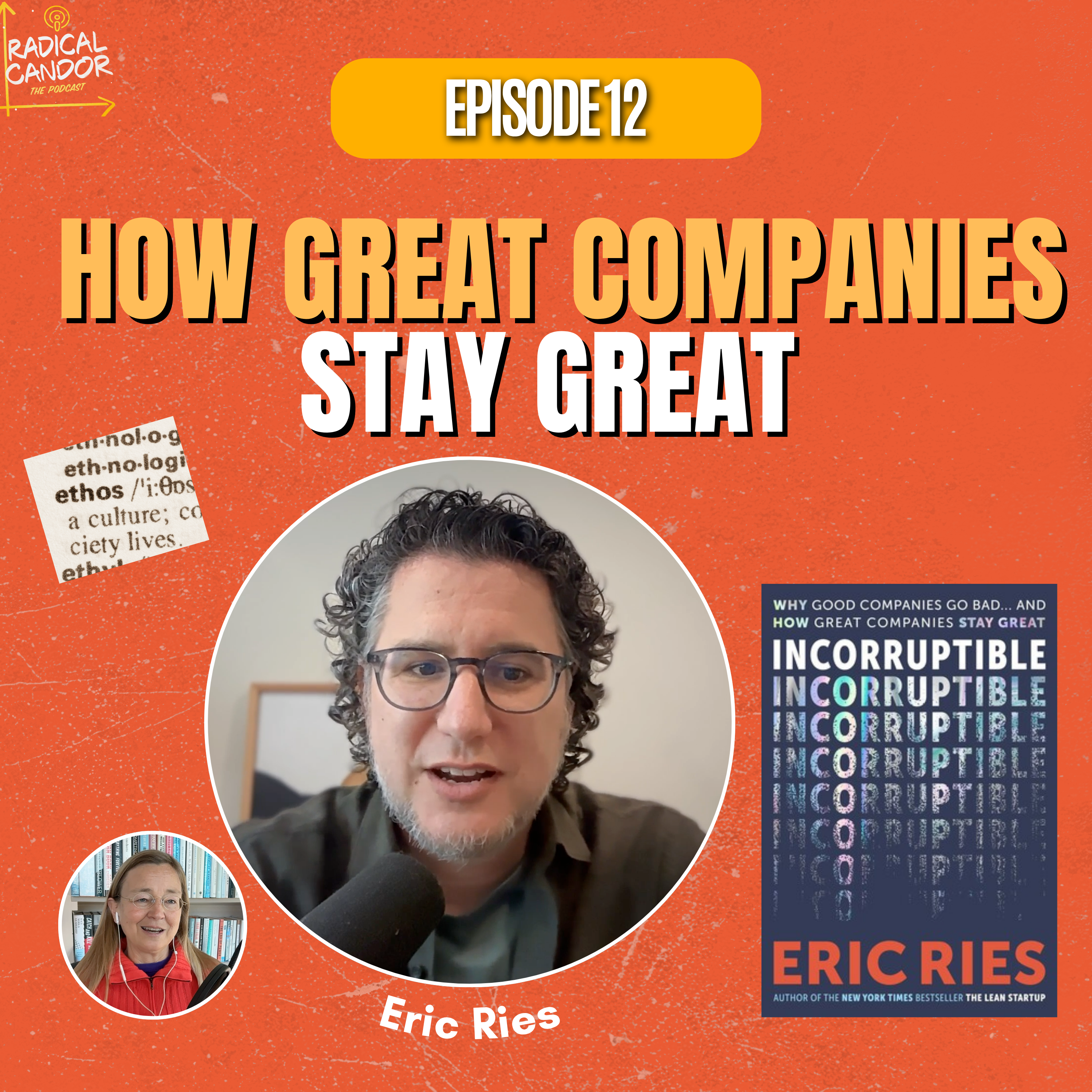
All too often, founders start a company and hire an incredible team dedicated to solving an important problem and leaving the world better off. Then...
46 min read
 Kim Scott
Jul 7, 2026, 10:00:00 AM
Kim Scott
Jul 7, 2026, 10:00:00 AM
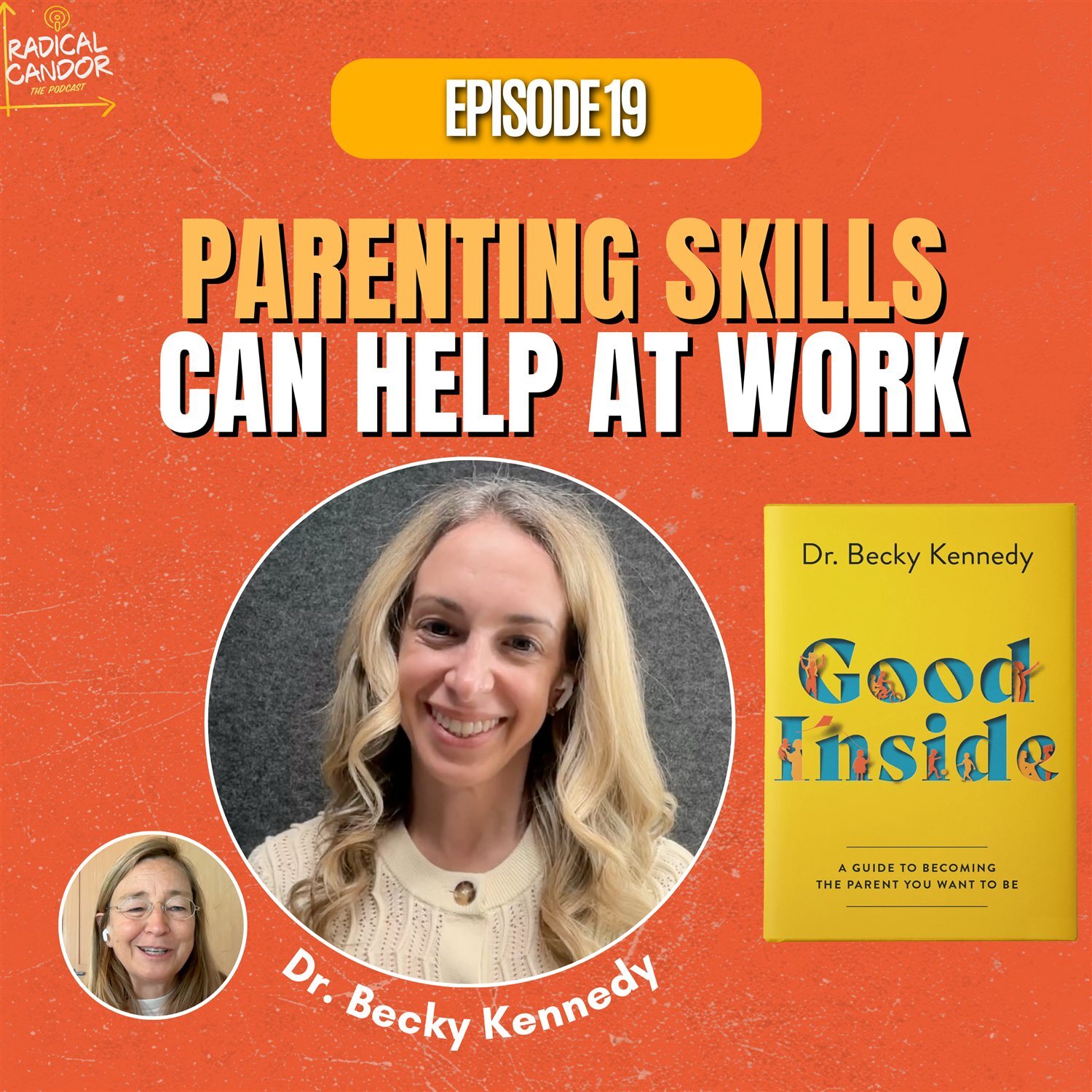
Table of Contents
While the podcast team is on a Radical Sabbatical, Kim is spending the season interviewing authors of the books that have shaped her thinking most in the last two years. This time, that's Dr. Becky Kennedy, the clinical psychologist and mom of three behind the parenting company Good Inside and the #1 New York Times bestseller by the same name.
On this episode of the Radical Candor Podcast, Kim talks with Dr. Becky about the surprising overlap between raising a family and running a team. You can't send a direct report to their room, but the skills that make someone a good parent — holding a boundary while staying warm, getting curious instead of defensive, repairing a mistake instead of pretending it didn't happen — are the same skills that make someone a good boss.
Watch the episode:
Dr. Becky's core move works whether the person losing it is four or forty-four: treat the outburst as an emotional fire, not a personal attack. Respond to the words on the surface — "you're a horrible manager," "I hate you" — and you'll fuel it. Get curious about what's underneath it instead, and it burns itself out. No one can sustain that level of emotion for more than a couple of minutes if you stop adding fuel.
That containment instinct, Kim points out, transfers directly to work. The colleague who snaps at you in a meeting and the toddler melting down in a grocery store are running the same program. Neither is a fair fight to win with a sharper comeback.
Dr. Becky frames every relationship as a bank account. Every time you ask something of someone — get dressed, hit this deadline, brush your teeth — you make a withdrawal. If you're a big withdrawer, you'd better be a bigger depositor. The deposits are moments of full, undivided attention: the first minute you see your kid in the morning, the first minute of a 1:1.
The advice isn't to carve out more hours. It's to stop wasting the handful of high-impact minutes you already get. How you deliver a hard message is multiplied by how full that account already is — and anything times zero is zero.
A boundary and a judgment can sound identical and land completely differently. "What is wrong with you, I'm taking away your blocks" and "I'm putting the blocks away because my job is to keep you safe" remove the same blocks — but only one keeps the kid on your team instead of making them your enemy.
The same split shows up in a performance conversation: naming what didn't work while making it clear you still believe in the person isn't a contradiction. It's the whole job. You can hold the line on behavior and still be squarely on someone's side.
Every parent yells sometimes. Every manager mishandles something. What determines the damage isn't the mistake — it's whether you repair it. Owning what went wrong out loud does two things a clean record never can: it models the accountability you're asking for, and it proves the relationship survives a bad moment.
Dr. Becky's line for it: "I know you can do better" — said from a place of belief, not threat. It works on a kid who bombed a goodbye at drop-off and on an employee who bombed a project, for the same reason.
[00:04] Kim Scott: everybody and welcome to the Radical Sabbatical. This is the Radical Candor Podcast where I am talking to the authors of books that have enormous meaning for me. And I am thrilled today to have with us Dr. Becky Kennedy, author of Good Inside. Welcome Dr. Kennedy, Dr. Becky. Thrilled, thrilled to have you.
[00:25] Dr. Becky Kennedy: Than thank you, Kim. So happy to be here.
[00:31] Kim Scott: I think there's so much overlap actually between our work. Radical Candor's about caring personally and challenging directly at the same time. And I really feel like Good Inside is kind of about the same thing. Two good things can be true at the same time.
[00:44] Dr. Becky Kennedy: Yeah. Yes. Yes. I well, I think those two things, you know, one of the the what I hold so kind of at the core of good inside is that kids need kind of boundaries. They need expectations, right? By the way, that they're not going to meet. Like I need to believe my kid is capable of making a transition or is capable of having better behavior. I need to hold on to that belief way longer.
[01:08] Kim Scott: Yes. Yes.
[01:12] Dr. Becky Kennedy: Than a minute or two, because that doesn't mean the next day things are gonna change, but they need expectations. They need someone to believe in them, right? And they also need boundaries, right? That's one thing. At the same time, I think kids really need us to connect to them. They need to see that their feelings are actually real. They need to be seen as good inside even when they have bad behavior. And I think that side of things has a lot of validation and warmth and.
[01:19] Kim Scott: Yes. Yes. Yeah.
[01:37] Dr. Becky Kennedy: I think in this new age of parenting, we've kind of overcorrected to that side and a little bit left out our belief in our kids' capability, our belief that they need to tolerate struggle, our holding boundaries that are really important for them. and I think good inside really brings that back into the picture.
[01:44] Kim Scott: Yes. I love it, I love it. And in fact, part of when I was writing Radical Candor, my college roommate was reading it and giving me advice. And she said to me that the workplace is all about the unfinished business of childhood. And I feel like so much of what Radical Candor is about is stuff that we all should have learned in childhood, but didn't. Well, what do you think?
[02:19] Dr. Becky Kennedy: Yeah, I mean I guess I think that's what adulthood is. Isn't that what adulthood is? I mean, our unfinished parenting is, our adult friendship stuff. We make friends with another mom at, you know, at preschool and we see three moms, we're at coffee and we weren't invited. And I'm like, my goodness, why why am I going back to what happened to me in middle school and on the soccer team in elementary school, right? Because the stuff that is unfinished or unhealed will make itself known to us.
[02:22] Kim Scott: Yes, it is. It's what per- Yes. Yes. Yeah.
[02:47] Dr. Becky Kennedy: In all different ways to try to get our attention, you know, to to try to get that healing and growth. And and I think you're right. Mm-hmm.
[02:47] Kim Scott: Yes. Yes. Yes, even more true when the parent is a dad, that the exclusion happens, right? From the other parents. I watch my husband struggle with that a lot. Another thing that was said to me that I think will resonate with you is early on in radical candor, I would say you just need to bring what you already know about relationships to work. And this engineer stopped me and he said, Kim, I wish you would stop saying, you know, if you write a book about feedback,
[03:02] Dr. Becky Kennedy: Mm-hmm.
[03:24] Kim Scott: you're gonna get a lot of it. And here was the feedback. He said, I wish you would stop saying that because most people don't know how to have relationships. And your job, Kim, is to begin to teach them. And a lot of your work is so helpful, again, not just about parenting, but about collaborating at work, whether you're the manager or the employee or someone's peer.
[03:25] Dr. Becky Kennedy: Uh-huh. Mm. Yeah. Yeah, you know, and I think I think this is a really important point because if I told you I was gonna change careers and become an astrophysicist, and then you said, Well, Becky, what do you know about astrophysics? I'd say, honestly, not a lot. But I think you'd say to me hopefully, okay, well, I hope you go learn things. Because by the way, like learning about astrophysicism, Becky, doesn't come naturally. Like you can really want to, but it it's not something someone's gonna drop on your doorstep. And there's something
[03:57] Kim Scott: Yeah. Yeah. Yeah. Yes. It takes some work.
[04:17] Dr. Becky Kennedy: Yeah, there's something with relationships and then I think especially with parenting because of this maternal instinct narrative that we have in our culture, that it should come naturally. That knowing how to show up for my kid and stay calm when they're tantruming and hold a boundary around their behavior, no, I will not let you hit. But have that not resort in me yelling random things I never intend to follow up on. That would come naturally. And I think parents find a lot of relief when I tell them the only thing that comes naturally in parenting.
[04:27] Kim Scott: Yes. Yeah.
[04:46] Dr. Becky Kennedy: Is how you were parented. And that that actually makes sense, which doesn't mean you're locked into that forever. No one in my family was an astrophysicist, so it doesn't come naturally, but I could be if I put the time in. And anybody can learn about parenting and show up in a way that feels better and stay connected to their kid and hold high expectations. It's just that we're not gonna naturally absorb that by walking down the street.
[04:48] Kim Scott: Yes. Yeah. Yes. Yeah, yeah, you have to be you have to become aware of how you were pan parented and maybe learn something about what could have gone better, you know, while forgiving your parents.
[05:17] Dr. Becky Kennedy: Yeah. A hundred percent. Yeah.
[05:23] Kim Scott: One of the things that I often say about becoming a manager is that becoming a manager is to become a projection screen for everyone's unresolved authority issues or parental issues, which is uncomfortable for most people. So like it or not, when you become a manager, you're often cast in the role of parent and usually the wicked step-parent, know, not the loving ideal parent. So how would you suggest dealing with that?
[05:34] Dr. Becky Kennedy: No
[05:52] Kim Scott: as a manager with being cast in the role of the evil step-parent.
[05:56] Dr. Becky Kennedy: Yeah. Well I mean, I think there's probably an even broader question. Let's start with it at work, where when something is just really heated between two people or when you feel like someone says something to you that you didn't really deserve, how do we operate in a way that's both effective, that feels respectful to everyone, and that preserves the relationship, assuming it's someone you need to stay in a relationship with or you want to, like your kid or like your employee, right? So
[06:06] Kim Scott: Yes. Yes.
[06:23] Dr. Becky Kennedy: You know, the first word that comes to mind is actually curiosity here, right? And I think curiosity is such an important trait that we all need to keep cultivating and parenting, definitely in workplace too. Because if I think about in your work situation, someone says something to me where like, Hey, I really didn't like the way you intervened in this meeting, Becky, and you're a horrible manager, and I feel like I'm in this kind of wicked stepmother, you know, kind of position that maybe I think even someone's overreacting to.
[06:26] Kim Scott: Yes. Ha\!
[06:51] Dr. Becky Kennedy: What it's interesting, Kim, what it reminds me exactly of is when you say to a toddler, TV time is over, it's time to get ready for a bath, I hate you, you're the worst mom. And you're like, What the heck? I just what did that happen? Right. And in both situations, what's remarkably similar is if we only respond to the words on the surface, we're gonna have to the behavior. If we take them kind of at full face value, we're gonna have a very unproductive conversation, right?
[06:58] Kim Scott: Yeah. Yes. to the behavior. Yes, whatever it is. Yes. Yeah.
[07:20] Dr. Becky Kennedy: What do you
[07:20] Kim Scott: Yeah.
[07:21] Dr. Becky Kennedy: it honestly, it's probably the same thing in both situations. I'd say, what are you talking about? You're making a big deal out of nothing. You can't talk to me that way. it's just gonna it's gonna flame. It's just fuel curiosity, which is really hard in both situations, probably starts with me taking a deep breath and reminding myself, hold on a second, something's going on here. This moment doesn't define me as a person. And then maybe even saying and hold on, you're really upset about something. I believe you.
[07:27] Kim Scott: Yeah. Yeah. Yeah. Yeah.
[07:50] Dr. Becky Kennedy: I also have a feeling you could tell that to me in a different way. So let's start again. It's actually interesting, whether I'm talking to my four-year-old or I'm talking to my 44-year-old colleague. I actually think the same language, you know, could really apply. And it comes from, even though their language is so escalated, there must be some part that's very real underneath. And I want to be curious enough to go beneath the words and figure out what's going on at the core. Because if I don't, you know what's gonna happen? That core is gonna continue spewing lava.
[07:53] Kim Scott: Yeah. Yes. Yes. Yes. Yes. And I think that is one of the things that was so helpful to me about becoming a parent in the workplace is that I learned.
[08:20] Dr. Becky Kennedy: Over and over. Mm-hmm.
[08:32] Kim Scott: I had to learn when my two-year-olds were laying, I have twins, so I always talk about children in the plural, but they would lay down on the floor in the grocery store and kick and scream. And yes, I had to learn how to take that deep breath. But the thing about it that I learned,
[08:49] Dr. Becky Kennedy: I'm sorry, Kim, so hard. Ugh yes.
[08:54] Kim Scott: is that no human being, whether they're four or 40 or 75, can sort of sustain that level of emotion for more than about 90 seconds, maybe two minutes if they really have a great capacity for strong emotion. And if I could just refrain from pouring fuel on the fire, it would go out by itself.
[09:08] Dr. Becky Kennedy: Yeah.
[09:19] Kim Scott: And that is so helpful at work, especially when dealing with senior leaders. So if I'm not the employee, if I'm not the evil boss, but the employee, you know, just learning how to treat that the same way I learned how to treat. was easier to handle in a tantrum from a two year old than than your boss. But it is it's useful, useful skill.
[09:37] Dr. Becky Kennedy: Yeah. Yeah. I think you're talking about when someone's really out of control. Sometimes I think it's actually powerful to think about them as kind of their feelings, their thoughts, their feelings, their urges in their body kind of are exploding out like an emotional fire. This is an emotional fire. And in life, we don't have emotional fire extinguishers. We just don't. So I'm sorry to all of you who, you know, thought you could find it. We can't just like put it out, you know? and so what's the next
[09:50] Kim Scott: Yeah. Yes. Yes. Yes.
[10:08] Dr. Becky Kennedy: best available option if there were a fire in your kitchen if you couldn't extinguish it, you would contain it. right. You would actually say, I can't make this fire go out, but I can prevent it from spreading. And so if you think about it containing it, and then I think about, you know, a two year old on the grocery store floor
[10:13] Kim Scott: Yes. Prevent it from spreading, yes.
[10:28] Dr. Becky Kennedy: Containment often means, okay, maybe I need to pick them up off the floor if they're like kicking the cereal because now all the cereal is falling off, right? maybe I need to get down low with them and just say simple words like, I'm here, or you know, I'm not gonna let you hit your sister or whatever it is. But actually it's saying a lot less on the outside and focusing a lot more on your own regulation on the inside because your kid can feel whether you've been taken over by their fire and now you're a fire. Stop, you're embarrassing me.
[10:33] Kim Scott: Yeah. Yeah. Yeah.
[10:58] Dr. Becky Kennedy: Or they feel if you can stay calm and that makes them kind of trust you. Like, the thing that overwhelmed me didn't overwhelm my mom. Okay. And that's kind of and and same thing at work. Someone says something, it's so inflammatory. It's good language because there's a fire image there. As good as it feels to kind of snap something back, you are just adding fuel. So is the fuel making the fire bigger?
[11:02] Kim Scott: Yeah. Yeah. Yes.
[11:22] Dr. Becky Kennedy: Is that worth it to feel like really powerful in the moment and deliver a zinger? Like only you know, I don't tend to think it's worth it. You know, unless the zinger's like really good. But just doing nothing and containing it allows the fire to get smaller and then you can have a more reasonable conversation.
[11:34] Kim Scott: Yeah. Yeah, I think one of the things that you say in a lot of different ways, very wisely, is that power and control don't work. They don't work as a parent. They don't work as a manager, but relationships. This is about building a relationship. And I think that is true in any aspect of life where you're working with other people to build something, whether it's a family or a business or a family business. Yeah.
[12:02] Dr. Becky Kennedy: Yeah. Yeah. I mean, I I like to think about this concept of connection capital because I think it's just very, very concrete where, if you think about your relationship, let's say, with your kid as kind of having an emotional connection bank account, right? Every single time you ask a kid to do something they don't inherently want to do, you are withdrawing, right? And by the way, we have to ask our kids to do things they don't want to do all the time. I mean
[12:09] Kim Scott: Yes. Mm-hmm. Yeah. Yes.
[12:31] Dr. Becky Kennedy: Time to get up, get dressed, brush your teeth, come have breakfast. That's four things before 7:15 a.m., right? And we shouldn't feel bad about that. That's just moving the day along. But if you think about that as withdrawing from the bank account, it makes you think, okay, well, if I'm a pretty big withdrawer, I better be an even bigger depositor, right? And the deposits in are all the different things we do to really connect to our kid, which is
[12:36] Kim Scott: Yeah. Yes.
[12:57] Dr. Becky Kennedy: Kind of a collection of moments where our kids feel seen, where they feel heard by us, where they feel like they have the rarest commodity of 2026, our full undivided attention. And and those moments I should say that are really connection and relationship building, I think as time goes on and the world gets so fast, feel very slow. They feel very low stim. So, Dr. Becky, you're saying I should just sit there at the kitchen table while my son after school
[13:07] Kim Scott: Yes.
[13:27] Dr. Becky Kennedy: Has a snack and not pepper him with questions and just kind of wait for him to talk. And and it's by the way, I hear myself say that it almost gives me a panic attack. It's so hard, right? But being fully present, listening, right? Not fixing things, saying things like, I'm so glad you're telling me that. I'm so happy to spend this time with you. tell me more.
[13:37] Kim Scott: Yeah, it is.
[13:49] Dr. Becky Kennedy: Those are major deposits. And at the end of the day, the effectiveness of your parenting intervention, the thing you say, the request, it's not just about how you say something in the moment. How you say something is then multiplied by how full or empty that that account is. And if the account's at a zero, anything times zero is zero. Right? Yeah. You are. You are. Yeah.
[14:10] Kim Scott: is zero, you're overdrawing on that account. The other thing that is so wise about your book is you talk about these moments. You're not saying put your phone away and shut your computer for half the day. like, it doesn't take that long to eat a snack, you know? And so much of radical candor is about these impromptu two-minute conversations. They are real human conversations, but most human conversations are actually chats. They're like two minutes or less.
[14:29] Dr. Becky Kennedy: yeah. I I love that you said that because, you know, we kind of also know there's certain moments in a parent and kid's day that have an outsize impact. And so the first couple minutes you see your kid in the morning, right? And I'll go over that. The the first couple minutes you have a reunion with them after daycare, after school, after soccer practice, because you didn't see them all day, and the last couple of minutes before they go to bed. Right. And I think there's something very practical and helpful about that. Because by the way, I have a feeling you have a lot of overachievers listening.
[14:55] Kim Scott: Yeah.
[15:11] Dr. Becky Kennedy: Overachievers, this is for you. Do not pick all three moments. You're like, great, I'm gonna crush all three. No, no, no. And it's not, I'm not right. I'm not saying that because I don't believe in you. I'm saying that because I do believe in you. Right. So let's gain some momentum. Start with one moment because I realized this in my own house. I was like, yeah, the first moment I see my kid, I'm pretty sure that's a good moment. And I realized the first moment was me in the kitchen yelling something like, You're already late. Come, you have to do everything around here. And I was like,
[15:11] Kim Scott: Ha\! Choose one.
[15:37] Dr. Becky Kennedy: like that's how I'm starting my new relationship with my kid. Like, can I imagine if the first thing my husband said to me was that? And then he got mad at me later for being in a bad mood. I'm like, you you had a part in that. Like, right. And so can you make the first thing you say to your kid eye contact, not yelling across the house, I'm so happy to see you today. I'm so lucky you're my kid. And parents always say, but you think my kid's gonna say something nice back? No, I think you have a normal kid and your kid will roll their eyes. That's fine.
[15:41] Kim Scott: Yes. Yes.
[16:07] Dr. Becky Kennedy: Who cares? Let them roll their eyes. It still matters. Or can I say to myself, I'm gonna put my phone away and I'm gonna do the five-minute bedtime routine without bringing my phone in the room. I really am. And I'm just gonna sit on the bed and I'm gonna remind myself my kid's gonna ask for water 13 times. It's just kind of part of his arc right now. And I'm gonna take a deep breath. But that's a one five minute period that I'm gonna crush, right? You pick the moment, but yeah, those moments, it's not all the time. It's really kind of zoning in on high impact moments.
[16:07] Kim Scott: Yes. Yeah, yeah. And I think these moments of connection are how relationships form. they're fleeting moments, and you want to have more good ones than bad ones. You're never going to say you're never going to have a bad, I mean, you can say that, but you will have bad moments. But the goal is more good than bad.
[16:44] Dr. Becky Kennedy: Yeah. Yeah. And I think, just to add, we all have those bad moments as a parent. Okay. Like anyone who says, I don't yell at my kids, I've never said something, you're a liar. Like you're a liar, we're not gonna be friends because you're lying, okay? I just don't believe you. We all have those moments. And so I think, yes, we wanna have more of the good moments, but I always like to tell parents we can have maybe our best moment of the day.
[17:03] Kim Scott: Yes. Yes. Ha\!
[17:24] Dr. Becky Kennedy: After our worst moment. Because after you yell, if you can kind of collect yourself and remind yourself you're not a monster, your whole relationship with your kid was not defined by the moment you yelled at them for being ungrateful about a gift. It's was not. That was just also a short period of time. But what is true is if you let that moment sit and just tell yourself the story of being a bad parent, it is gonna feel tough between you and your kid for a while, or maybe the rest of the night. If you repair, hey, I'm so sorry I yelled at you. That was not okay. I'm sure that felt scary. Look.
[17:25] Kim Scott: Yes. Yeah.
[17:53] Dr. Becky Kennedy: Later, maybe tomorrow we could talk about how to kind of receive a gift in a kind way, but that's not even an excuse. It just wasn't okay for me to yell at you the way I did. And I'm sorry. And to know that you're modeling accountability and repair things that we all want our kids to to have when they get older, that wouldn't even be possible if I didn't mess up. And so sometimes our best moments are because of our hard, bad moments.
[18:12] Kim Scott: Yes. Yes, yeah, exactly. Because the repair can actually do more good. It repairs it like it doesn't it makes it better. It's like, what's that? Japanese art form of putting broken charts with the gold? Yes, I can't remember. But it but that's what repair can feel like.
[18:21] Dr. Becky Kennedy: Yes. Japanese, right? With with the gold and the and it's interest that's exactly right. And you know, it's interesting because when I talk to parents about the traits they want in their kids, I I wouldn't say explicitly a parent always says, I want my kid to be able to apologize, even though I think we'd all Yeah, that matters a lot. But accountability is is high. I think it's it's like a word. I want my kids to be accountable. When is my kid gonna be accountable for their behavior? And
[18:47] Kim Scott: Yeah. Yes.
[18:55] Dr. Becky Kennedy: You know, one of the things I say to parents kind of directly is again, like with love, tell me how you model accountability when you show up in a way you're not proud of with your kid. Just talk to me about it. Right. And how can I expect my kid to be accountable for their bad behavior if I'm not accountable for my own? It's just, it can't happen. And so to know as a parent, I'm actually helping my kid be accountable.
[19:06] Kim Scott: Yes. Yeah.
[19:17] Dr. Becky Kennedy: For all I know, for someone listening, they would think I'm probably the first adult in my whole lineage who's ever apologized to a kid. That's really generation changing and cycle breaking. That's that's amazing. That's huge.
[19:25] Kim Scott: Yeah. Yeah, yeah, you're doing important work raising the next generation and improving humanity, really.
[19:30] Dr. Becky Kennedy: Yes. I mean, how many adult issues at work? Politics would would be better if people were saying, you know what, I'm sorry about that. That got a little extreme. I'm sorry. Let me dial that back a couple notches.
[19:37] Kim Scott: Yes. Yeah. Yes. Yeah, I think also the thing about these bad parenting moments is that we carry with us so much guilt. I'll share a really bad parenting moment and how my career actually helped me overcome it. Because I feel like we there's this notion that there's this work-life balance and every time you're working, you're hurting your children. And that's just not true in my experience. So this happened. My kids are 17 now. But back when they were in preschool, they were I don't know. three or four. And I had picked them up at nursery school and I was taking them home and I had a meeting as soon as I got home. So I was already a little bit, you know, on time crunch, little stressed. And they started fighting in the in the backseat, like, I don't know, throwing things at each other and yelling, I kept saying, stop, stop. And finally, I was
[20:23] Dr. Becky Kennedy: Mm. Stressed, yeah.
[20:38] Kim Scott: like rage over and I pulled off the road I pulled into a parking lot and I said I am so angry it's not safe for me to drive I got out of the car and I walked around the car three times and I got back in and their eyes were like saucers they're like my gosh she's lost it yeah and I drove I got home and I felt so I was
[20:56] Dr. Becky Kennedy: Ish yeah.
[21:02] Kim Scott: overwhelmed with parental guilt. had this meeting, I knew I needed to repair, but I didn't have time to repair. Anyway, I got on the call, but I got on the call in a public space so they could come. And I was talking and I was back like I was, you know, the professional giving good advice. And each kid sat on either side of me and you could just feel their bodies relaxed. They're like, thank God work mom is back.
[21:30] Dr. Becky Kennedy: Yeah.
[21:31] Kim Scott: And for me, at least as a parent, it was so important to have this realm where the rules of engagement were a little easier than they were. It's really hard to be a parent of a three-year-old, like incredibly emotional. I can't think of anything harder that I've ever done anyway.
[21:39] Dr. Becky Kennedy: But you what's interesting, Kim? It makes me think that the work environment kind of acted as a container for you. It kind of helped you pull it back in. And then my guess is you could transfer that back to home. Right? Yeah.
[21:54] Kim Scott: It did. Yeah. Yes. Yeah, exactly. That is what it did for me. And so for me, mean, everybody parents differently. But I think if I had not worked at all, it would have been very, I don't know where I would have found that container. It was very useful. The container was very helpful to my parenting.
[22:19] Dr. Becky Kennedy: I I th yeah, I I totally, totally hear that. And and look, just to build on that, right? First, I would actually say in your situation, Kim, you modeled something like extremely emotionally mature. Do you have to say, I am so angry that I'm not able to perform certain responsibilities safely and so I'm going to make a decision so I don't have to perform that responsibility. I I mean I just think right in our marriages we would
[22:36] Kim Scott: Yeah. Yes. Yeah.
[22:44] Dr. Becky Kennedy: I'll do better if we were able to say, hey, I'm getting to the point where I'm not gonna be able to speak to you respectfully. So I'm gonna take a timeout myself. Like that would be good, or right. And and and I think that's that's a such a good example though of had those moments can be the most teachable moments and the most connecting moments. So I just want to model. Let's say I calm down, let's say I've said some version of, look, I think that scared you. I got to the point. I use a loud voice, you know, and and I'm sorry. And you know what I was thinking about. Do you ever
[22:44] Kim Scott: Yes. Yeah. Yes. Yeah. Yeah.
[23:15] Dr. Becky Kennedy: Feel so angry that it's almost hard to hear. Do you ever feel so angry that your body can't really make the best decisions? Right? Because that happens to all people. Right? Or let's say you had a situation where your kid just hit someone on the playground and you're working through it with them. You know what it's interesting? What happened to me in the car? Which again, I'm gonna work on managing those feelings earlier. It kind of reminds me because my anger got so loud that
[23:19] Kim Scott: Yeah. Yeah.
[23:45] Dr. Becky Kennedy: It kind of burst out of my body. I think that's what happened to you when Kaylee was using your shovel in the sandbox and you ended up hitting her. And so both of us together, let's work on noticing our frustration and anger earlier and taking a deep breath then. We're on the same team. Like how many of us would work through so many of our struggles more easily if someone kind of dropped down and leveled with us? And sometimes if our kids just see us as perfect all the time, it's really hard to learn from someone.
[23:47] Kim Scott: Yeah. Yeah.
[24:14] Dr. Becky Kennedy: Who's perfect? It's kind of impossible to. Yeah.
[24:15] Kim Scott: Who's perfect? Impossible. Yes. Yeah. Yeah. Yeah. Now it's so wise. Your book made me reassured that I hadn't done such a terrible. I remember it's but it's always a bad feeling. It's really hard not to get, I think sometimes emotions with other people, whether at work or at home.
[24:28] Dr. Becky Kennedy: Please.
[24:34] Kim Scott: We're like the, what's the Tacoma State Bridge, know, the one where the frequency resonated and the thing started. I feel like that happens with us in conversations. And your book is full of good advice about how not to resonate with someone else's negative emotions.
[24:45] Dr. Becky Kennedy: Well Well, I think one the things that happens, right? is that our kids' emotions have such a big impact on us because unconsciously we often use our kids' behavior as kind of the latest barometer of whether we're doing our good job. It's like our parent report card. And most parents I know, in the list of things they care about in terms of their identities, the parent is pretty high up there. Like if they really did
[25:00] Kim Scott: Yes. Yeah, yes. Yes.
[25:19] Dr. Becky Kennedy: feel like everyone like, you're a bad parent. That would that would crush them. They want to feel like a good parent. And without realizing, we use our kids' behavior as a report card. And so my kids having a tantrum in the grocery store. And
[25:26] Kim Scott: Yes. Yeah, the people around me are judging me and then I'm triggered.
[25:32] Dr. Becky Kennedy: Everyone exactly. And so I think and this is as true at work as with parenting, but I always tell people like we think we respond to other people's behaviors. We don't. We respond to the story we tell ourselves about their behaviors. And without realizing it, my kids' tantrum in a public space.
[25:47] Kim Scott: Yes.
[25:51] Dr. Becky Kennedy: The story I'm telling myself is everyone's judging me and everyone thinks I'm a horrible parent. And honestly, this doesn't happen to my friend. And so I probably am doing something wrong. The reason then I want to shut down my kid's tantrum in that moment in such a hardcore way is not even the tantrum. It's I need to shut down the pain from that story, right? I need my kid's tantrum to go off because it's like an off-valve so I can feel good about myself again. Now, the powerful thing about that is we can change the story if my story instead is.
[26:06] Kim Scott: Yeah. Yeah. Yes.
[26:17] Dr. Becky Kennedy: I have a good kid who's overwhelmed in the grocery store. And I always think if we're gonna make up other people's thoughts about us, we might as well make those thoughts work for us. So I always say, those people are cheering me on. They're like, Becky, I dealt with tantrums in grocery stores for so many years. You do you. You're a good parent. We see that. And now all of a sudden I feel like I have an aisle full of people who support me.
[26:20] Kim Scott: Yeah. Yeah. who are, yes, who have empathy with the situation that you're in. Yeah, yeah. And I think that's the basic of cognitive behavioral therapy, right? There's the activating event, your kid's tantrum, or your boss's tantrum, or your peer's tantrum. Then there's your belief about what's happening. And then there's the consequence. Then there's your behavior. And if you have a bad belief, you're probably gonna have a bad reaction.
[26:42] Dr. Becky Kennedy: Totally, totally.
[27:06] Kim Scott: So one of the things I want to ask you about, I mean, for me, feedback is the atomic building block of collaboration. It's the basis of my marriage. It's the basis of my relationship with my children. And it's the basis of my relationship with people at work. And by feedback, I mean, you know, both praise and criticism, both of which should care, show that you care and challenge. you had a really good
[27:36] Dr. Becky Kennedy: Mm-hmm.
[27:38] Kim Scott: line in your book about choosing compassion over criticism. So one question I have for you is, there be compassionate criticism? And I know maybe criticism is not the right word for me to have chosen. talk to me a little bit about the problems with criticism and maybe the opportunities of sharing different points of view.
[27:44] Dr. Becky Kennedy: Mm. Yeah. Yeah. I mean, I guess my beliefs tend to fall between the extremes. So it's not like I think we should avoid criticism all the time, compassion only. I don't know what that really looks like in real life, right? But I think at the end of the day, as parents, we're in the business in some ways of trying to help our kids develop the skills they need across a variety of experiences in childhood. Because childhood wires our body, which means it has undue influence on all the years ahead.
[28:18] Kim Scott: Yeah. Yes. Yes.
[28:34] Dr. Becky Kennedy: Kind of the greatest privilege emotionally at least you can give a child is being able to cope with the things that come their way, right? And so that those aren't things that are gifted at age 18, right? Those are those are things that you develop through experience in the relationship with your parents, right? So I think there's a couple things and there's a couple dualities, right? I believe at good inside all feelings are okay and all behaviors are not okay. We have to set boundaries around behaviors.
[28:34] Kim Scott: Yeah. Yeah. Yep. Mm-hmm. Yes.
[29:04] Dr. Becky Kennedy: Right, people it's not like, I believe anger is actually a really healthy emotion. I think it's one of the most misunderstood emotions, especially as women, we distance our distance ourselves from it. But just because I think it's okay for my kid to be angry, it doesn't mean I think, hit your sister, so beautiful, you're so angry. Obviously no. That that'd be psychotic, you know? No. But then we I think because these dualities are hard, we're not sure how to intervene with
[29:09] Kim Scott: Yeah, especially for women, yes. Yeah. Right, right.
[29:30] Dr. Becky Kennedy: Both. So I would say a good inside, and maybe this is a different version than criticism. We belong, we believe in firm parental boundaries. And most parents aren't using boundaries right. They think they're setting boundaries when they're really making requests. Saying to a kid, stop hitting, who is showing you that they cannot stop hitting is not a great leadership strategy. I won't let you hit. And actually taking my kid away from his sister, I won't let you hit. That's step one. That is kind of my version of criticism. It's just
[29:37] Kim Scott: Yes. Yes. Yes. No, no. Yes.
[29:59] Dr. Becky Kennedy: This behavior isn't okay. And I also kind of know you're developmentally not capable of stopping it. And I'm the authority in the room. So lovingly, I am taking you away. And then I might say something to my kid, like, You're a good kid having a hard time. It's hard to wait your turn. I know you wish you could have all the green crayons yourself, whatever was going on, while stopping my kid from going back and lunging toward his sister. Like I'd actually go, not gonna no. I'm holding a boundary around the behavior, but I'm still seeing my kid as a good kid with.
[30:00] Kim Scott: Yes. Yes. Yeah Yes. No.
[30:28] Dr. Becky Kennedy: Compassion. And I think the essence of this, Kim, is I really believe we feel kind of someone's intention or mindset behind their intervention. Because if let's say my kid again throws something across the room, right? This is a good one. Throws blocks across the room. And I think I'm gonna take away their blocks. I want you to hear the difference.
[30:30] Kim Scott: Yes. Mm-hmm. Yeah.
[30:55] Dr. Becky Kennedy: What is wrong with you? I'm taking away your blocks. You are showing me you can't use blocks responsibly versus this. Hey, sweetie, I'm putting the blocks away. No more blocks. Here's the thing. My number one job is to keep you safe. I take that job very seriously. And you're showing me you can't play safely. And honestly, I'm gonna make a decision for your safety rather than you being happy with me any minute of the day because I love you. Like I'm still taking away the blocks, okay? But in the first version, my kid is my enemy.
[30:56] Kim Scott: Yes. Yes.
[31:22] Dr. Becky Kennedy: They feel like a bad kid based on how I'm talking to them. And it's kind of like we're on opposite teams. In the second intervention, I'm actually taking the blocks away because I am on my kids' team, because I believe my kid's a good kid. And I don't want them to be in a situation where they keep experiencing themselves as out of control. So same intervention with some quote criticism or boundary setting, but very, very different impact.
[31:22] Kim Scott: Yeah. as yes. Yeah, yeah, and you're not judging the child. You're just saying, this is not okay. You're a good child, but this is not okay. You're a good child. And two things can be true. I love that. You said that over and over in your book. Yes. So what are the two things that are true?
[31:54] Dr. Becky Kennedy: That's right. Two things are true. Yeah, two things. I think there's a lot of two things are true. Number one, right? My job is to set boundaries. Your job is to have feelings about them. And my good boundaries don't mean you're gonna be calm. And your upset feelings don't mean I made a mistake about my boundaries. Like two things can be true. I can set boundaries, you can be upset. And actually when that's happening, we're probably both doing our jobs. Those can be true.
[32:06] Kim Scott: Yes. Yes. Yeah. Yes. with doing our jobs.
[32:24] Dr. Becky Kennedy: Another thing that could be true is I can understand that my kid has a lot of jealousy toward his brother. And you better bet I will not allow you to make fun of your brother and tease him in front of me because of that. No, I'm gonna say, whoa, that is not okay. Both of you to your rooms. You're actually not in trouble. I have two good kids, and this way of teasing and name-calling is not safe. And so we're gonna get to the bottom of it together. And then if I go to my kid who has all that jealousy, yeah, I might say, look,
[32:37] Kim Scott: Yes. Yeah.
[32:53] Dr. Becky Kennedy: I get it. It's hard to have a brother who's on the A team at soccer and is the star student. I get it. I would find that annoying too. You're not crazy. And you and I have to figure out how to talk about that together. And I will do a better job listening because it absolutely cannot come out this way. Because that's not not only good for him, it's actually not good for you. I know you don't really like seeing yourself in that way either. And I'm gonna help protect both of you.
[33:00] Kim Scott: Ha\! So good, so good, I love it, I love it. I think also two good things, two positive, like care personally and challenge directly can also be true at the same time. You don't have to choose between being a pushover and being a jerk. Like you can be neither one of those things.
[33:31] Dr. Becky Kennedy: That's That's exactly right. And I think, you know, a line that I've been sharing a lot with families, right? That I think is powerful when said from the right place is I I know you can do better. Okay, like we had a really tough goodbye. It's been hard to get out of the house in the morning. And I'm talking to you about it because I think we can brainstorm together, but also I know you can do better than this. I I know it's hard to leave the house and go to camp. I know it's hard to leave the house and go to your aunt's house, whatever it is. And
[33:51] Kim Scott: Yeah.
[34:09] Dr. Becky Kennedy: I know you cannot want to do something and still handle the situation in a more respectful way. So let's get to the bottom of that together. And I I think about how awful it is as a kid to be acting out a lot and to have no one in your life who really believes you can do better. It's like I actually have horrible feeling. It's horrible. And so I think there's something, and again, if I said, I know you can do better, this is ridiculous. I'm taking away your dessert. I don't want someone to be like, I did the Dr. Becky thing. And I'm like, well, not really, you know?
[34:14] Kim Scott: still do it anyway. Yeah. Yeah. Yes. Yeah. Yeah. you Yeah.
[34:38] Dr. Becky Kennedy: it was all kind of undone by the tone and the the threat, you know. but by the way, I think at work too, you have a hard project, you kind of know it bombs, and if your manager is like, Look, that didn't go great and you're here because I believe in you and because I know you can do better. So let's figure out how that happened so that we can ensure it goes differently the next time. I'm on your team. Kind of same thing.
[34:41] Kim Scott: Yes. Yes, yes, I love it. I love it. So one of the things One of the things that I think about a lot, and I would love to get your reaction to, is that I think on the challenge directly part of radical candor, one of the things that makes it so hard for me, and a lot of other people say this resonates for them as well, is almost from the time we learn to speak, we have a parent who says, you don't have anything nice to say, don't say anything at all. And this makes it really hard to challenge directly.
[35:16] Dr. Becky Kennedy: Mm-hmm.
[35:37] Kim Scott: So talk to me about, know, and I have, I used to, when I was developing, when I was writing Radical Candor, I wrote that, you know. One of the things that makes it really hard is if you don't have anything nice to say, don't say anything at all. And then my kids pointed out, you know, something rude of somebody's personal appearance in the grocery store or wherever we.
[35:58] Dr. Becky Kennedy: Yeah.
[36:01] Kim Scott: I found those words coming out of my mouth as a parent. So talk to me about those words.
[36:06] Dr. Becky Kennedy: Yeah. You know, well, if you don't have anything nice to say, don't say anything at all. I guess my first question to someone who was told that growing up, and like I understand this is a common phrase, is what does nice mean? What does nice mean? Does nice mean make someone else feel good? If you don't have anything to say that makes someone feel good, don't say anything. Well, I don't know about that 'cause we can't always make someone feel good. Is nice meaning you're sure that it
[36:19] Kim Scott: Yes.
[36:35] Dr. Becky Kennedy: doesn't cause any discomfort in the other person. Ooh, well, anytime you want something, it almost always inconveniences someone else. So is that really what it means? Does nice you know, and so I I don't know the right answer there, but I think it's a really interesting question. I had what does that mean? Like let's not take for granted that we know what that means. And I'm gonna share a story actually and so the other day I was with a friend of mine. We were with friends and and our kids and and I've been kind of part of this
[36:45] Kim Scott: Yes. Yeah. Yes. Yes.
[37:04] Dr. Becky Kennedy: kind of kids' journey for a while. This is what I would call a deeply feeling kid, has had very big emotions, big emotional explosions. But I think kids who are deeply feeling kids have this incredible emotional kind of store that if you help them harness, they become, you know, changers. And anyway, we went to Starbucks. We got all the girls their whatever their drink is that they like in their tween years. Okay. And this girl goes, I want, you know, she really asserted herself. I'd like this thing with less ice and extra strawberries. I heard her very respectful and she gets it. She comes back to the moms.
[37:06] Kim Scott: Mm-hmm. Yes.
[37:34] Dr. Becky Kennedy: And she just goes, forget extra strawberries. And I love this. She goes, which mom, we paid for. They have less strawberries than usual. Okay. This was like the situation. And kind of no one's no one said anything. And she just goes, I'm gonna go back and say something. She's 11 years old. I was like, look at this. Like, how many of us women just take what right? So this is what I heard her say, right? She actually turned back to us. She goes, you know what? The woman's making a drink. I'm gonna wait till she's done. so respectful, right? Woman came back and she said, Hey, excuse me.
[37:42] Kim Scott: Right. Good, yeah, yeah. Yes.
[38:04] Dr. Becky Kennedy: My my sticker here, it says extra strawberries, and I I think I actually have less strawberries than usual. And the woman just at the counter goes, I think you're right. Okay. I was like, this woman, this girl, this girl gave us a masterclass. Okay, because one of the things I always say to adults in my private practice, especially when working with couples, and it goes back to the phrase is there are many ways to say things that are true.
[38:14] Kim Scott: That is a triumphant moment.
[38:30] Dr. Becky Kennedy: Let's just be honest. I can say to my husband, if I'm frustrated, you never come home and help with the kids. Or I can say, Hey, I'm feeling overwhelmed at night and I'd love at least two nights that you come home by 5 30. I I think we both know which is going to be more effective. Okay. so there's many ways to say things that are true. And I think the ultimate challenge in human relationships is trying to communicate in a way that feels as true for you as it does respectful of someone else. Very hard.
[38:42] Kim Scott: Yeah. Yes, yeah. Yes.
[38:59] Dr. Becky Kennedy: This girl
[38:59] Kim Scott: Yes.
[39:00] Dr. Becky Kennedy: at Starbucks, my friend's daughter, perfectly struck that balance. Okay. And so when I think about she did, but it still inconvenienced the other person. That person had to do one more thing, or when you return the coffee, because they make it right. It does inconvenience someone. And I think it goes back to it's actually not about being nice. Maybe it is, and this goes back to your book. Can I say something that feels as true for me as it does respectful?
[39:04] Kim Scott: She knew how to be respectful. Yeah. Yeah.
[39:26] Dr. Becky Kennedy: Of the other person and now that nebulous nice isn't even really part of the equation.
[39:26] Kim Scott: Yes. Yeah, exactly, exactly. And I think the word respectful, that's why my next book is Radical Respect. Because that's what I tried actually to say to my kids instead of if you don't have anything nice to say, say that again, but try to say it more respectfully of the other person. Yeah. Yes. Yeah.
[39:43] Dr. Becky Kennedy: Yeah. That's exactly right. I know you can do better. There's something really true here. Like when my kid says, I hate you. Okay, you're mad. That is very real. And by the way, I want to help you work through it, but I hate you isn't going to be a way that I can do that with you. So tell me what's going on. Right. And that is how we teach our kids to get all the wisdom from their feelings, but then to actually use it to communicate with people in a way that is going to preserve a relationship.
[40:02] Kim Scott: Yeah. Yeah. Yeah.
[40:14] Dr. Becky Kennedy: And by the way, it's actually gonna increase the likelihood of you getting what you want because you're not pissing them off along the way.
[40:17] Kim Scott: Yes, yes. Yeah. And I think also like when my kids would say that, I would say, look, you can be mad at me and still love me. You know, that's possible. Two things can be true.
[40:25] Dr. Becky Kennedy: Yes, yes, yes, yes. That's right.
[40:30] Kim Scott: And two emotions can be true. I think there's so that's one. So we just took care of one big radical candor problem was this. If you don't have anything like let's not silence ourselves and let's not allow ourselves to be silenced by that, whatever that inner voice on our shoulder is. The other part, I think happens maybe when we're a little bit older, we get our first job and somebody says be professional. And I think an awful lot of us translate that to mean as leave your emotions at home, leave your humanity at home.
[40:53] Dr. Becky Kennedy: Mm-hmm.
[41:00] Kim Scott: And I think that people really are, people are afraid of each other's emotions. And so part of learning how to show that we care personally is learning how to have our own emotions and not repress them at work, but also learning how to accept the emotions of others. And I think you have so much wisdom on this feeling and allowing others to feel in your work.
[41:08] Dr. Becky Kennedy: Yeah. Mm. Yeah. You know, I feel I sometimes feel bad for emotions. Like I feel like emotions are in our body. And they're like, We've gotten a bad rap, guys. Like we've got to change our PR, you know, our PR rep because emotions at the end of the day are sensations and they're information. Emotions are information our body gives to us about what we care about, what we value, what we want, what we need, if we feel like we're under threat. Now
[41:33] Kim Scott: Yes\! Yes. Mm-hmm. Yes.
[41:57] Dr. Becky Kennedy: They're not always like 100% true in the world. They're they're they're you know, have a range, you know, but at their core, they're trying to tell us something. And often what we do is we try to shut them down. Well, guess what happens when we shut down and we're trying to get a message across? All of us will then express that message in an even more heightened form because we're desperate to be believed. And then if we're shut down again or we're gonna, okay, I'm gonna up the empty again. And we we all will say like these.
[42:03] Kim Scott: Yes. Yes. Yeah.
[42:26] Dr. Becky Kennedy: big huge things that are so far from being accurate because the original kernel was so shut down. And I I think that's a really profound thing to think about because there's a couple things about that. Number one, if my emotions are information, then it would do me well to listen to them. I'm not going to do exactly what they tell me because there's always a translation that's needed. But I think about a CEO of a company saying, all right, guys, give me all the information you're getting from the market, but only only the good ones. There's
[42:34] Kim Scott: Yes. Yeah. Yes.
[42:56] Dr. Becky Kennedy: Good, there's good stuff, and only bring me the good if it's uncomfortable or Don't
[43:01] Kim Scott: Did
[43:02] Dr. Becky Kennedy: yeah, to me the best managers first of all, of course you wanna you know, hear the good and celebrate the good and do more of the good, but they can hear kind of information that's not inherently bad. Usually you just mean it's uncomfortable, right?
[43:12] Kim Scott: Yeah. Yes.
[43:16] Dr. Becky Kennedy: Okay, so the world is changing. So our traffic has changed, whatever it is, you know, okay, well, what might be going on? And let's really think through this together and let's also use that type of data to make different decisions. That's what our emotions are. If we don't let ourselves feel angry, first of all, it's gonna end up exploding in an inopportune way, but I'm kind of missing something that I might need in the workplace to do better. If I don't let myself feel sad, you know, when you blunt one emotions, you blunt them all. And so when you think about emotions as information.
[43:29] Kim Scott: Yes. Yes. Yes. Yeah. Yeah.
[43:46] Dr. Becky Kennedy: And I think we all would say information and knowledge are power, we're really hamstringing kind of showing the things that really give us that power. Now, I think the issue and why emotions have gotten a bad rap is I I always say we're born with all the feelings and none of the skills to manage our feelings. And feelings and emotions that overpower skills explode out of us in a whole range of behavior. But that's not really the emotions' fault. It's kind of the fault that we haven't built up the skills and we can.
[44:01] Kim Scott: Yeah, yes.
[44:15] Dr. Becky Kennedy: build up skills. And so I think the question isn't are emotions the problem. It's what kind of skills can I build to learn how to listen and kind of manage my emotions without being completely taken over by them. And it's never too late to kind of learn and practice some of those skills.
[44:28] Kim Scott: Yes. Yeah. Yeah, yeah. And I think listening to your own emotions rather than repressing them is like where it all starts. And then being curious instead of furious about someone else's emotions. You tell this great story in the book about the cereal box and getting curious, not furious. Can you share that with a hypothetical situation where there's no chicken in the refrigerator, so you're going to have Cheerios and
[44:42] Dr. Becky Kennedy: That's right. Mm. my goodness, Kim, you're gonna have to give me more detail about the story. I'm like, Sydney, I haven't I haven't like read my own book. Tell me it and then I'll get right in there. Or you tell the story, I'll latch onto it. Yeah.
[45:03] Kim Scott: Okay, I'll tell the story. I'll tell the story. So you're sort of imagining yourself in a situation that's analogous to what your kids are in. So you're... And maybe it's not you, maybe it's some theoretical other person. But you get to the end of the day, you're planning on having chicken for dinner, you open the fridge, there's no chicken in there. So you decide, I'm gonna have, it's gonna be Cheerios for dinner tonight. We've all been there. And you get out the cereal box, and then your spouse comes home and says, Why are we having Cheerios and you throw this cereal box at your spouse and your spouse could have one of two responses either
[45:46] Dr. Becky Kennedy: Yeah.
[45:51] Kim Scott: you know, why didn't you go to the grocery store, you lazy, disorganized person? Or your spouse could say, gosh, you've been through a lot today. Could get your spouse could and if your spouse gets curious, not curious, it's all going to end fine. If your spouse like doubles it because you already feel bad that you didn't make it to the grocery store to get the chicken, you know.
[45:59] Dr. Becky Kennedy: Yeah. Yeah. That's right. And I think we have this weird thing that we've accepted as fact. We have this weird phrase. Like, if I don't punish my kids' behavior, I am reinforcing that behavior. It's kind of another thing that we just take as fact instead of saying, Well, like, is that true? Because let's take it back to me, right? Let's say I lost my wallet and I had a walk home in the rain because I didn't, you know, have any money for a car or taxi at that point and my phone's not, you know,
[46:19] Kim Scott: Yes. Yes. Is that true? It's not. Yeah. Mm-hmm.
[46:39] Dr. Becky Kennedy: The charge is dead. And I had a day where my boss said I didn't do a good job. And then I'm walking home and I see three of my best friends at dinner and they didn't invite me. And then I get home and I don't even have chicken in the fridge, right? And then my husband is like, Hey, did you get chicken and did you pick up my prescription on the way? And by the way, I want to tell you about my great day at work. And I'm like, Stop it\! Right. And let's say my husband has this amazing response to me. Hold on. Whoa. That's a really intense tone, Becky. But also,
[46:48] Kim Scott: Yeah. Yeah. Yeah.
[47:07] Dr. Becky Kennedy: Something must have happened in your day for you to have that response. And I actually care more about whatever's going on for you underneath than this particular tone. So we could talk about the tone later. Just I'm here. What what happened today? I just want to know if someone hearing that Kim goes, my God, Becky, you are basically telling your husband that you're gonna walk all over him. Basically, your husband just reinforced your yelling behavior. Because if your husband doesn't say, Becky, go to your room and I'm not talking to you for a day, he has to say that. Okay, now look, if this is pervasive, okay, that's one thing, but we all have these moments. Plus, I'm an adult and we're talking about like a three-year-old who we're laying down the law with. Being curious about what's going on underneath, allowing a moment to just be a moment and not the whole truth, and trying to actually understand the source of an issue does not reinforce.
[47:48] Kim Scott: Yes.
[48:06] Dr. Becky Kennedy: Bad behavior. I just think it's such a nasty view of humans that I I just won't buy into. That doesn't mean we don't need boundaries. My husband might need to say to me the next day, look, you've now had a series of these moments at night. And Becky, I know you can do better. And I have to bring myself into this equation. I don't want being talked to that way. And if this continues and if you're not working on things, of course. But also, these are two adults. We're talking about someone who's capable in me in my 40s of doing a little bit better. And so
[48:09] Kim Scott: Yes. you Yes. Yeah, and a three-year-old, forget it.
[48:34] Dr. Becky Kennedy: That's right. And so I think when we think about it that way, you know, the whole idea of reinforcing bad behavior, we we at least can put a question mark on it. Like maybe that's not true. Maybe that's just been something handed down through the generations.
[48:49] Kim Scott: Yeah, yeah, I love that. It's so important. What I say to people is, like I really... I really believe, as do you, that bullying needs to be stopped. However, if someone yells at me, what I try to do is if I'm thinking about the radical, I'm trying to think about how can I move up on care personally in this moment? This person is yelling at me. The only way to move up on care personally when someone is yelling at me, because my instinct is to yell back and be obnoxious, or if I feel afraid to go talk badly about that person behind their back, neither of which are.
[49:17] Dr. Becky Kennedy: Yeah. Yep.
[49:25] Kim Scott: to kind of solve the problem. I try to get curious, not furious. try to, that's what I try to do to move. I can't be at the tippy top of care personally if somebody's yelling at me, but I can at least get above the line.
[49:38] Dr. Becky Kennedy: And I think another thing that always helps parents understand this with their kids is, you know, let's say you have a kid who's a basketball player. They've learned the basics, they know how to dribble, they make layups, and now they've had the majority of their season. You're like, this kid is turnover after turnover, missing basic layups, missing their free throws. And you're watching on the stands and you see their coach. And you see the coach say, Serious Bobby, what is wrong with you? Something do you see anyone else missing these layups? Seriously, something's wrong with you. And go to your room.
[49:44] Kim Scott: Mm-hmm. Mm-hmm. Yeah.
[50:07] Dr. Becky Kennedy: And if you don't start making layups, honestly, I'm gonna bench you for the rest of the season. Like I just want to know the parent who goes, That boss is really inspiring change. Like no right, that sorry, that right, that coach is really inspiring change. And and if you think about the opposite, let's say you hear that coach say, by the way, you might have to take the kid out of the game because that's kind of like us pulling a kid to the side and saying, I'm not gonna let you hit. Hey, I'm pulling you out, but I just want to tell you something. I want you to come 15 minutes early to practice every day this week.
[50:08] Kim Scott: Ha ha ha Yeah, that coach is, yeah. Yeah.
[50:37] Dr. Becky Kennedy: I believe in you. You're a good player. Everyone can have a hard stage. We're gonna get back to the basics. We're gonna brainstorm what's happening in your layup. And I feel like that extra time together is gonna really help. Kim, like what parent goes that coach is reinforcing bad basketball behavior. Extra time? Extra time with the kid? You're basically saying your kid's gonna get rewarded for all these turnovers. I mean, no one would ever say that. You know what they'd say? That's a great coach. And I think they'd also say, how else would my kid
[50:49] Kim Scott: you Yes.
[51:07] Dr. Becky Kennedy: get better if not for that type of approach. And so when a kid is at a hitting stage and you say, look, before your next playdate, we're going to practice situations and let's have a little more time together, you're not reinforcing behavior. You're setting the foundation for a change in behavior, just like in other areas with our kids.
[51:11] Kim Scott: Yes. Yes, you're leading by example instead of getting, I mean, doing the, it's you're not hitting them back, but you're punishing them, which is not, you want good, you know, you want to model good behavior, not model bad behavior.
[51:40] Dr. Becky Kennedy: Mm.
[51:41] Kim Scott: At the same time, you are very wise in the book about preventing bullying between kids. And I would love to talk about this because I think this is also incredibly relevant to the workplace right now. So what is, if you're the authority in the room, what is your job? How do you prevent bullying and why is it so important?
[51:48] Dr. Becky Kennedy: Mm. Yeah. Yeah, and look, there this is important to differentiate. Kids say not nice things to each other. Adults say not nice things to each other. We can't bubble wrap our kids. We don't want to, right? I always think we want to prepare our kids for the road, not the road for our kids, unless we want to pave roads for them the rest of their life, which feels exhausting. I do not. Exactly. Okay, so let's just we gotta differentiate. And it's a tricky thing to differentiate sometimes. Now, at the same time, I think my number one job is to keep my kids safe. No.
[52:08] Kim Scott: Mm-hmm. Yes. Yes, we do not. They do not. Nobody wants that. Yeah.
[52:33] Dr. Becky Kennedy: Safe doesn't mean happy and safe doesn't mean comfortable. Okay. That is definitely, I do not want to keep my kid comfortable because that's the surest best way they'll be anxious and feel s unsafe for the rest of their lives when they're in the real world. Right. But if I think about a house where, again, there's name-calling, there's really nasty threatening between siblings. I think too many times we're like, boys will be boys or kids act this way. I think that's a safety issue, right? Like I shouldn't have to, as a kid,
[52:36] Kim Scott: Mm-hmm. Yeah. Yes. Yes.
[53:01] Dr. Becky Kennedy: feel kind of unsafe in my own family home. And so if I remind myself my number one job is to keep my kids safe, it's not safe for the kid being bullied. But I would also say, Kim, I don't think it's safe for the kid who is doing the bullying. We forget that our that's right. They they I take on that identity and kids don't even if they say this is fun, they don't want to act that way. It's out of control for them. I really have seen that so many times. And so I need to keep both kids safe.
[53:15] Kim Scott: Yeah, because then they think of themselves as a bully. Yeah.
[53:29] Dr. Becky Kennedy: Which often means I need to intervene earlier because what often happens is my god, I hope my kids get along today when they're playing in the playroom. And you know, I'm laughing because we do this as parents, and then if anyone asks us the truth, they're like, When's the last time your kids got along in the playroom? Like, well, never. Like, I don't know, it's not like a great statistical bet, you know? And then we let our be I feel like we let ourselves be surprised by perfectly predictable moments. And then when those moments happen, they're at a ten out of ten.
[53:31] Kim Scott: Yes. Yeah, yeah.
[53:57] Dr. Becky Kennedy: Because we are crossing our fingers. The best time to intervene is when things are at a two out of ten, a five out of ten, right? So I may say, look, when you guys are in the playroom, I'm gonna be sitting there because the truth is it's not safe for words to be exchanged in this way. And my job is to keep you both safe because you're both good kids. And it's just tricky to get along. And so even at kind of the first instance, when I sense some harshness, that's the moment I say, we're gonna bring the temperature down. And and we're gonna do that together. And you're gonna find it annoying.
[53:57] Kim Scott: Yes. Yeah. Yeah.
[54:25] Dr. Becky Kennedy: And I'm thinking in my head, Kim, and I'm gonna find it annoying because I'd rather be in the other room doing whatever I was doing. Okay. But that's what we're gonna do because I believe in you and I know we have to intervene earlier before things heat up and before I get so frustrated. So that's what playtime's gonna look like today.
[54:30] Kim Scott: Yeah. I love that. It's so important. When my kids were little, my son was bigger than my daughter. And I found that I had to treat what I called verbal violence in the same way as I did physical violence. Because if I didn't...
[54:54] Dr. Becky Kennedy: Yes.
[54:57] Kim Scott: My daughter who is incredibly empathetic, which is a wonderful trait which can be used for evil as well as for good, because she knew just what buttons to push and eventually he'd haul off and hit her. then they both felt bad, you know, and so you got to treat them both the same. Yeah, I love it.
[55:08] Dr. Becky Kennedy: Yeah. Yeah. Exactly. Yep.
[55:18] Kim Scott: Okay, I want to thank you. There's so much more to say, but Dr. Becky, so much wisdom, so much wisdom, not only for raising children, but for building a successful career. And I think we do learn a lot from our kids about how to have a better career and from our careers about how to be a better parent. So thank you.
[55:41] Dr. Becky Kennedy: Thank you, Kim.
Both rest on holding two things as true at once — for Dr. Becky, boundaries and connection; for Kim, caring personally and challenging directly.
Get curious instead of furious. Contain the emotional “fire” instead of fueling it by reacting to the words on the surface.
Think of the relationship as a bank account — every ask is a withdrawal. A few minutes of real, undivided attention at high-impact moments (like the first minute you see someone, or 1:1s) are the deposits that make the tough asks land.
A boundary addresses unacceptable behavior while affirming the person is still fundamentally good; criticism attacks the person. Same intervention, very different impact.
Repair — owning what went wrong and apologizing — models the accountability you want from others, and it teaches that a relationship survives a bad moment. Perfection never gets to demonstrate that.
Three ways to put this into practice.
All too often, founders start a company and hire an incredible team dedicated to solving an important problem and leaving the world better off. Then...

Most leaders learn on the fly—and Kim knows the bruises that come with it. In this episode she joins longtime Google Distinguished Designer Ryan...
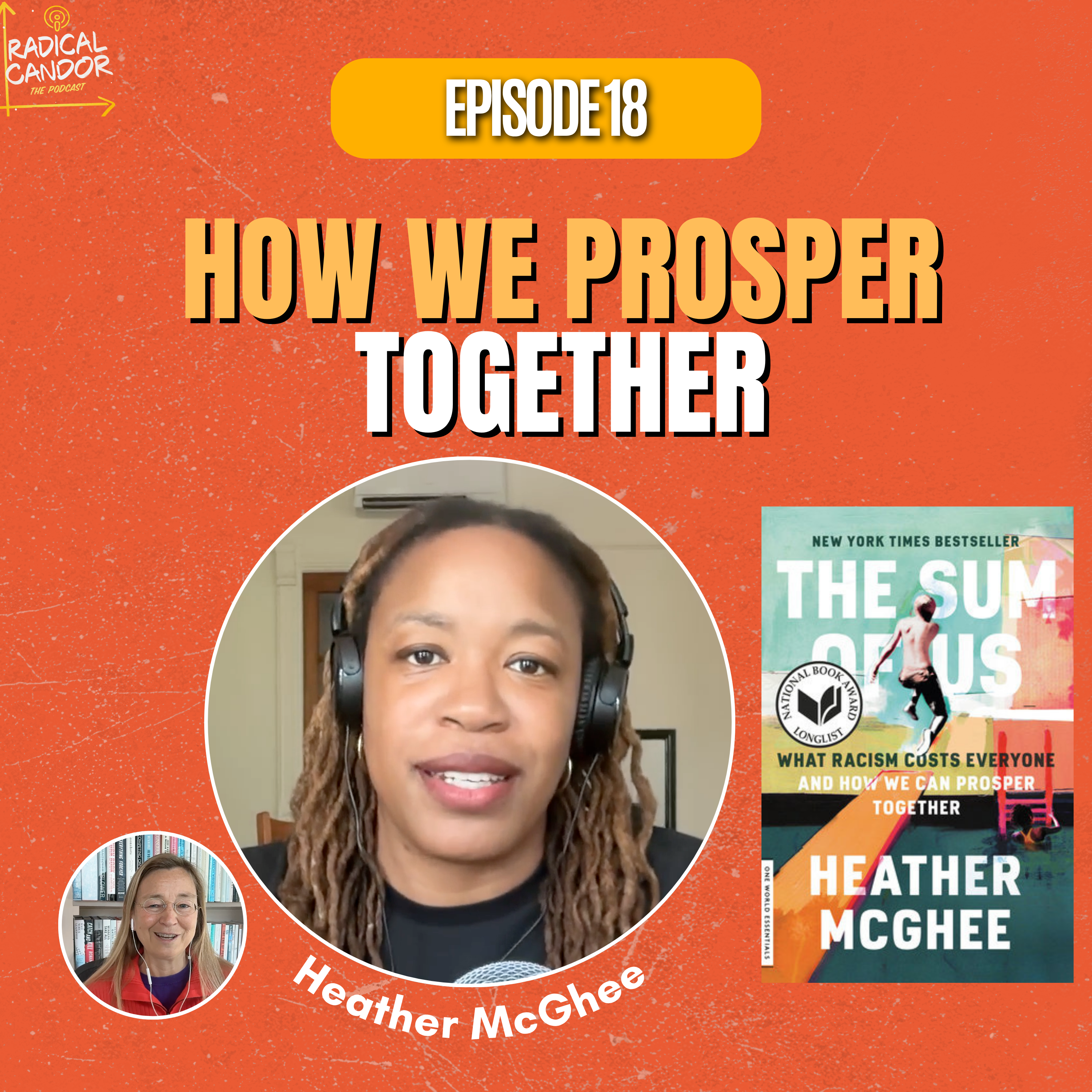
While the podcast team is on a Radical Sabbatical, Kim is interviewing authors of books that have shaped her thinking over the past two years. On...
Share your perspective
Leave a comment below.