Podcast Episode 1: What is Radical Candor?
Our first podcast episode is available now! This week Kim and Russ introduce the ideas behind Radical Candor, tell how they learned these lessons the...
1 min read

Radical Candor Episode 2 is here! In this week's episode, Russ and Kim talk about Radically Candid criticism. What is it and why does it work? They share stories about times they screwed up and then received Radically Candid criticism. Russ and Kim also give concrete tips for offering Radically Candid criticism in your own workplace.
Listen now!
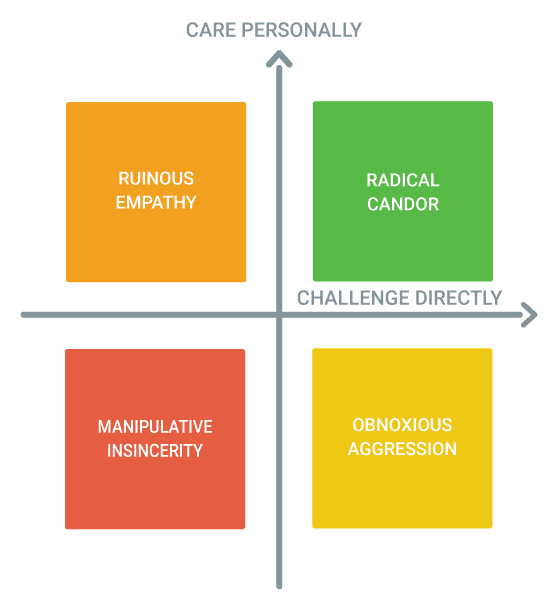
This week's episode is all about Radical Candor, which happens when you Challenge Directly at the same time that you show that you Care Personally. To help you visualize this, we created a 2x2 framework, and labeled the other quadrants of the 2x2 to motivate you to reach for Radical Candor:
 In this episode, Russ shares a story about receiving Radical Candor from Colonel John Boggs during his time in the Marines. He explains how it was possible for him to hear and act on this tough feedback:
I need you to tell me why your leadership is so weak that your Marine thought it was ok to go to Mexico, get drunk, and punch a cop.
Kim shares her Radical Candor origin story, when she walked away with words to live by:
It's not mean, it's clear.
Kim and Russ talk about what you can do to make it possible for people to hear your tough feedback, how to show you Care Personally over time, and how you can also show you Care Personally with just one sentence.
And of course, the episode ends with specific tips that you can put into practice right away.
Tip 1: Take a moment to show that you care, to establish a human bond.
Tip 2: Don't sugarcoat it. "Be really clear about what needs improvement."
Tip 3: Do not offer a feedback sandwich.
Make sure to listen to the podcast for the full explanation of these tips.
Want to dig into more content related to this episode? Check out these links:
Our first podcast episode is available now! This week Kim and Russ introduce the ideas behind Radical Candor, tell how they learned these lessons the...

On this episode of the Radical Candor podcast, Kim, Jason and Amy dig into the digital advice mailbag and answer questions from Radical Candor...
By now you're familiar with the ideas behind Radical Candor — Care Personally and Challenge Directly. How can you take these ideas and make an...
Share your perspective
Leave a comment below.