2 min read

What Is Manipulative Insincerity? Radical Candor Coaches Share Their Epic Feedback Fails

What Is Manipulative Insincerity? Radical Candor Coaches Share Their Epic Feedback Fails

Table of Contents

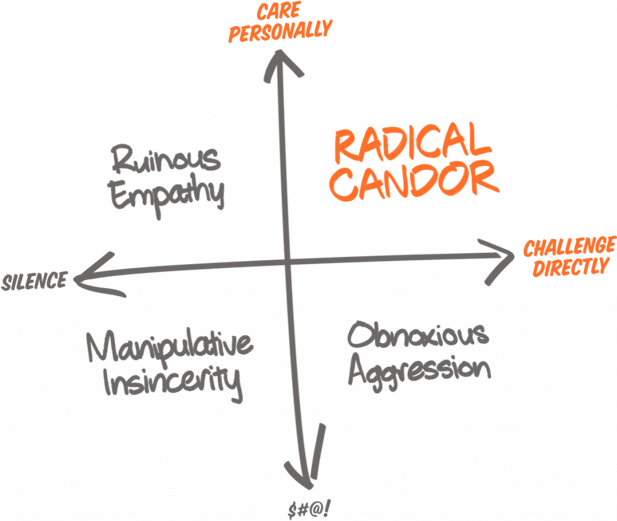
We've all been there at one time or another — too tired to care or argue. Hanging on by a thread with no craps left to give. This is how folks often land in the Manipulative Insincerity quadrant of the Radical Candor Framework.
Manipulative Insincerity

Manipulative Insincerity is what happens when you fail to both Care Personally and Challenge Directly.

It’s praise that is non-specific and insincere or criticism that is neither clear nor kind.

It’s the kind of backstabbing, political, passive-aggressive behavior that might be fun to tell stories about but makes for a toxic workplace, ruining relationships and work.

People give praise and criticism that is manipulatively insincere when they are too focused on being liked or they think they can gain some sort of political advantage by being fake, or when they are too tired to care or argue anymore.
Listen to our Radical Candor Stories podcast episode >>
Manipulative Insincerity often starts as Obnoxious Aggression — what happens when you challenge someone directly but don’t care about them personally.

It’s being clear, but not kind; praise that doesn’t feel sincere or criticism that isn’t delivered kindly. Obnoxious Aggression is also called “brutal honesty” or “front stabbing.”

In the videos below, our Candor Coaches share stories of Manipulative Insincerity as well as stories about how easily Obnoxious Aggression can devolve into Manipulative Insincerity, and how quickly a front stab can turn into a stab in the back.

Talking Smack Behind People's Backs


Candor Coach Aaron Dimmock shares a story about a time he behaved with Manipulative Insincerity by talking behind a team member's back rather than giving the person he was frustrated with direct feedback.

Eventually, the dynamic became so uncomfortable that Aaron left the team.


Candor Coach Becca Barish shares a story about a time she behaved with Manipulative Insincerity by talking behind a team member's back after a meeting rather than approaching the person directly.

This created an "us versus them" mentality and polarized a team that was supposed to be working collaboratively.

From Obnoxious Aggression —> Manipulative Insincerity


Lead Candor Coach and Podcast Host Amy Sandler shares a story about a time she behaved with Obnoxious Aggression by kicking up.

Instead of talking to them directly, she cc'd a colleague's bosses on an email to vent her frustration with said colleague's performance on a technology project they were both working on.

Not only did this behavior reflect poorly on Amy's colleague, but it also made her seem like a jerk.

When a new team came and took charge of the project, Amy was the lone member of the original group, and she was so over it.

Rather than bring the new team up to speed on what had already been done, she moved swiftly from Obnoxious Aggression to Manipulative Insincerity.

Amy didn't share any information with the group and instead adopted a "good luck with that" attitude.

What’s Your Story?

Send us your Radical Candor stories by emailing them to advice@radicalcandor.com.

————————————————————————————————————————————————————————————–
 

Key Questions Covered

What is Manipulative Insincerity in the Radical Candor framework?

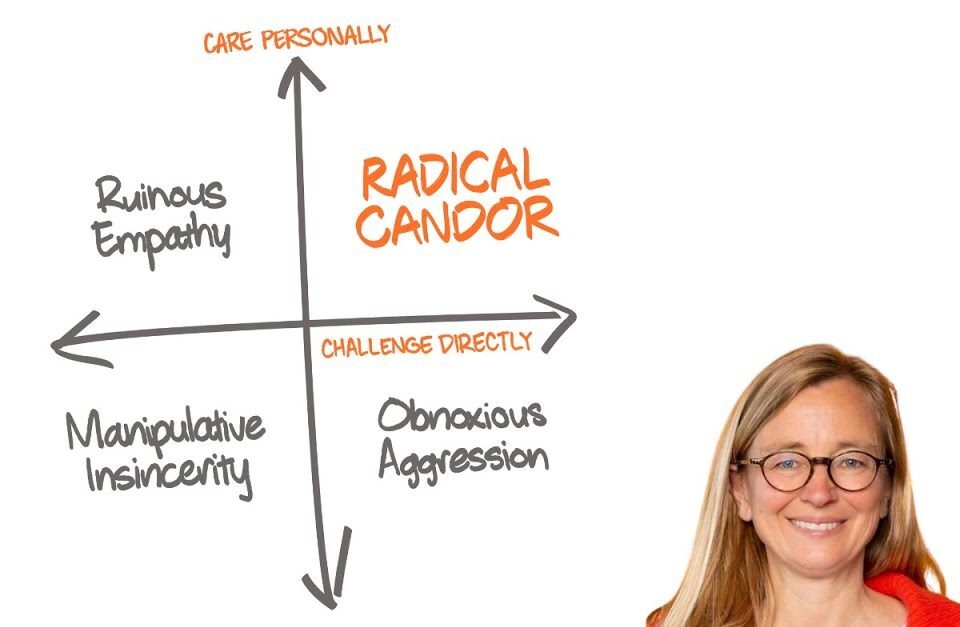
Manipulative Insincerity is one of the four quadrants of the Radical Candor framework. It occurs when you fail to both Care Personally and Challenge Directly. It shows up as non-specific, insincere praise or criticism that is neither clear nor kind. It also includes backstabbing, passive-aggressive, and politically motivated behavior. People fall into this quadrant when they're too focused on being liked, seeking political advantage, or simply too tired to care or argue anymore.

How does Obnoxious Aggression turn into Manipulative Insincerity?

Obnoxious Aggression — being direct but uncaring — can quickly devolve into Manipulative Insincerity. For example, if you publicly call someone out or "front stab" them and it backfires socially, you might retreat into passive-aggressive or avoidant behavior instead. In the post, Amy Sandler's story illustrates this: she started by cc'ing a colleague's bosses on a frustration email (Obnoxious Aggression), then completely disengaged and withheld information from a new team (Manipulative Insincerity). A front stab can quickly become a stab in the back.

Why is talking behind someone's back considered Manipulative Insincerity?

Talking behind someone's back fails on both axes of Radical Candor: it doesn't show care for the person (since you're not helping them improve) and it doesn't challenge them directly (since they never hear the feedback). As the Candor Coaches' stories show, this behavior poisons team dynamics — creating "us versus them" mentalities and making working relationships so uncomfortable that people leave. It's the opposite of the honest, caring communication Radical Candor encourages.

What are some real-world examples of Manipulative Insincerity at work?

The post shares three coach stories as examples:

  • Aaron Dimmock vented frustration about a team member to others rather than giving direct feedback — the discomfort eventually drove him off the team entirely.
  • Becca Barish complained about a colleague after a meeting instead of addressing them directly, polarizing a collaborative team.
  • Amy Sandler withheld critical project information from a new team and adopted a dismissive "good luck with that" attitude rather than helping them get up to speed.
How can I avoid falling into the Manipulative Insincerity quadrant?

The antidote is Radical Candor itself: caring personally about the people you work with while challenging them directly. When you're frustrated, go to the source rather than venting to others. When you're exhausted or checked out, recognize that withdrawing and going passive-aggressive damages trust and teams. Even a short, honest conversation beats silence, avoidance, or political maneuvering. Staying self-aware about your motivations — are you being fake to be liked or to gain an advantage? — is the first step to course-correcting.

Keep going.

Three ways to put this into practice.

Apply what you've learned Get personalized coaching with Compass
Your AI-powered Radical Candor coach. Free to try.
Used by managers at Apple, Dropbox, and Twitter Try Compass free
Stay sharp More like this, every week
Practical leadership tips in your inbox.
Join 25,000+ leaders Subscribe free
For your whole team Bring Radical Candor to your organization
Workshops, keynotes, and rollouts for teams of 50+.
Trusted by 100+ Fortune 500 leadership teams Talk to our team

EXPLORE MORE FROM RADICAL CANDOR

What is Radical Candor? The basic principles in 6 minutes.

What is Radical Candor? The basic principles in 6 minutes.

What is Radical Candor? People often get confused about what Radical Candor really means.
Read More
Acting Like a Jerk by Not Caring Personally is a Radical Candor Fail

Acting Like a Jerk by Not Caring Personally is a Radical Candor Fail

What makes Radical Candor radical is that it’s a deviation from the norm, which tends to fall somewhere between acting like a jerk and avoiding...
Read More
Practice Radical Candor to Combat These 3 Toxic Workplace Behaviors

Practice Radical Candor to Combat These 3 Toxic Workplace Behaviors

A new survey from FlexJobs noted that 68% of people who recently quit their jobs did so without having another job lined up. What's more, the number...

Read More