The Human Cost of NDAs and Forced Arbitration in the Workplace
Edited By Brandi Neal, Radical Candor podcast writer and producer, and director of content creation for Radical Candor. This article about the...
6 min read

Edited By Brandi Neal, Radical Candor podcast writer and producer, and director of content creation for Radical Candor. This article about Bob Sutton and surviving assholes in the workplace has been adapted from a Radical Candor podcast episode about the same topic. This article explores Sutton's research on organizational decline, the difference between cognitive and emotional trust, and practical strategies for managing conflict and giving feedback. Learn how to avoid being a 'clueless asshole' and build sustainable, human-centered organizations. Ideal for leaders, managers, and anyone interested in improving workplace culture.

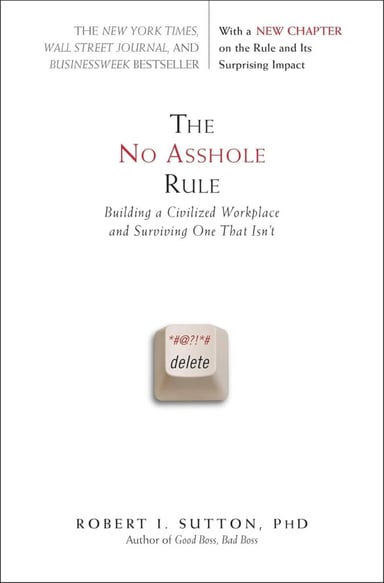
Organizational dynamics are a complex web of performance, innovation, and human well-being. Stanford Professor Emeritus and author of The No Asshole Rule and The Friction Project, Bob Sutton, has spent four decades dissecting what makes organizations tick, or sometimes, implode.
Sutton's work as an organizational psychologist began with a focus on organizational decline and downsizing, examining the impact of business decisions on people. According to Sutton, organizations must be productive and innovative to survive, but this doesn't give them a free pass to mistreat people.
He recently joined the Radical Candor podcast to discuss the distinct difference between what an organization does and how it does it, and why it matters.
Sutton’s early research focused on organizational "death" and decline, examining how organizations disband and downsize. “My dissertation was on how you disband an organization that you have declared is we're going to kill it, basically,” Sutton said, referencing studies that ranged from auto plants to university departments.
This foundational work led him to a core principle: there's a distinct difference between what an organization does and how it does it.
"I believe that organizations need to be efficient, productive, innovative, otherwise nobody eats," Sutton explained. "That's just the way it is. But as one of my favorite sayings is there's a difference between what you do and how you do it."
This "how" is critical. Sutton argues that business decisions invariably involve treating people either well or terribly. Whether it’s plant closings, layoffs, or broader organizational changes, the manner in which decisions are executed has profound implications for both organizational performance and individual well-being.
"If you do it in such a way that you treat people where you give them predictability, you give them some logic about why you're maybe shutting the plant or laying them off or laying their colleagues off," Sutton said. "You give them some control over how it unfolds and you treat them with as much compassion as possible, I would argue that two things happen. One is that you save as much money and are as efficient as possible and innovative as possible… And then the other thing that happens is that you don't damage human well-being."
Sutton's stance on treating people with respect is unwavering. He acknowledges that some might argue that being an "asshole" can lead to better business outcomes.
"People will always have an argument whether assholes are more effective or not," he said, noting that data can sometimes be misused to justify poor behavior. "I don't care, even though I can show you the evidence. If you're an asshole. I think you're a piece of shit as a human being. I don't want you, go away, F you."
Author and co-founder of Radical Candor, Kim Scott, echoed his sentiment. She recalled a personal experience with a startup that handled layoffs poorly, using a "paid asshole" to deliver the news. Scott emphasized that how these decisions are made matters immensely.
"How one does this makes all the difference," she said. "And that was really the moment when I decided that management was interesting. It actually really did matter."
"They hired this guy who I can only describe as a paid asshole, like the CEO did not have the courage to come and have these conversations himself with everyone, and this paid asshole, of course, didn't know who anyone was," she said.
Sutton agreed, calling Scott's story "almost the perfect story of how not to do it." He highlighted the importance of "prediction, understanding, control and compassion" in such situations, qualities that were conspicuously absent in the startup’s approach.
He also cited a story about the famous leadership coach Bill Campbell, known for his human approach to even the hardest decisions. “Bill Campbell never would’ve had someone else do it,” Sutton said. “He would’ve done it himself. He was there, present with the people.”
Scott adds that the distinction between the "bonafide jerk" and the "temporary jerk" often lies in emotional awareness. A leader who is momentarily harsh but deeply regrets it can still salvage their credibility, whereas those who remain detached from the feelings of others face significant challenges. “The bonafide jerks don’t waste any time feeling bad about hurting people,” she said.
The discussion also delved into the complexities of friction within organizations. Sutton, along with his co-author Huggy Rao, explored this in their book The Friction Project. Sutton explained that while efficiency is often prized, some things should not be rushed or made too easy. Innovation, for example, often requires patience and persistence.
Amy Sandler, principal coach and podcast host at Radical Candor, connected this idea to the concept of relationships in the workplace. She asked about the research behind building trust and giving people the benefit of the doubt. Sutton responded by distinguishing between "cognitive trust" and "emotional trust." Cognitive trust is based on roles and rules, while emotional trust requires deeper understanding and time to develop.
"When it comes to really deep understanding of who is good at what and how to balance our needs and to think long term, the it turns out that the that uh that this idea of developing emotional trust, they call it, is something that can that can take quite a long time," Sutton said.
Help Me Create a Candid & Respectful Workplace Culture: Help with Radical Candor
Interpersonal friction, when handled productively, can even be a catalyst for creativity. Sutton cited research showing that teams that engage in respectful debate and know how to manage conflict are often the most effective. Scott added that fighting, when done well, can prevent feedback debt and resolve conflicts before they fester.
The conversation also touched on dealing with difficult people in the workplace. Sutton offered several strategies, including cognitive behavioral therapy, avoiding contact, and documenting behavior to potentially bring about change. He also emphasized the importance of giving feedback to those who may be "clueless assholes," people who lack awareness of how their actions affect others.
"If it's, sometimes giving people feedback they're leaving people feeling like dirt is important," Sutton said. "Because that's another one of my distinctions. One are strategic assholes. The others are clueless assholes, and there are a lot of people in the world who lack the awareness of how they're making other people feel."
Resisting Coercion and Conformity Demands a Conscious Design: Here’s How to Get Started »
Scott shared an experience from early in her time at Google where an HR person told her she was intimidating her team and making them feel powerless.
She initially didn't believe it, feeling that it was contrary to her intentions and her self-image. She had worked hard to be taken seriously and didn't see herself as intimidating.
This realization helped Scott understand that her behavior was creating an environment where her team didn't feel safe to challenge or disagree with her, indicating a lack of psychological safety. It was this practical exercise, rather than just the feedback, that made her realize she needed to change her behavior.
"A useful sort of a rule for almost all of us is to be slow to label other people as certified as assholes. And to be quick to label ourselves," Sutton said.
Both Scott and Sutton reflect on the challenges of scaling a business while maintaining the personal relationships and care that drive its success. Or as Scott often says, "it's better to have a hole [on your team] than an asshole."
Sutton’s work, including The Friction Project, argues that not everything can or should scale. While companies chase growth and efficiency, Sutton warns that the attempt to do so at the expense of human connection is often counterproductive.
As Sutton and Scott discuss the complex decisions leaders must face, they conclude that it’s essential to navigate these choices with both intelligence and compassion. “Leadership is about knowing when to apply friction, and when to let it go,” Sutton said. His insights offer a reminder that the most effective leaders are those who understand the human element at play in every decision.

“You can’t avoid the emotional toll of leadership. It’s about the impact on the person you’re working with, and also on yourself,” he said. For Sutton, understanding the impact of leadership actions—whether it’s firing someone or providing tough feedback—is essential to effective management.
“Efficiency is sometimes ruinously inefficient in the long run,” he noted, pointing out that the push for speed can often undermine the deeper work necessary for a company’s success.
He also introduces the concept of reversible versus irreversible decisions. “Do I know what I’m doing?” and “Is the decision reversible?” are two guiding questions for leaders navigating complex challenges. “These are crucial questions for any decision, but especially when you’re scaling,” Sutton says. His approach is grounded in the idea that leaders should weigh the potential harm of a decision and its reversibility before acting.
Overall, the conversation highlights the intersection of humanity and leadership—whether managing feedback, difficult decisions, or the friction that arises in complex organizations. Leaders who embrace Radical Candor and are mindful of the emotional dynamics in their organizations can foster environments of respect and productivity, even in the most challenging circumstances.

Edited By Brandi Neal, Radical Candor podcast writer and producer, and director of content creation for Radical Candor. This article about the...

Edited By Brandi Neal, Radical Candor podcast writer and producer, and director of content creation for Radical Candor. When leaders prioritize...

Edited By Brandi Neal, Radical Candor podcast writer and producer, and director of content creation for Radical Candor. This article about rebuilding...
Share your perspective
Leave a comment below.