1 min read

Reward the Candor

Reward the Candor

Table of Contents

One of the tips we shared in our post about how to get more feedback is to reward feedback to get more of it. If you want to get others to open up and tell you what they think, you have to show them that you appreciate it. It’s a risk for them to tell you what they think, and if the risk isn’t worth it -- if they are punished for their real-talk or see that it is ignored -- they won’t continue taking it. So if you want to encourage people to continuing giving you important feedback, reward the candor!

In the end, you get the behaviors you reward. If you reward candor, if you reward straight-forward talk, you will get it.

-- Jack Welch, speaking at Stanford Business School

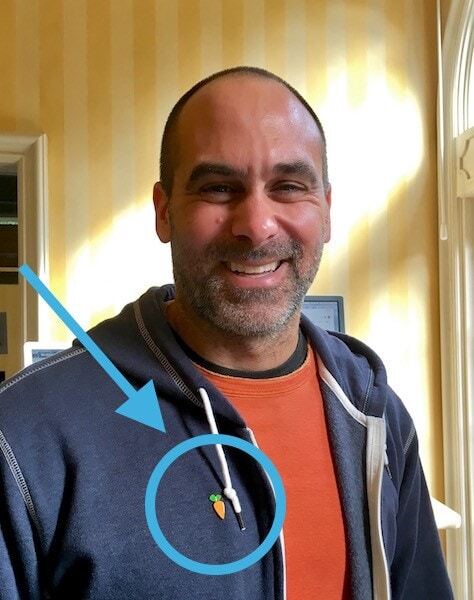
We learned about a great example of rewarding the candor when we were at Instacart earlier this year. Max Mullen, co-founder of Instacart, uses Instacart carrot pins to thank and recognize someone when they offer him Radical Candor. He gives them a carrot pin to wear and gives them an extra carrot pin to pass on. When someone offers them Radical Candor, they can reward that candor with a carrot pin as well.

instacart-logo

Now, as you walk around the 350-person Instacart office, you can see people wearing their carrot pins and recognize that they’ve been successful in Challenging Directly and showing they Care Personally.

During the visit to Instacart, Russ was lucky enough to earn one of the pins because of his Radical Candor :) He also of course received one to pass along to the next person who gave him Radically Candid feedback.
Key Questions Covered

Why is it important to reward candor on your team?

When someone gives you honest feedback, they're taking a risk. If that risk goes unrewarded — or worse, if they're ignored or punished — they'll stop speaking up. Rewarding candor signals that straight talk is valued and safe, which encourages more of it over time. As Jack Welch put it, you get the behaviors you reward. Make it worth people's while to be honest with you, and you'll build a culture where real feedback flows freely.

How did Instacart's Max Mullen reward Radical Candor in practice?

Max Mullen, co-founder of Instacart, created a simple but powerful ritual using Instacart-branded carrot pins. When someone offered him Radical Candor, he gave them a carrot pin to wear as recognition — and a second pin to pass on to the next person who gave them candid feedback. The result: a visible, self-propagating reward system. Walking through the 350-person office, you could spot carrot pins and immediately know those people had both Challenged Directly and Cared Personally.

What does 'rewarding candor' actually look like in day-to-day management?

Rewarding candor doesn't have to be elaborate. The most important thing is to respond visibly and positively when someone gives you honest feedback. That could mean thanking them publicly, acting on their input and following up to let them know you did, or using a tangible token of appreciation like Instacart's carrot pins. The key is consistency — if people see that candor leads to positive outcomes rather than awkward silence or blowback, they'll keep offering it.

What happens if you ignore or punish honest feedback?

If people see their candid feedback ignored or — worse — used against them, they'll quickly learn to stay quiet. This erodes psychological safety and leaves you managing without the real information you need. Over time, you end up in an environment where people tell you what you want to hear rather than what you need to hear. Radical Candor only works as a two-way practice: you have to make it genuinely safe and worthwhile for people to speak up.

How does rewarding candor connect to the broader Radical Candor framework?

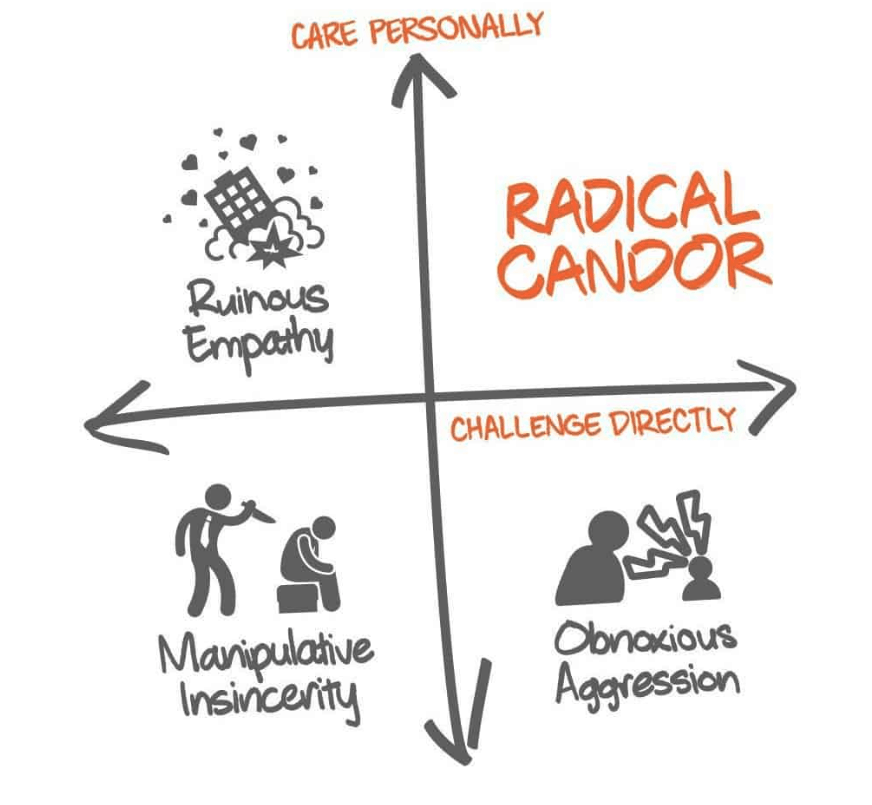
Radical Candor is built on two dimensions: Caring Personally and Challenging Directly. Rewarding candor reinforces both. When you publicly acknowledge someone for speaking up, you show you care about them as a person (not just their output) and you model that direct challenge is welcomed, not feared. It also closes the loop — soliciting feedback is only half the equation. Rewarding it is what turns a one-time exchange into an ongoing culture of honest communication.

Keep going.

Three ways to put this into practice.

Apply what you've learned Get personalized coaching with Compass
Your AI-powered Radical Candor coach. Free to try.
Used by managers at Apple, Dropbox, and Twitter Try Compass free
Stay sharp More like this, every week
Practical leadership tips in your inbox.
Join 25,000+ leaders Subscribe free
For your whole team Bring Radical Candor to your organization
Workshops, keynotes, and rollouts for teams of 50+.
Trusted by 100+ Fortune 500 leadership teams Talk to our team

EXPLORE MORE FROM RADICAL CANDOR

How to Respond to Negative Feedback at Work That You Disagree With

How to Respond to Negative Feedback at Work That You Disagree With

Kim Scott is the author of Radical Candor: Be a Kick-Ass Boss Without Losing Your Humanity and Radical Respect: How to Work Together Better and...

Read More
The Most Important Thing Leaders Should Think About in 2026

The Most Important Thing Leaders Should Think About in 2026

By Kim Scott I’ve been thinking about what the most important thing is for leaders to think about in 2026. This may be kind of a random...
Read More
3 Ways to Introduce Radical Candor's Feedback Framework to Your Organization

3 Ways to Introduce Radical Candor's Feedback Framework to Your Organization

When we talk about Radical Candor at companies or with individuals, we see a lot of heads nodding in agreement. People understand that Radical...

Read More