COMPASS
Just-in-time AI coaching for real conversations — prep for hard feedback, reset expectations in a 1:1, or navigate cross-functional tension. Free tier, Pro, and Team plans.
For You
Radical Candor® teaches you how to be clear without being harsh, and how to care without going soft. The result is better conversations, stronger relationships, and better results.
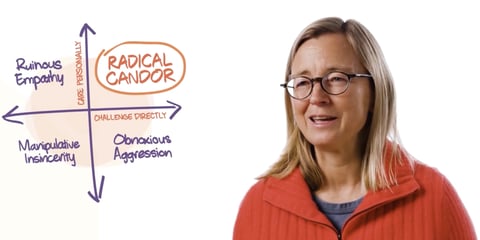
You're too nice to say the hard thing, so you don't (Ruinous Empathy). You blurt it out and wreck the relationship (Obnoxious Aggression). You avoid the whole conversation (Manipulative Insincerity). The way out is Radical Candor® — kind and clear and specific and sincere.
Just-in-time AI coaching for real conversations — prep for hard feedback, reset expectations in a 1:1, or navigate cross-functional tension. Free tier, Pro, and Team plans.
Practice giving and getting feedback — led by a seasoned Candor Coach, with real people, in real time. $299+ per seat.
A comedic Netflix-insipred series (runtime: 45min) starring David Alan-Grier plus reflection and practice exercises. Built to feel different from traditional training: funny, memorable, practical.
Kim walks you through the Radical Candor® framework, the four feedback styles, and how to give and receive feedback that actually lands. Watch it when you want. Come back when you need a reset. $149/year.
Learn the basics of Radical Candor in six minutes. Obnoxious Aggression is what happens when you challenge someone directly, but don’t care about them personally. Manipulative Insincerity is praise that is non-specific and insincere or criticism that is neither clear nor kind. Ruinous Empathy is “nice” but ultimately unhelpful or even damaging. Radical Candor is criticism that is kind and clear, and praise that is specific and sincere.
Kim breaks down the concepts on Radical Candor, provides specific stories and examples, and reveals the two incidents that prompted her to bottle the magic of Radical Candor and share it with the world. Radical Candor not only become a best-selling book, but it’s also blossomed into a company creating BS-free zones at workplaces around the world.
Kim’s talk at First Round Capital went viral and started a feedback revolution around the world. Why? Because implementing a feedback-first culture will improve your relationships and help your team achieve more success than you ever thought possible. Next, Kim is tackling bias and bullying in the workplace. Order her new book, Just Work: How To Root Out Bias, Prejudice, and Bullying to Create a Kick-Ass Culture of Inclusivity, to learn how we can recognize, attack, and eliminate workplace injustice ― and transform our careers and organizations in the process.
We’ve put together this list of questions to get you started with your Radical Candor book club. Visit our book page to buy copies of Radical Candor in bulk at a reduced rate. After your club members have read the book, use the critical thinking questions to help guide the discussion.
Your ability to build trusting, human connections with the people who report directly to you will determine the quality of everything that follows. Despite these relationships being vitally important, most of us are at a loss when we set out to build relationships with our direct reports.
It’s a lot easier to lead by example than it is to change other people’s behavior. If you want to encourage feedback between the people on your team or at your organization, you’re going to have to create an environment where people feel safe and encouraged to give real feedback.
As a manager, it’s crucially important for you to get feedback and find out what people really think. Getting people to Challenge you Directly can be the difference between success and failure, which means you need to make a concerted effort to get feedback.
It is a manager’s job to help each person on their team develop and grow their careers, as well as manage their performance. Balancing the intrinsic desire to improve and grow and the extrinsic desire for rewards like bonuses, equity, and promotion is one of the most difficult things about being a manager. We can help you navigate.
The GSD Wheel has 7 steps: Listen, Clarify, Debate, Decide, Persuade, Implement and Learn. When run effectively, the GSD Wheel will enable your team to achieve more collectively than anyone could ever dream of achieving individually.
Not sure which to pick? Most people start with Compass or the book, then add from there.